Hemu Tuva Village is one of the largest and best-preserved Tuva settlements in China, located inside the Kanas Scenic Area in northern Xinjiang.
The village is known for wooden cabins, birch forests, river valleys, morning fog, and seasonal landscape changes. Unlike city-based sightseeing destinations, travel here depends heavily on weather, lighting conditions, and outdoor movement between viewpoints.
This destination is better suited for travelers interested in photography, slower-paced travel, and natural landscapes. Travelers expecting dense sightseeing attractions or luxury hotel infrastructure may find the experience more limited.
Best Time to Visit Hemu Tuva Village
The best overall period is usually from mid-September to early October for autumn scenery, or December to February for winter landscapes.
| Season | Conditions | Best For |
|---|---|---|
| June to August | Mild weather, green forests, open grasslands | Hiking, horseback riding |
| Mid-September to early October | Golden birch forests, stable photography conditions | Landscape photography |
| December to February | Snow-covered cabins, frozen landscapes, winter fog | Snow scenery, winter travel |
| May | Remaining snow mixed with spring scenery | Seasonal transition photography |
Several seasonal differences are important when planning a trip:
Autumn is the busiest photography season
Summer mornings and evenings can still feel cold
Winter transportation conditions may change depending on snowfall
Morning fog is more common near the river valley and viewing areas
May offers a transition-season atmosphere with snow remaining on higher mountain areas while lower forests begin turning green.
Recommended Itineraries in Hemu Tuva Village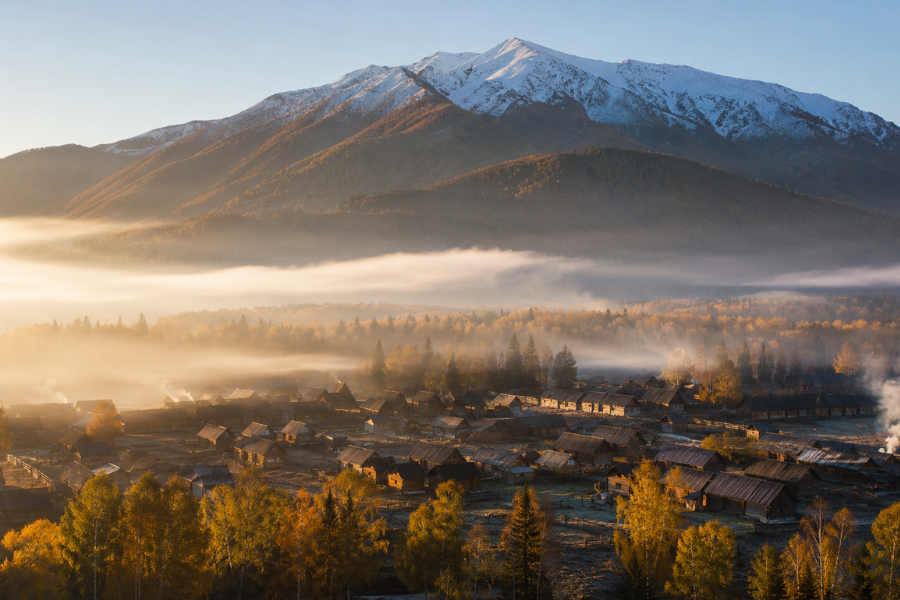
Classic Route (1 Day)
Suggested route:
Burqin → Hemu Village → Hemu Bridge → Viewing Platform → Birch Forest → Riverside Walk
This route covers the main village photography areas and commonly visited viewpoints. It works best for first-time visitors or travelers combining Hemu with a broader northern Xinjiang itinerary.
The schedule can feel relatively compact because walking distances between photography points are longer than many travelers initially expect.
Extended Route (2 Days)
Suggested route:
Burqin → Hemu Village overnight stay → Sunrise Viewing Platform → Forest horseback route → Riverside photography → Night photography
This option provides more flexibility for sunrise timing, weather conditions, and visibility.
A two-day itinerary is usually a better choice for:
Photography-focused travelers
Travelers interested in sunrise and night photography
Winter visitors
Travelers who prefer a slower pace
Staying overnight inside the village improves access to early morning fog conditions and nighttime photography opportunities.
Custom Route Option
Hemu is commonly combined with nearby destinations across northern Xinjiang.
Popular route combinations include:
Kanas Scenic Area + Hemu + Baihaba Village
Altay ski areas + Hemu winter routes
Northern Xinjiang routes including Koktokay Scenic Area and Urho Ghost City
Travelers combining multiple destinations often benefit from route planning support because seasonal road conditions and long transfer distances can affect travel efficiency.
How to Get to and Around Hemu Tuva Village
Most travelers reach Hemu through the following route:
Urumqi → Altay → Burqin → Hemu Village
Another common option is:
Urumqi → Kanas Airport → Hemu Village
Several transportation details are important for planning:
Shuttle buses are usually required during peak seasons
Self-driving access may be restricted during busy periods
Mountain weather can affect visibility and driving conditions
Internal movement inside the village is mainly on foot
Travelers often underestimate the time required to move between photography locations. Some viewpoints also require uphill walking before sunrise.
A private vehicle or organized route can make transportation between northern Xinjiang destinations more efficient, especially during unstable weather periods.
Where to Stay in Hemu Tuva Village
Accommodation in Hemu mainly consists of wooden guesthouses and cabin-style homestays.
| Area | Best For | Notes |
|---|---|---|
| Near Hemu Bridge | Short stays, easier village access | Convenient central location |
| Near viewing routes | Sunrise photography access | Earlier departures required |
| Riverside sections | Lower activity levels at night | Longer walking distances |
Accommodation conditions are generally simpler than city hotels.
Several practical points are worth noting:
Prices increase significantly during autumn peak season
Winter holidays and autumn weekends require early booking
Heating quality varies between properties
Sound insulation can be limited in some wooden buildings
Travelers focused on photography usually benefit from staying inside the village rather than making a same-day visit.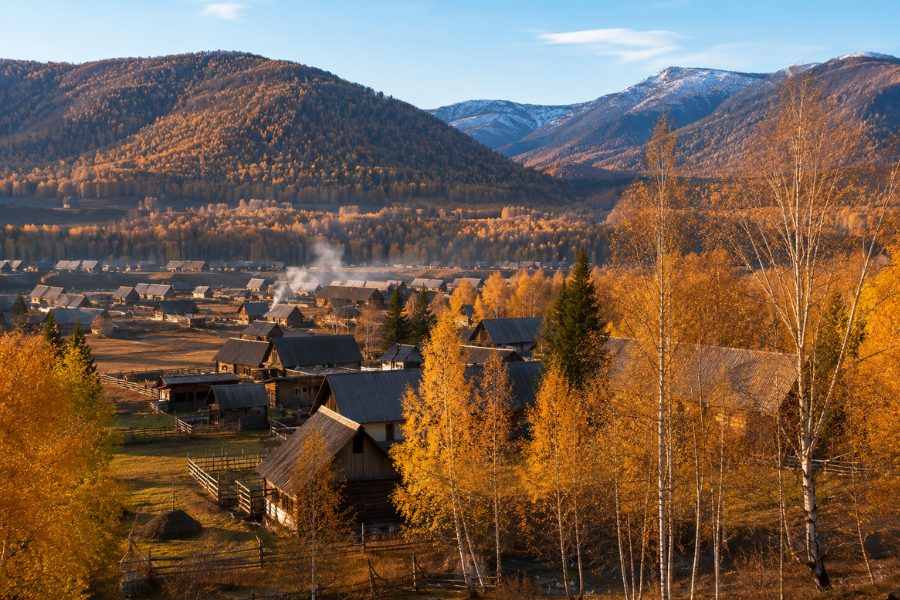
Practical Travel Tips
Clothing and Weather
Layered clothing is strongly recommended
Day and night temperature differences can exceed 20°C
Waterproof hiking shoes improve comfort during snowmelt periods
Nighttime temperatures remain low even in late spring
Photography Preparation
Sunrise photography requires very early departures
Portable batteries are useful during long outdoor sessions
Headlamps improve safety before sunrise and at night
Visibility can change quickly due to fog conditions
Walking and Accessibility
Some riverside boardwalks become slippery during snowmelt
Scenic points are spread across different sections of the village
Moderate uphill walking is required for several viewpoints
Travelers should prepare for extended outdoor activity
Seasonal Considerations
Spring conditions may still include snow-covered mountain areas
UV exposure at altitude can feel stronger than expected
Insect repellent is useful near rivers and forest areas
Weather changes can significantly affect photography conditions
Is a Guided or Private Tour Worth It
Hemu is relatively manageable for independent travelers, but route timing and transportation coordination can become more complicated than expected.
Common challenges include:
Coordinating sunrise photography with changing weather
Managing long walking distances between viewpoints
Handling transfers across northern Xinjiang
Adjusting plans during unstable mountain conditions
Independent travel works well for travelers comfortable with flexible schedules and outdoor conditions.
However, a structured itinerary often improves travel efficiency, especially for travelers combining Hemu with Kanas, Baihaba, or broader northern Xinjiang routes. Organized transportation and flexible route planning can reduce unnecessary transfers and improve access to sunrise and nighttime photography conditions.
Hemu is generally better experienced at a slower pace rather than as a rushed sightseeing stop. Allowing enough time for weather and lighting changes usually creates a more balanced travel experience.
Travelers planning a broader northern Xinjiang itinerary may also benefit from reviewing seasonal road conditions, transfer times, and accommodation availability before finalizing their route.