What to Expect in Muztagh Glacier Park
Muztagh Glacier Park is a high-altitude glacier destination on the Pamir Plateau, centered around the glacier landscape of Muztagh Ata.
Unlike typical sightseeing areas with dense facilities and short walking routes, travel here involves long-distance driving, rapid altitude gain, and constantly changing mountain weather.
This destination is a better fit for travelers interested in glacier scenery, high-altitude landscapes, and remote road travel rather than entertainment-style attractions.
The main highlight is the combination of glacier formations and surrounding Pamir Plateau scenery.
Visitors can usually see:
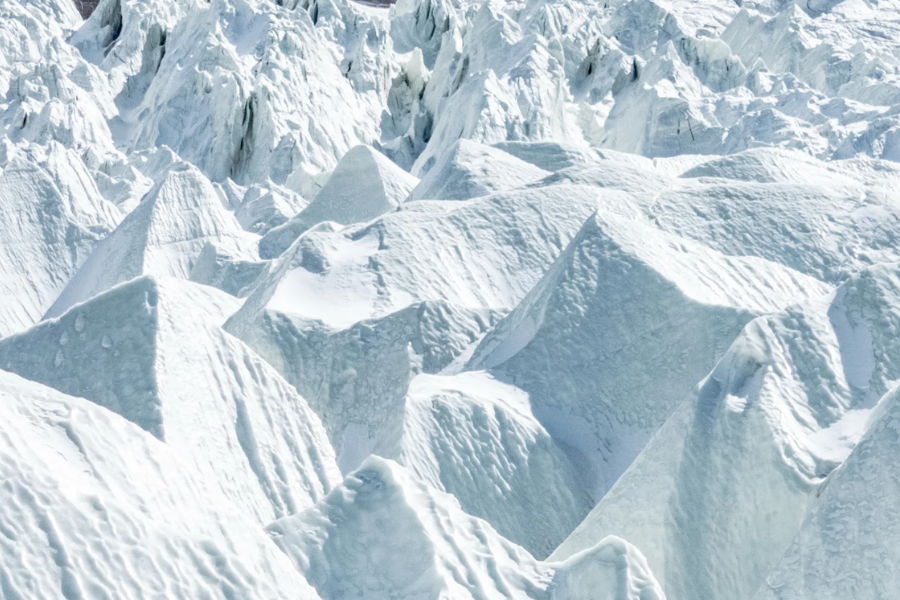
Glacier tongues and ice formations
Snow-covered peaks above 7,000 meters
High-altitude desert and grassland landscapes
Seasonal yaks, wetlands, and alpine meadows during summer
Most travelers remain near the glacier viewing platform instead of attempting advanced glacier hiking routes.
The visitor center sits at around 4,200 meters above sea level.
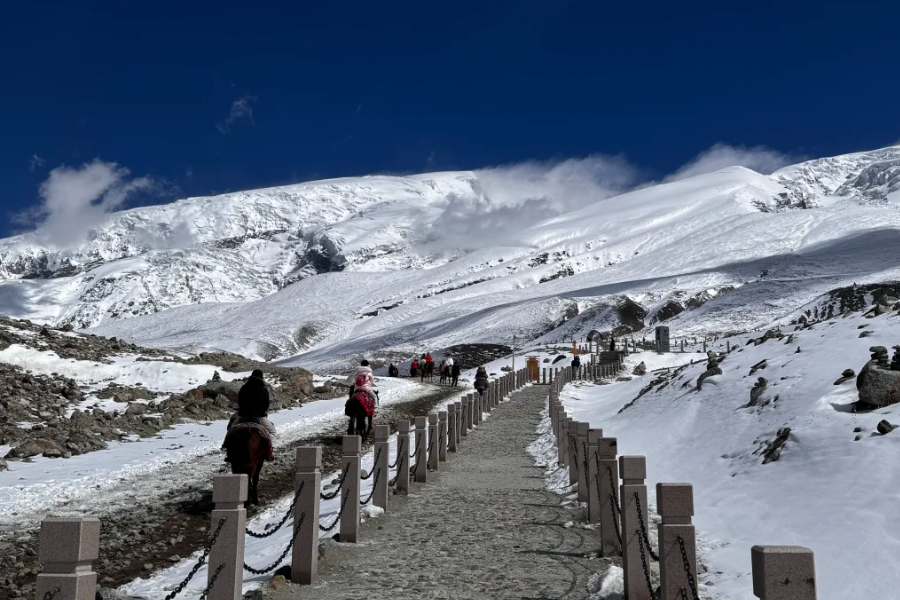
The main glacier viewing platform is located between approximately 4,600 and 4,688 meters. Even short walking distances can feel physically demanding at this altitude.
Some visitors are surprised by how quickly fatigue appears after arriving at the viewing area.
Best Time to Visit Muztagh Glacier Park
The best time to visit is from May to October.
July to September usually provides the most stable road access and weather conditions.
Summer offers easier transportation access and clearer glacier visibility
Early autumn creates stronger snow contrast across the surrounding peaks
Winter conditions may lead to temporary road closures or restricted access
Morning conditions often provide clearer mountain visibility and softer lighting for photography.
Strong winds, cloud cover, and glare become more noticeable later in the day.
We recommend starting early, especially if you are traveling from Kashgar or continuing toward Tashkurgan on the same day.
Recommended Itineraries in Muztagh Glacier Park
Classic Route (1 Day)
This route usually follows Kashgar → Karakul Lake → Muztagh Glacier Park → Tashkurgan.
It covers the main glacier viewpoints and the core section of the Karakoram Highway landscape.
We recommend this option for first-time visitors or travelers with limited time.
The overall pace is relatively compact because of the long driving distances across the Pamir Plateau.
Short scenic stops are usually enough for casual travelers who mainly want glacier and mountain views.
Extended Route (2–3 Days)
This route expands on the classic version and includes additional stops across the Pamir Plateau region.
Common additions include:
Karakul Lake
Traditional Tajik villages
Wetland and grassland viewpoints near Tashkurgan
Additional glacier viewpoints and photography areas
This is a better choice if you prefer slower altitude adjustment, photography-focused travel, or a more flexible schedule.
Spending a night in Tashkurgan usually makes the overall route more comfortable and reduces travel fatigue.
Custom Route Option
Travel routes across the Pamir Plateau can be adjusted based on weather, altitude adaptation, and available travel time.
Many travelers combine:
Kashgar and Karakul Lake
Tashkurgan and glacier viewpoints
Multi-day Karakoram Highway routes
A custom itinerary can reduce unnecessary backtracking and improve pacing at high altitude.
This becomes increasingly important for travelers unfamiliar with plateau travel conditions.
How to Get to and Around Muztagh Glacier Park
Most travelers reach the glacier area through Kashgar or Tashkurgan.
Approximate travel distances include:
| Starting Point | Distance | Driving Time |
|---|---|---|
| Kashgar | Around 220 km | 4–5 hours |
| Tashkurgan | Around 70 km | About 1 hour |
Travel times across the Pamir Plateau are often longer and slower than they appear on maps due to altitude, checkpoints, and mountain road conditions.
Inside the scenic area, visitors normally:
Enter through the visitor center
Take a shuttle bus into the glacier zone
Walk approximately 20–30 minutes to the viewing platform
The walking distance itself is relatively short, but the high altitude increases physical fatigue significantly.
Some glacier sections may involve uneven rocks, loose surfaces, or icy ground depending on seasonal conditions.
Public transport offers lower costs but limited flexibility
Private vehicles make it easier to combine multiple plateau destinations efficiently
We recommend arranging transportation in advance if you plan to continue toward other Pamir Plateau locations.
Independent travel planning can become complicated because of altitude pacing, remote road conditions, and limited transportation connections.
Where to Stay in Muztagh Glacier Park
Most travelers stay in Kashgar or Tashkurgan rather than near the glacier area itself.
Kashgar is better for acclimatization, transportation access, and first-night arrival
Tashkurgan works better for extended Pamir Plateau routes
Spending one or two nights in Kashgar before entering the plateau usually improves altitude comfort.
Tashkurgan is more suitable for travelers continuing deeper into the Pamir Plateau region.
Accommodation options near the glacier area are limited and relatively basic.
Practical Travel Tips
UV exposure is extremely strong above 4,000 meters
Layered cold-weather clothing is necessary even during summer
Strong winds are common throughout the day
Oxygen supplies may help reduce discomfort at higher elevations
Avoid intense physical activity after arrival
Proper hiking shoes improve stability on loose or icy terrain
Trekking poles can help on uneven glacier surfaces
Carry water, snacks, and warm drinks because facilities are limited
Drone usage may be restricted in certain border-region areas
Weather conditions can change rapidly within a short period
Many travelers underestimate how tiring short walks can feel at high altitude.
Proper pacing is usually more important than trying to reach additional viewpoints quickly.
Is a Guided or Private Tour Worth It
Traveling independently on the Pamir Plateau can be more difficult than many visitors initially expect.
Long driving distances, altitude adjustment, checkpoint procedures, and changing weather conditions all affect route planning.
Public transportation does not efficiently connect many glacier viewpoints and plateau routes.
A structured private trip can reduce logistical uncertainty and improve time efficiency.
This is especially useful if you want to combine:
Muztagh Glacier Park
Karakul Lake
Tashkurgan
Additional Pamir Plateau stops
Experienced local coordination can also help travelers manage altitude pacing more comfortably and avoid inefficient scheduling.
Final Thoughts
Muztagh Glacier Park is less about long glacier exploration and more about experiencing the scale of the Pamir Plateau landscape.
The overall experience depends heavily on weather conditions, visibility, altitude adaptation, and route planning.
Choosing the right travel pace, transportation arrangement, and overnight stops can significantly improve comfort during this part of Xinjiang.