What to Expect in the Twelve Muqam Experience
The Twelve Muqam experience is most suitable for travelers interested in Silk Road culture, traditional Uyghur performing arts, and historical cultural traditions.
Unlike standard stage performances or short folk music shows, Muqam combines music, poetry, storytelling, dance, and improvisation within one extended performance structure.
Travelers expecting fast-paced entertainment may find traditional performances slower and more narrative-focused. The experience is usually more rewarding when approached as a cultural tradition rather than a tourist performance.
Many first-time visitors initially expect only music, but Muqam functions as a complete artistic system that combines multiple forms of expression at the same time.
Performances often emphasize gradual rhythm changes, emotional vocal delivery, collective interaction, and long-form musical progression rather than short individual songs.
Basic historical understanding before attending can significantly improve appreciation of the performance structure.
Best Time to Experience the Twelve Muqam
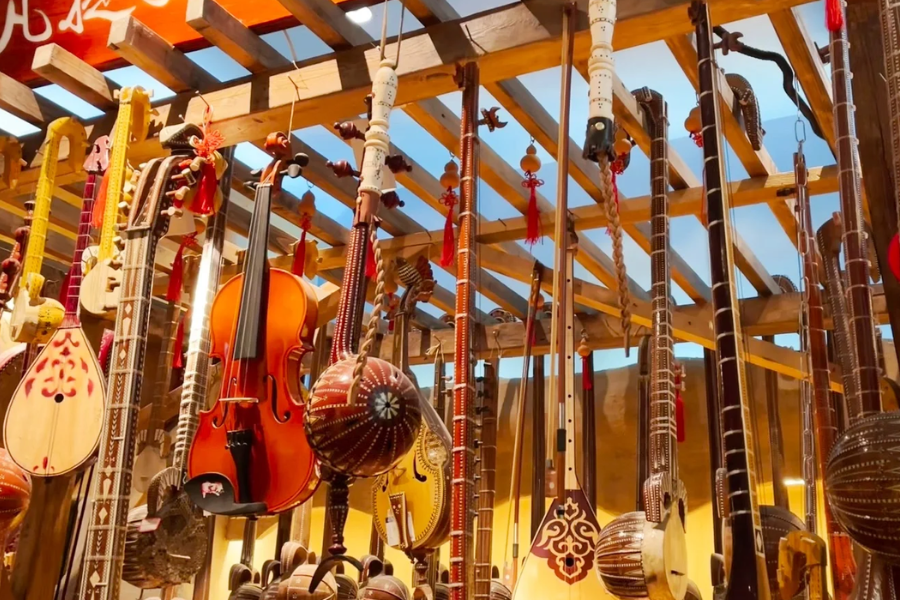
The best time to explore Muqam-related cultural destinations is from May to October.
Seasonal conditions vary across southern Xinjiang:
May to June – milder temperatures and lower crowd density
July to August – peak travel season with larger cultural activities
September to October – clearer weather and more stable travel conditions
Evening performances are usually easier to appreciate because traditional architecture, lighting, music, and movement create a stronger atmosphere after sunset.
You may prefer avoiding major Chinese national holidays if you want smaller audiences and more relaxed cultural settings.
Winter travel is possible, but performance schedules and tourism services may become more limited outside larger cities.
Recommended Itineraries for a Muqam Cultural Trip
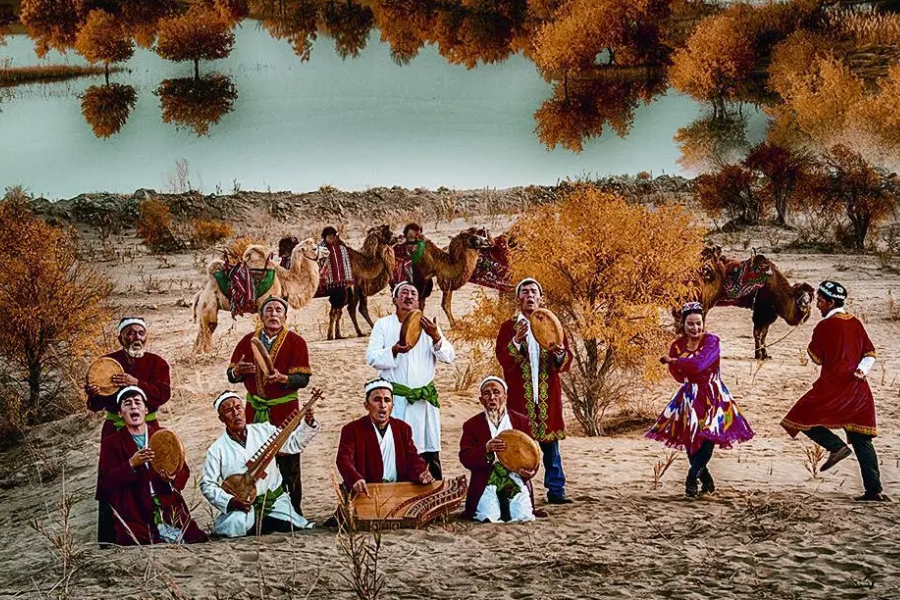
Classic Route (3–4 Days)
This route typically follows Kashgar → Shache → Kashgar.
It covers the main cultural regions connected with Muqam heritage, including historical districts, traditional markets, museums, and local performance venues.
We recommend this option for first-time visitors or travelers with limited time.
The pace is balanced, with moderate daily travel distances and enough flexibility for evening cultural programs.
Suggested route:
Day 1 – Arrive in Kashgar and explore Kashgar Old City
Day 2 – Travel to Shache and visit Muqam-related cultural areas
Day 3 – Attend local cultural performances and return to Kashgar
Day 4 – Visit museums, bazaars, and depart
Extended Route (6–8 Days)
This route expands beyond Kashgar and Shache to include additional southern Xinjiang cultural regions such as Hotan or Kuqa.
It provides broader exposure to regional variations within Uyghur music traditions and Silk Road oasis culture.
This is a better choice if you are interested in photography, documentary-style travel, historical research, or slower-paced cultural exploration.
Possible route combinations include:
Kashgar + Shache + Hotan
Kashgar + Kuqa + Aksu
Southern Xinjiang cultural circuit routes
Travel distances become significantly longer on extended routes, so additional buffer time is recommended between cities.
Custom Route Option
Muqam-related travel can be combined with broader Silk Road itineraries across Xinjiang.
Common combinations include:
Kashgar Old City
Id Kah Mosque
Yarkant Ancient City
Traditional bazaars
Southern Xinjiang oasis towns
Routes can usually be adjusted based on available travel days, cultural interests, and transportation preferences.
Independent planning becomes more complicated once multiple southern Xinjiang cities are combined within one trip. A customized route can reduce unnecessary backtracking and improve overall travel efficiency.
How to Get to and Around Muqam Cultural Areas
Most travelers begin in Kashgar because it offers the strongest transportation connections and the widest range of cultural resources.
Important Muqam-related regions include:
Shache County
Hotan
Kuqa
Distances between cities in southern Xinjiang are long, and many cultural sites are spread across separate oasis regions.
Transportation options usually include:
| Option | Advantages | Limitations |
|---|---|---|
| Public transport | Lower overall cost | Less flexible schedules |
| Private car | Faster regional travel | Higher transportation cost |
| Guided route | Easier logistics and cultural explanation | Less independent pacing |
Public transportation works reasonably well between larger cities, but smaller cultural venues may require additional local transport arrangements.
We recommend private transport or structured itineraries if you plan to visit multiple cultural regions within a shorter schedule.
Where to Stay for a Muqam-Focused Trip
Accommodation choices depend heavily on your planned route.
Kashgar – better for shorter trips and first-time visitors
Shache – more suitable for travelers focusing specifically on Muqam heritage
Hotan – useful for extended southern Xinjiang exploration
Kuqa – practical for combining Silk Road history with regional music culture
Staying near historical districts often improves access to evening performances and traditional cultural environments.
Smaller guesthouses and locally styled accommodations may provide a more culturally connected atmosphere than large business hotels.
Travelers combining several cities may prefer minimizing hotel changes to reduce long-distance transfer fatigue.
Practical Travel Tips
Learning basic Muqam history before attending improves understanding significantly
Documentary viewing beforehand can make performance structure easier to follow
Traditional performances often move at a slower pace than commercial tourist shows
Smaller local venues usually provide closer interaction between performers and audiences
Photography conditions are often better in traditional old town environments
English explanations may be limited outside major tourist areas
Evening programs generally create a stronger cultural atmosphere
Southern Xinjiang travel distances are often longer than visitors initially expect
Building extra buffer time into your itinerary helps reduce transportation pressure
Is a Guided or Private Cultural Route Worth It
Understanding Muqam culture independently can be challenging without historical context.
Many performances rely on long-form narrative progression, symbolic movement, and regional musical traditions that may not be immediately obvious to first-time visitors.
Travel logistics across southern Xinjiang can also become complicated when combining multiple cultural destinations within one trip.
Independent travelers often spend significant time coordinating transportation, accommodation, and performance schedules between distant cities.
A structured cultural itinerary can simplify the process and create a more connected understanding of music, architecture, local history, and Silk Road cultural exchange.
This approach is especially useful for travelers who want to combine Kashgar, Shache, and other southern Xinjiang destinations efficiently within a limited timeframe.
Recommended Resources Before Visiting
Books:
Xinjiang Uyghur Muqam Art — Instruments and Audio Collection
Intangible Cultural Heritage — Overview of the Central Silk Road
Documentary:
Uyghur Twelve Muqam
Watching documentaries before attending a live performance often makes the rhythm structure and narrative progression easier to understand.
Final Thoughts
The Twelve Muqam is less about individual songs and more about experiencing a long-standing cultural tradition shaped by centuries of Silk Road exchange.
Travelers who prepare basic historical context in advance usually gain a clearer understanding of the performance structure and cultural significance.
Careful route planning across Kashgar, Shache, and other southern Xinjiang regions can also make the experience more efficient and rewarding.