What to Expect in Apricot Valley
Apricot Valley, also called Turgen Apricot Valley or Xinghuagou, is one of the best-known spring landscape destinations in Northern Xinjiang.
The valley is known for large wild apricot forests spread across rolling hills, river valleys, and grasslands beneath the eastern Tianshan Mountains.
This destination feels very different from urban flower parks in eastern China. The scenery is more natural, less developed, and heavily influenced by weather, bloom timing, and lighting conditions.
You may prefer this destination if you are interested in:
Seasonal landscapes
Photography-focused travel
Multi-day Northern Xinjiang road trips
Slower scenic travel rather than activity-heavy itineraries
This may be a less suitable choice for travelers expecting:
Stable bloom conditions throughout April
Dense tourism infrastructure
Short travel distances between attractions
Fully predictable weather conditions
The main highlight is not a single attraction. The experience comes from the combination of wild blossoms, open grasslands, snow mountains, livestock, and changing spring light.
Best Time to Visit Apricot Valley
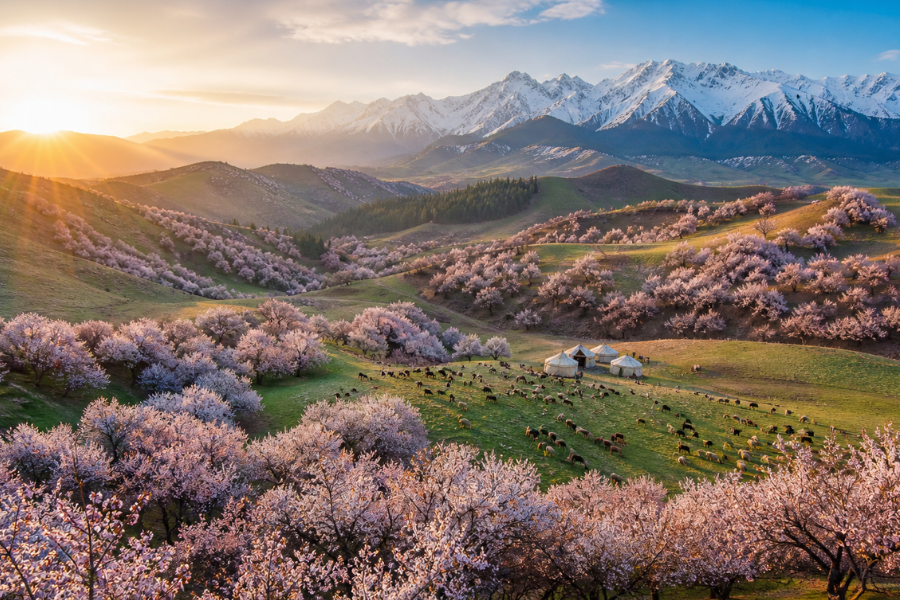
The best time to visit Apricot Valley is usually early to mid-April, when the wild apricot trees reach peak bloom.
The flowering window is short and highly seasonal. In many years, peak bloom lasts only around 7 to 10 days.
Bloom timing changes every year depending on:
Spring temperatures
Rainfall
Wind conditions
Late cold fronts
| Period | Conditions | Best For |
|---|---|---|
| Late March to Early April | Early blossoms, colder mornings, fewer visitors | Flexible travelers, photography |
| Early to Mid-April | Peak flowering season | First-time visitors |
| Late April | Blossoms begin fading, greener hillsides | Scenic driving |
| June | Summer grassland scenery, apricot harvest season | Combined Ili routes |
| Autumn | Yellow grasslands and forest colors | Quiet road trips |
Important seasonal considerations:
Visitor numbers increase quickly during peak bloom
Midday lighting is usually less favorable for photography
Rain and wind can noticeably affect flower density
Morning temperatures may still feel close to winter conditions
We recommend leaving some flexibility in your schedule if Apricot Valley is the main purpose of the trip.
Recommended Itineraries in Apricot Valley
Classic Route (3–4 Days)
A common spring route follows:
Yining → Sayram Lake → Apricot Valley → Nalati Grassland
This route covers several of the Ili region’s best-known seasonal landscapes while keeping driving distances relatively manageable.
It’s a better choice for:
First-time Northern Xinjiang visitors
Travelers with limited time
Scenic-focused itineraries
The pace is balanced, although travel days in Xinjiang are often longer than many travelers initially expect.
| Route Type | Best For | Pace | Main Advantage |
|---|---|---|---|
| Classic Route | First-time visitors | Balanced | Covers major spring scenery efficiently |
| Extended Route | Photography and deeper exploration | Slower | More flexibility for bloom and weather changes |
Extended Route (5–7 Days)
A longer version often includes:
Yining → Sayram Lake → Apricot Valley → Nalati Grassland → Tangbula Grassland → Duku Highway Ili Section
This route allows more flexibility around:
Bloom timing
Sunrise and sunset photography
Weather adjustments
Road conditions
We recommend this option for travelers who want a less rushed pace or plan to focus heavily on landscape photography.
Driving conditions in the Ili region can slow travel more than expected due to mountain roads, weather changes, and frequent photo stops.
Custom Route Option
Apricot Valley is usually visited as part of a broader Northern Xinjiang spring itinerary rather than a standalone destination.
Common route combinations include:
Apricot Valley + Sayram Lake
Apricot Valley + Nalati Grassland
Ili spring photography routes
Northern Xinjiang seasonal road trips
Because bloom timing changes yearly, fixed schedules are not always ideal.
A customized route often makes the trip more efficient, especially when combining multiple spring destinations across the Ili Valley.
How to Get to and Around Apricot Valley
Reaching the Ili Region
Most travelers first arrive in:
Urumqi
Yining
From Urumqi to Yining:
| Transportation | Approximate Time |
|---|---|
| Flight | Around 1 hour |
| High-speed train | Around 5 hours |
From Yining, the route usually continues through:
Yining → Xinyuan County → Apricot Valley
The valley is located near National Highway 218, around 2 kilometers from Turgen Township.
Transportation Challenges Inside the Region
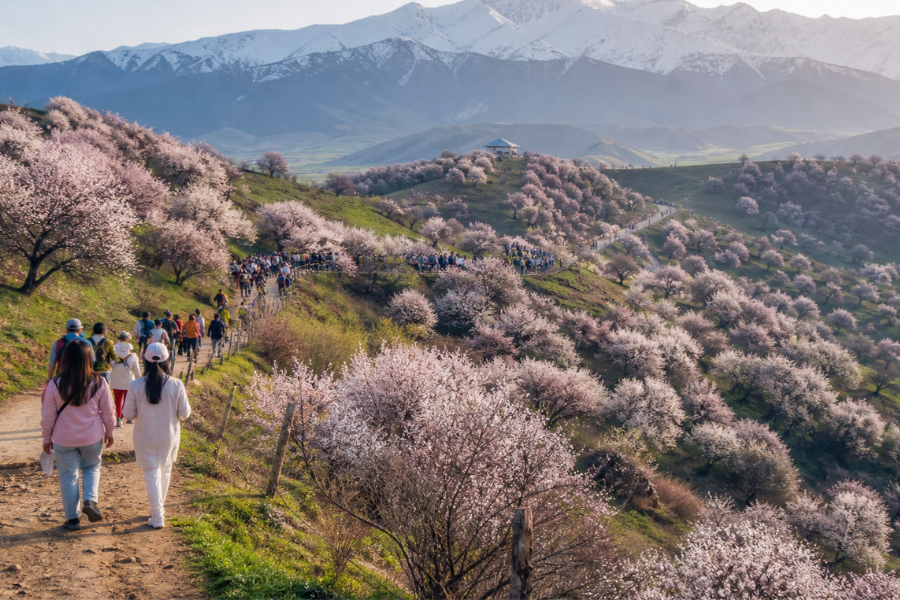
Public transportation to the valley is limited, especially during peak bloom season.
Most travelers choose:
Chartered vehicle
Self-driving
Small group tour
Private tour
Important transportation realities:
Traffic congestion is common during peak flowering days
Parking areas may become crowded by late morning
Some viewpoints require short uphill walking
Mobile signal coverage can be unstable inside the valley
Muddy ground conditions are common after rain
Sunrise photography usually requires very early departure times from nearby towns.
A private vehicle generally provides the most flexibility for weather and lighting adjustments.
Where to Stay in Apricot Valley
Accommodation near the valley remains relatively limited compared with larger tourism areas in Xinjiang.
Common options include:
Kazakh yurts
Local guesthouses
Small countryside stays
Hotels in Xinyuan County
Hotels in Yining
| Area | Best For | Notes |
|---|---|---|
| Xinyuan County | Early valley access | More practical during flower season |
| Yining | Regional transportation hub | Better restaurant and hotel selection |
| Local countryside stays | Photography-focused travelers | More limited facilities |
We recommend booking accommodation early during peak bloom season. Availability becomes limited quickly once flowering forecasts improve.
Practical Travel Tips
Photography Timing
The best lighting conditions usually appear:
Within 1–2 hours after sunrise
Around 2–3 hours before sunset
Morning mist sometimes appears after rain or overnight cooling, especially in lower valley areas.
Midday conditions often produce flatter light and heavier visitor traffic.
Clothing Recommendations
Spring weather in the Ili Valley changes quickly between morning and evening.
We recommend bringing:
Windproof jacket
Warm outer layer
Waterproof footwear
Sunscreen
Sunglasses
Layered clothing
For photography, lighter neutral colors such as white, beige, and light blue generally contrast better with the blossoms.
Walking and Terrain Conditions
Most viewing areas involve light walking rather than difficult hiking.
However:
Some photography viewpoints require moderate uphill walking
Spring terrain may become slippery after rain
Wind exposure is stronger on open hillsides
Outdoor exposure times are often longer than expected
Useful Preparation
Facilities inside the valley remain basic.
It’s useful to carry:
Drinking water
Snacks
Portable charger
Offline maps
Extra camera batteries
Checking updated bloom forecasts before departure can significantly improve trip timing.
Is a Guided or Private Tour Worth It
Apricot Valley is visually accessible but logistically less straightforward than many travelers expect.
The main challenges are usually:
Extremely short bloom periods
Rapid weather changes
Long driving distances
Limited transportation options
Accommodation pressure during peak season
Independent travelers often underestimate how quickly conditions can change across the Ili region.
A private or guided itinerary can help:
Coordinate bloom timing more efficiently
Reduce long-distance transportation stress
Adjust routes around weather conditions
Improve sunrise and sunset scheduling
Combine multiple spring destinations more realistically
This is often a better choice for first-time Xinjiang travelers or visitors planning photography-focused itineraries.
Final Thoughts
Apricot Valley works best as part of a broader Northern Xinjiang spring route rather than a single-stop trip.
The experience depends heavily on bloom timing, weather conditions, and lighting quality. Travelers who allow more flexibility in their itinerary usually have a smoother experience.
If you’re planning a spring journey through the Ili Valley, early route coordination and realistic pacing can make a significant difference.