What to Expect in Qiongkushitai Village
Qiongkushitai Village is known for alpine grasslands, Kazakh wooden houses, river valleys, and mountain scenery within the Tianshan Mountains of Ili.
Unlike heavily commercialized sightseeing destinations, travel here focuses more on scenic driving, open landscapes, and slower-paced exploration. Many travelers consider the road journey itself to be one of the main highlights.
This destination is a better fit for travelers who enjoy photography, self-driving routes, horseback riding, and deeper grassland experiences. It may feel less suitable for visitors expecting short travel distances or highly developed tourism infrastructure.
Best Time to Visit Qiongkushitai Village
The best time to visit is from June to September.
Late May to early June – snow-covered peaks remain visible above fresh grasslands, although vegetation may still appear less green
June to August – fuller grassland scenery, more stable horseback riding conditions, and longer daylight hours
Late September to early October – cooler weather and stronger autumn colors for photography
Weather conditions in the mountains can change quickly throughout the day. Wind exposure, altitude, and valley temperatures may feel colder than expected even during sunny weather.
Visitor numbers usually increase before major holidays and during peak summer travel periods. Road construction and traffic delays may extend travel times on mountain sections during busy seasons.
Recommended Itineraries in Qiongkushitai Village
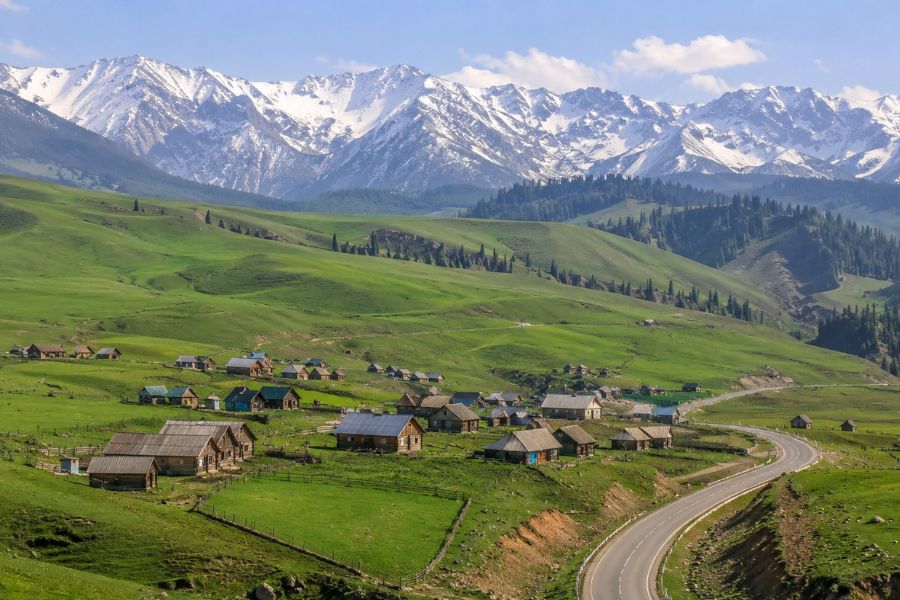
Classic Route (2 Days)
This route usually follows Yining → Tekes County → Qiongkushitai Village → Kalajun Grassland.
It covers the main alpine grassland scenery, Kazakh village atmosphere, scenic mountain roads, and short horseback riding or walking experiences around the village area.
We recommend this route for first-time Xinjiang visitors or travelers with limited time.
The pace is relatively balanced, although driving hours can still feel longer than expected because of winding mountain roads and elevation changes.
Extended Route (4–6 Days)
This route expands beyond the classic version and continues toward Nalati Grassland, Xiata Ancient Trail, or seasonal sections of the Duku Highway.
It includes more remote landscapes, longer scenic drives, and additional opportunities for photography, horseback riding, and light hiking.
This is a better choice if you prefer a slower travel rhythm or want greater flexibility for weather and lighting conditions.
A longer itinerary also helps reduce schedule pressure when road construction or mountain traffic affects travel times.
Custom Route Option
Routes around Qiongkushitai Village are highly flexible and are commonly combined with broader Ili region itineraries.
Common route combinations include:
Qiongkushitai Village + Kalajun Grassland
Qiongkushitai Village + Nalati Grassland
Qiongkushitai Village + Xiata Ancient Trail
Qiongkushitai Village + Duku Highway
A customized route can help reduce repeated driving and improve timing between mountain destinations. This becomes especially useful during changing seasonal conditions or road construction periods.
How to Get to and Around Qiongkushitai Village
Most travelers enter through Yining or Tekes County.
Driving from Tekes County usually takes around 3 to 4 hours depending on weather, road conditions, and traffic levels. The route includes multiple mountain passes, sharp curves, and continuous elevation changes.
Public transportation coverage remains limited in this area.
Self-driving – flexible for photography stops and scenic detours, but requires careful mountain driving experience
Private car or chartered vehicle – more efficient for travelers unfamiliar with Xinjiang mountain routes
Small group tours – lower planning difficulty, although schedules may feel less flexible
Many travelers underestimate the length and physical fatigue of the drive. Winding roads may also cause motion sickness for some visitors.
The road journey itself is often considered part of the experience. Several of the strongest viewpoints appear along the mountain route rather than only inside the village.
Where to Stay in Qiongkushitai Village
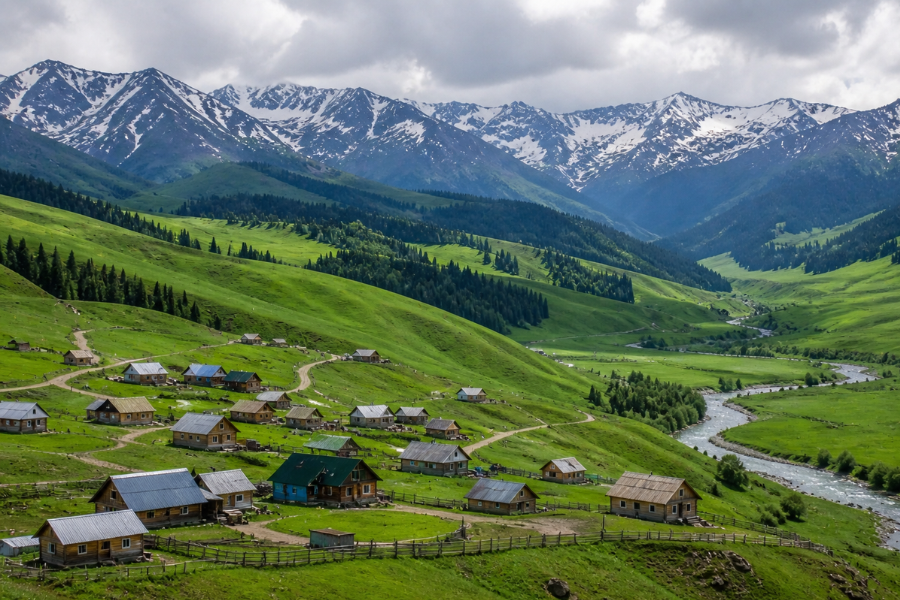
Accommodation mainly consists of Kazakh-style guesthouses, wooden cabins, and seasonal grassland camps.
Village center – more convenient for restaurants, transportation, and horseback riding arrangements
Hillside accommodations – wider valley views and quieter surroundings, although access may be less convenient
Grassland camps – more immersive scenery with simpler facilities
Accommodation availability becomes more limited during summer and holiday periods. Booking in advance is strongly recommended between June and September.
Staying overnight usually provides a better overall experience than a same-day return trip because sunrise, sunset, and early morning mountain conditions are often among the highlights.
Practical Travel Tips
Bring layered clothing because temperatures can change quickly in mountain areas
Prepare snacks and water before entering remote road sections
Road conditions may vary depending on construction activity and weather
Mountain roads require extra caution around sharp turns and narrow roadside areas
Horseback riding activities may involve moderate physical effort
Some travelers experience mild altitude discomfort during elevation changes
Early season grasslands may not yet reach peak green conditions
Motion sickness medication can be useful for travelers sensitive to winding roads
Staying near the village center improves convenience for meals and transportation
Photography-focused travelers often do not need extensive hiking because many viewpoints are already accessible near roadside hillsides
Is a Guided or Private Tour Worth It
Independent travel is possible, but this route can become physically tiring because of long driving hours, mountain terrain, and changing road conditions.
Public transportation does not cover many scenic sections efficiently, and coordinating timing between Ili grassland destinations may require careful planning.
A private tour or customized itinerary can help reduce driving fatigue and simplify transportation between mountain regions.
This option is especially useful for travelers combining Qiongkushitai Village with Kalajun Grassland, Nalati Grassland, Xiata Ancient Trail, or seasonal Duku Highway routes.
Flexible local planning often improves route efficiency because seasonal weather, construction work, and traffic conditions can change quickly in this area.
Qiongkushitai Village is best suited for travelers who enjoy alpine landscapes, scenic driving, and slower-paced grassland travel experiences.
Choosing the right season and maintaining a flexible itinerary can significantly improve the overall experience. Reviewing route options in advance is especially important for travelers exploring the Ili region independently.