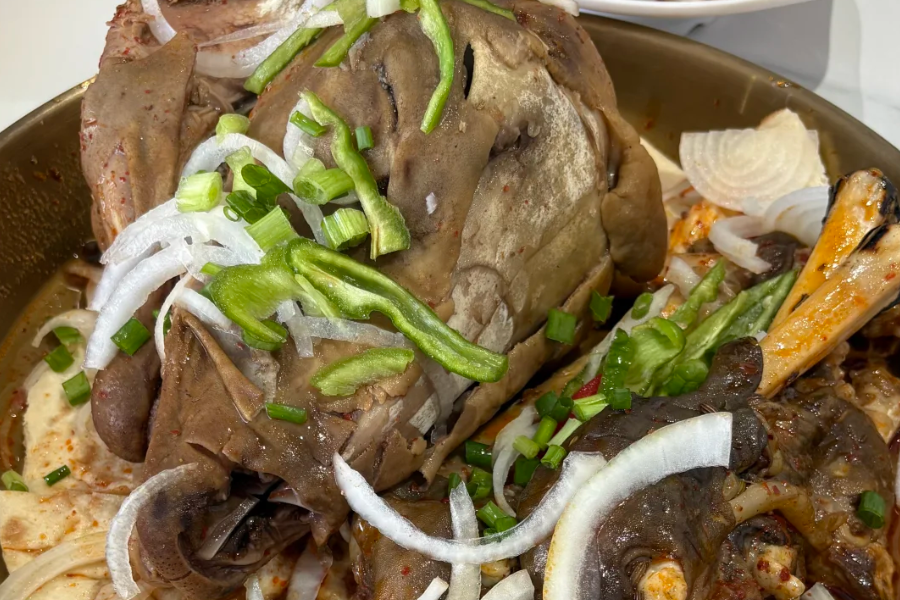
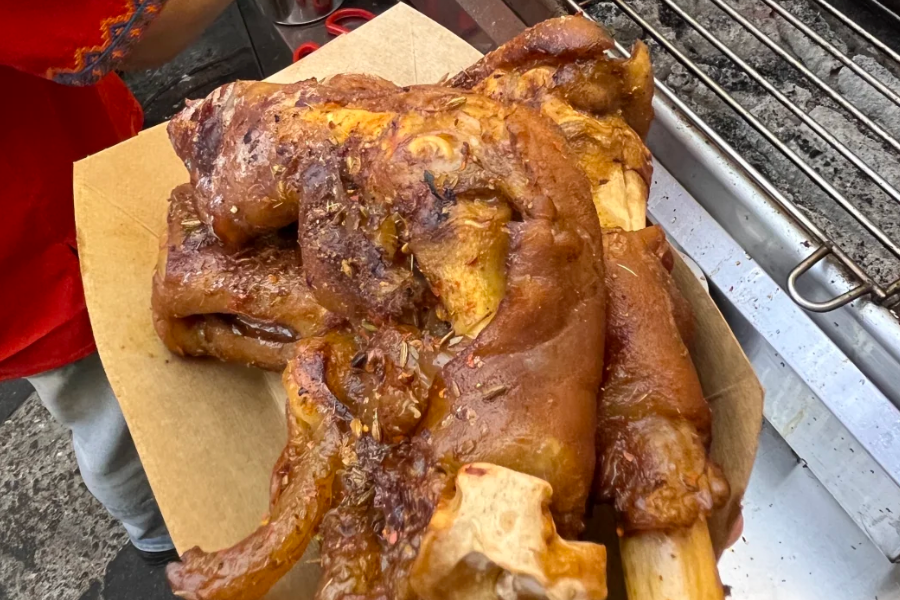
Grilled Lamb Trotters are one of the more recognizable late-night barbecue foods in Xinjiang. Travelers often notice them first in busy night markets, where large lamb trotters sit beside charcoal grills covered with cumin, chili flakes, and smoke.
This dish is less about lean meat and more about texture. The experience usually combines crispy skin, soft tendon, collagen-rich layers, and strong charcoal aroma.
For first-time visitors, it helps to know that grilled lamb trotters are very different from standard Xinjiang lamb skewers.
What Do Grilled Lamb Trotters Taste Like?
The flavor is usually heavier and richer than many travelers expect.
Most restaurants simmer the trotters for several hours before grilling them over charcoal. This preparation softens the tendon and reduces gaminess while creating the sticky, gelatin-rich texture the dish is known for.
A well-cooked version typically has:
Slightly crispy skin
Soft collagen underneath
Strong cumin aroma
Moderate to heavy chili seasoning
Smoky barbecue flavor from charcoal roasting
The lamb flavor itself is often milder than expected. Many travelers who normally avoid strong lamb dishes still find grilled lamb trotters approachable, especially when the cooking process is handled well.
Texture matters more than appearance here. The dish is designed to be chewy, sticky, and hand-held rather than clean or delicate.
Why Is This Dish So Popular in Xinjiang?
Xinjiang barbecue culture places heavy emphasis on charcoal cooking and full use of lamb cuts.
Grilled lamb trotters fit naturally into that food culture because they work well for long evening meals, shared dining, and beer-based night market gatherings.
The dish is especially common in:
You’ll usually find it near larger barbecue areas rather than formal restaurants. Busy night markets and local barbecue streets often provide the best experience because turnover stays high and grilling happens continuously.
This also helps freshness. Lamb trotters lose texture quickly once they cool down.
What Makes It Different From Xinjiang Lamb Skewers?
Many visitors assume grilled lamb trotters will taste similar to regular lamb kebabs. In reality, the eating experience is completely different.
| Dish | Main Experience | Texture | Eating Style |
|---|---|---|---|
| Grilled Lamb Trotters | Collagen-rich barbecue | Sticky, chewy, gelatinous | Hand-held, bone-focused |
| Xinjiang Lamb Skewers | Roasted lamb meat | Firm, meat-heavy | Skewer-based |
Lamb skewers are usually easier for first-time visitors.
Grilled lamb trotters are a better choice for travelers who enjoy tendon dishes, slow-braised meats, or collagen-heavy textures commonly found in some Chinese, Korean, or Central Asian cuisines.
When Is the Best Time to Try Grilled Lamb Trotters?
Evening is usually the best time.
Most barbecue districts become active after dinner, especially between 7 p.m. and midnight. The busiest period often starts later at night, particularly during summer travel season.
We recommend going slightly earlier in the evening if you prefer:
Shorter waiting times
Fresher batches
Less crowded seating
Easier ordering experience
Late-night barbecue streets in Xinjiang can become extremely busy during holidays and peak tourism months.
How Should Travelers Order It?
First-time visitors may prefer sharing one portion instead of ordering individually.
The dish is heavier and more filling than it looks, especially when combined with other Xinjiang barbecue foods. Sharing also makes it easier to try additional dishes like naan, lamb skewers, or cold yogurt drinks.
You may also want to ask about spice level before ordering. Some vendors use aggressive chili seasoning by default.
In many local barbecue restaurants, front trotters are considered softer and richer in tendon compared with rear trotters. Experienced diners sometimes request specific cuts for texture reasons.
What Can Affect the Quality?
Cooking consistency varies significantly between vendors.
Some restaurants focus mainly on spice intensity, while others prioritize slow braising and tendon texture. Tourist-heavy food streets sometimes produce less consistent results because of volume and speed.
Fresh charcoal grilling generally produces the best texture.
Poorly prepared versions can become:
Dry on the outside
Rubbery in the center
Overly greasy
Difficult to chew
Busy local barbecue restaurants usually provide a more reliable experience than stalls displaying large quantities of pre-cooked food.
What Should Travelers Pair It With?
Grilled lamb trotters work better as part of a larger Xinjiang barbecue meal rather than as a standalone dish.
Cold or lighter side items help balance the richness. Common combinations include naan, yogurt drinks, cold noodles, and local beer.
Xinjiang yogurt drinks are especially useful for reducing heaviness after collagen-rich barbecue foods.
If you plan to explore several dishes in one evening, starting with smaller portions usually creates a more balanced experience.
Is Grilled Lamb Trotters Suitable for Everyone?
Not always.
Travelers who dislike tendon texture, collagen-heavy foods, or hand-held meat dishes may struggle with the experience. The dish also feels much richer than standard barbecue meat.
However, many visitors still find it easier to approach than more traditional Xinjiang offal dishes such as rice sausage or lung-based specialties.
You may prefer grilled lamb trotters if you already enjoy:
Braised tendon dishes
Bone marrow
Slow-cooked barbecue
Sticky collagen textures
Final Thoughts
Grilled Lamb Trotters are one of the more texture-focused foods in Xinjiang night market culture. The experience depends heavily on preparation quality, charcoal grilling technique, and timing.
For travelers exploring local barbecue districts in Kashgar or Urumqi, this dish works best as part of a slower evening food experience rather than a quick snack stop.
If you’re unsure whether the texture suits your preferences, sharing a freshly grilled portion with other dishes is usually the safest starting point.