What to Expect in Kashgar Old Town Homestay
Kashgar Old Town homestays are less about hotel comfort and more about staying inside the daily rhythm of Kashgar Old City.
Most accommodations are built around traditional Uyghur-style courtyards with narrow alley entrances, rooftop terraces, carved wooden details, and shared outdoor spaces. The experience feels closer to a lived neighborhood than a standard tourism district.
This is usually a better choice for travelers who prioritize atmosphere, walkability, photography, and Silk Road culture over luxury services or polished hotel facilities.
Many visitors choose these stays because they want direct walking access to:
Id Kah Mosque
Kashgar Ancient City alleys
Tea houses
Night markets
Handicraft streets
Traditional restaurants
The strongest advantage is convenience inside the Old Town itself. Early mornings and evenings become much easier without repeated taxi transfers from newer districts of Kashgar.
At the same time, expectations should remain realistic.
Some homestays operate inside renovated historic buildings with older infrastructure. Sound insulation can be limited, Wi-Fi quality varies, and room conditions differ significantly between older courtyard sections and newer annex buildings.
Private ensuite rooms usually provide a more balanced experience than large dormitories, especially during summer peak season.
Best Time to Visit Kashgar Old Town Homestay
The best period for staying inside Kashgar Old Town is generally from May to October, when walking conditions and evening activity are more comfortable.
Summer offers the strongest Old Town atmosphere, especially after sunset when restaurants, tea houses, and rooftop terraces become more active. This is also the busiest season, particularly from July through early October.
Spring and autumn usually provide a better balance between weather and crowd levels. Daytime temperatures remain manageable, and alley photography conditions are often clearer during morning and late afternoon.
Winter stays are quieter and easier to book, but heating quality varies between properties. Some smaller courtyard guesthouses may feel colder than modern hotels in newer parts of Kashgar.
If rooftop photography is important, the most reliable evening lighting window is usually between 7:30 p.m. and 9 p.m. during warmer months.
Recommended Itineraries in Kashgar Old Town
Classic Route (3 Days)
A short Kashgar stay usually works best when centered entirely around Old Town walking access.
Most travelers begin with Kashgar Ancient City, Id Kah Mosque, nearby tea houses, and the evening night market areas. This route minimizes transportation needs and works well for first-time Xinjiang visitors with limited time.
The pace is generally relaxed rather than packed. Early mornings and evenings tend to provide the best atmosphere inside the Old Town.
Extended Route (5–7 Days)
Longer stays often combine Kashgar Old Town with Karakul Lake, Tashkurgan, or sections of the Karakoram Highway.
This option works better for travelers interested in Silk Road routes, photography, or overland travel planning. Many homestays become informal meeting points for travelers sharing transportation toward western Xinjiang destinations.
Staying inside the Old Town before and after longer highway trips also makes logistics easier, especially for early departures and flexible scheduling.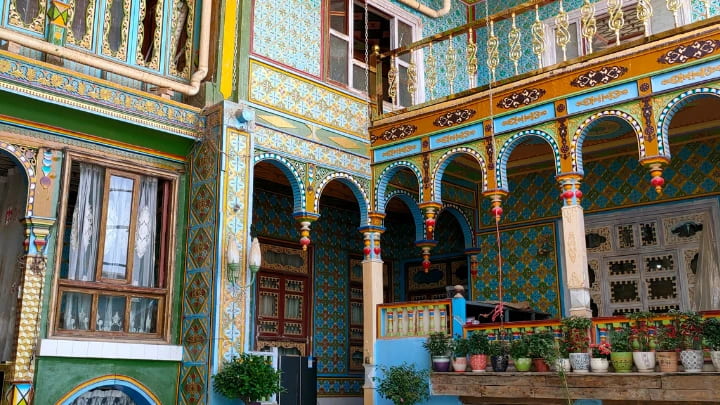
Custom Route Option
Kashgar can be combined naturally with several different Xinjiang travel styles.
Some travelers connect Kashgar with southern Silk Road cities, while others extend toward Pamir Plateau routes or cross-border overland itineraries. A customized schedule usually becomes more useful when balancing transport timing, accommodation quality, and seasonal road conditions.
This is particularly helpful for travelers trying to combine cultural experiences with remote western Xinjiang landscapes in one itinerary.
How to Get to and Around Kashgar Old Town
Most travelers arrive through Kashgar Laining International Airport or Kashgar Railway Station. Transfers to the Old Town area usually take around 10 to 20 minutes depending on traffic and checkpoint conditions.
The larger challenge begins after arriving near the Old Town itself.
Many homestays are hidden inside narrow alleys, courtyard entrances, or small passageways that vehicles cannot access directly. First-time visitors often spend extra time locating accommodations, especially after dark.
Offline maps, Chinese-language addresses, and direct communication with hosts generally reduce arrival confusion.
Walking is usually the most practical way to explore the area once inside the Old Town. Most major attractions, food streets, and tea houses are concentrated within a relatively compact area.
Public transportation works for reaching newer districts of Kashgar, but private transfers or taxis generally become more efficient for airport arrivals, railway departures, or longer regional routes . 
Where to Stay in Kashgar Old Town
Accommodation choice inside Kashgar Old Town affects the overall experience more than many travelers expect.
Older courtyard dormitories usually provide the strongest social atmosphere, but they also tend to have the most noise, shared bathroom congestion, and inconsistent facilities.
Travelers who prioritize rest and comfort generally prefer:
Ensuite private rooms
Newer annex buildings
Smaller boutique-style guesthouses
Upper-floor rooms away from central courtyards
Rooftop-view rooms are especially popular during summer because evening temperatures become more comfortable after sunset.
Staying directly inside the busiest alley zones improves walkability but may increase nighttime noise. Smaller guesthouses closer to the edge of the Old Town often provide a quieter balance while remaining within walking distance of major attractions.
Practical Travel Tips
Bring realistic expectations before booking inside Kashgar Old Town.
The experience usually prioritizes location and atmosphere over standardized hotel services.
Useful preparation often includes:
Earplugs for courtyard noise
Sandals for shared bathroom areas
Portable chargers or power banks
Offline maps before arrival
Advance booking during summer
Travelers sensitive to noise should avoid large backpacker hostels during peak season.
Respecting residential space is also important inside the Old Town. Many alleys remain active living neighborhoods rather than tourism-only areas.
Is a Guided or Private Tour Worth It
Independent travel inside Kashgar Old Town is generally manageable because most attractions remain walkable.
The more difficult part is usually coordinating transportation beyond Kashgar itself.
Routes toward Karakul Lake, Tashkurgan, or remote Silk Road sections often involve long distances, limited schedules, and changing road conditions. Language barriers and checkpoint procedures can also slow travel planning for first-time Xinjiang visitors.
A private driver or organized route usually becomes more useful when combining multiple western Xinjiang destinations in one trip. This option can reduce transfer uncertainty and make timing more predictable, especially on shorter itineraries.
For travelers mainly focused on the Old Town itself, independent stays often work well as long as accommodation expectations remain realistic and bookings are confirmed in advance.
Kashgar Old Town homestays are ultimately less about room quality and more about access to everyday Old City life. Planning carefully before arrival usually creates a much smoother experience, especially during busy travel periods.