What to Expect in the Kashgar Opening Ceremony Show
The Kashgar Opening Ceremony Show takes place at the entrance of Kashgar Old City and functions as a symbolic opening moment for entering the Ancient City. Rather than a large-scale theater production, the experience feels closer to a public cultural welcome ceremony built around Silk Road imagery, Uyghur music, and crowd interaction.
Most visitors remember the atmosphere more than the performance length itself. Drums, traditional costumes, dancers, fruit-carrying performers, and the opening of the city gate create a strong sense of arrival, especially for travelers visiting southern Xinjiang for the first time.
The ceremony is relatively short, usually around 20 minutes. Travelers expecting a long staged production may find it more commercialized and tourism-focused than anticipated, but it still works well as the starting point of a Kashgar Old City walking route.
This experience is generally a better fit for travelers who enjoy public cultural performances, photography, and lively street environments. Travelers looking for quiet sightseeing or less crowded experiences may prefer exploring the Old City later in the afternoon instead.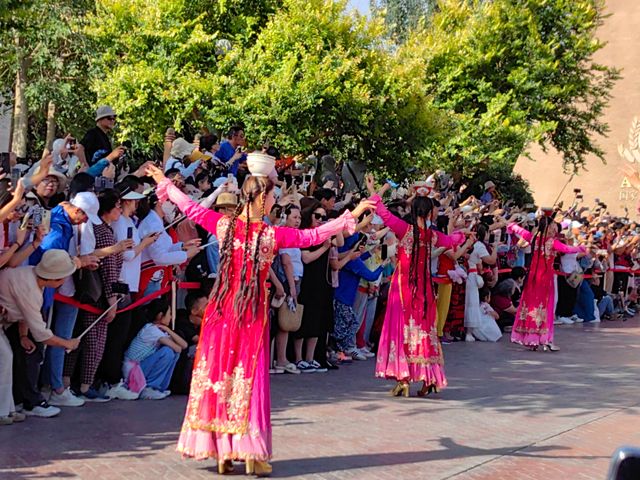
Best Time to Visit the Kashgar Opening Ceremony Show
Morning is usually the best time to visit, especially for first-time travelers planning to explore Kashgar Old City afterward.
Most performances begin around 10:30 a.m., although seasonal adjustments occasionally happen. Visibility is generally clearer in the morning, and the brighter lighting makes architectural photography easier inside the Ancient City after the ceremony ends.
Crowds begin building much earlier than many travelers expect. During holidays and peak summer season, the viewing area near the gate often becomes heavily congested 30 to 40 minutes before the official start time. Travelers arriving exactly at showtime usually struggle to find clear viewing positions.
Some evening sessions are occasionally available around sunset. These tend to offer cooler temperatures and softer lighting, although visibility may become less consistent depending on weather and crowd conditions.
Recommended Itineraries in Kashgar
Classic Route (1 Day)
For most first-time visitors, the ceremony works best as the opening section of a full Kashgar Old City walking day rather than a standalone attraction.
A balanced route usually begins with the Kashgar Opening Ceremony Show in the morning, followed by a slower walk through the main streets of Kashgar Old City. After the performance ends, many visitors naturally move into the city together with performers and crowds, which becomes part of the experience itself.
From there, the route typically continues toward tea houses, handicraft alleys, courtyard areas, and nearby food streets before reaching Id Kah Mosque later in the day. This pacing generally feels more manageable than trying to combine too many distant attractions in one itinerary.
Extended Route (2–3 Days)
Travelers spending multiple days in Kashgar usually experience the Old City differently once the daytime crowds begin thinning.
An extended route allows more time for evening photography, smaller residential alleys, local markets, and slower cultural exploration beyond the main tourist streets. Many travelers also combine Kashgar with regional routes toward the Pamir Plateau, Karakul Lake, or Tashkurgan afterward.
This option is usually better for photography-focused travelers or visitors interested in southern Xinjiang cultural environments beyond the most visited public areas.
Custom Route Option
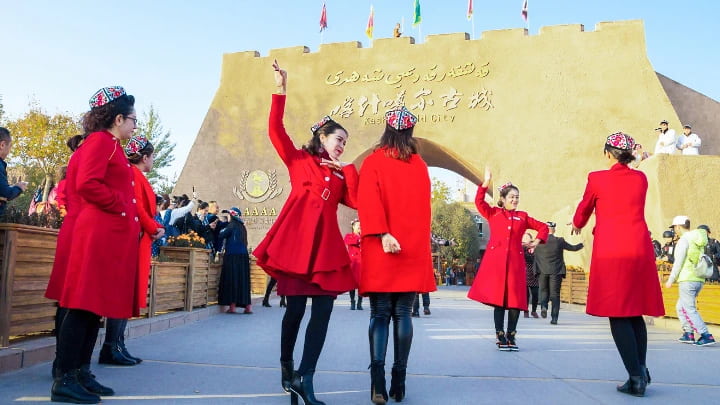
Kashgar itineraries are relatively flexible because most Old City areas connect naturally by foot. Some travelers prioritize architecture and photography, while others focus more on food streets, tea houses, or cultural interaction.
Customized route planning becomes more useful during peak season, when crowd density, transportation timing, and walking fatigue begin affecting the overall experience more noticeably. A more organized arrival plan can reduce repeated walking and improve timing around the busiest sections of the Ancient City.
How to Get to and Around Kashgar
Most travelers arrive through Kashgar Laining International Airport or Kashgar Railway Station. From central Kashgar, the Ancient City entrance area is usually reachable within 15 to 30 minutes by taxi or ride-hailing service.
Inside Kashgar Old City, walking is the primary way to explore. Streets are narrow, crowded, and designed more for pedestrian movement than vehicle access.
Independent travel inside Kashgar itself is generally manageable. However, travelers continuing toward remote southern Xinjiang destinations often find transportation planning more difficult than expected because of long driving distances and limited public transit flexibility.
In these situations, a private vehicle or organized route often saves time and reduces transfer uncertainty, especially for travelers combining multiple regional stops within a short schedule.
Where to Stay in Kashgar
For most first-time visitors, staying near Kashgar Old City is the most practical choice.
Early access to the ceremony becomes easier, and returning to the hotel during crowded afternoon periods is more convenient. This area also works well for travelers planning evening photography or slower nighttime walks after daytime tour groups begin leaving.
Travelers focusing on regional Silk Road routes sometimes stay closer to transportation corridors before early departures toward Pamir Plateau destinations. However, for travelers mainly exploring Kashgar itself, the Old City area usually provides the best balance between accessibility and atmosphere.
Practical Travel Tips
Arriving at least 30 minutes early usually improves the experience significantly, especially for photography and visibility near the gate area. Morning sunlight becomes strong quickly in the open square, so lighter clothing, water, and sun protection are often necessary during warmer months.
Many travelers underestimate how crowded the entrance area becomes before the ceremony starts. Large camera setups can make movement difficult once crowd density increases, and wide-angle photography generally works better than portrait framing unless positioned very close to the performers.
Leaving immediately after the performance ends often creates the most stressful crowd movement of the morning. A slower transition into the Ancient City usually feels more comfortable and allows better opportunities for photography once the main crowd begins spreading through the streets.
Is a Guided or Private Tour Worth It
The Kashgar Opening Ceremony Show itself is simple to access, but the broader travel experience around it can become more complicated during busy periods.
Timing, viewing position, transportation coordination, and route pacing all affect the experience more than the performance duration itself. This is particularly true for travelers visiting Kashgar for the first time or combining the Old City with longer southern Xinjiang routes afterward.
Independent travel works well for many visitors. However, travelers with limited time often find that organized transportation or private route planning reduces logistical pressure and creates a more balanced itinerary throughout Kashgar and the surrounding region.
For most travelers, the ceremony works best as the opening atmosphere of a larger Kashgar experience rather than the main attraction itself. Careful timing usually matters more than spending longer at the performance area.