Many travelers arrive in Kashgar expecting lamb skewers, naan, and large barbecue platters. What surprises many first-time visitors is how often pigeon dishes appear in local restaurants, especially around older neighborhoods and late-night dining streets.
Roasted pigeon is not treated as a novelty dish in Kashgar. In many small restaurants, it’s one of the main specialties alongside pigeon soup and hand-pulled noodles.
For travelers planning a food-focused Xinjiang itinerary, understanding how Kashgar-style pigeon dishes differ from classic Cantonese roast pigeon helps avoid mismatched expectations.
Why Kashgar Roast Pigeon Feels Different From Cantonese Roast Squab
Traditional Cantonese roast pigeon developed inside the Cantonese siu mei system alongside roast goose, char siu, and crispy pork belly. The focus is usually on thin crispy skin, balanced seasoning, and controlled roasting techniques.
Kashgar pigeon dishes move in a different direction.
The flavor profile is usually smokier, meatier, and less sweet. Many restaurants use either open-fire grilling or naan-pit roasting instead of the lacquered Cantonese roasting style commonly seen in Guangzhou or Hong Kong.
Travelers familiar with Hong Kong roast squab may notice that Kashgar versions feel more rustic and concentrated in flavor. The meat is often firmer, with stronger roasted aroma and more noticeable charcoal flavor.
What Roast Pigeon Actually Tastes Like
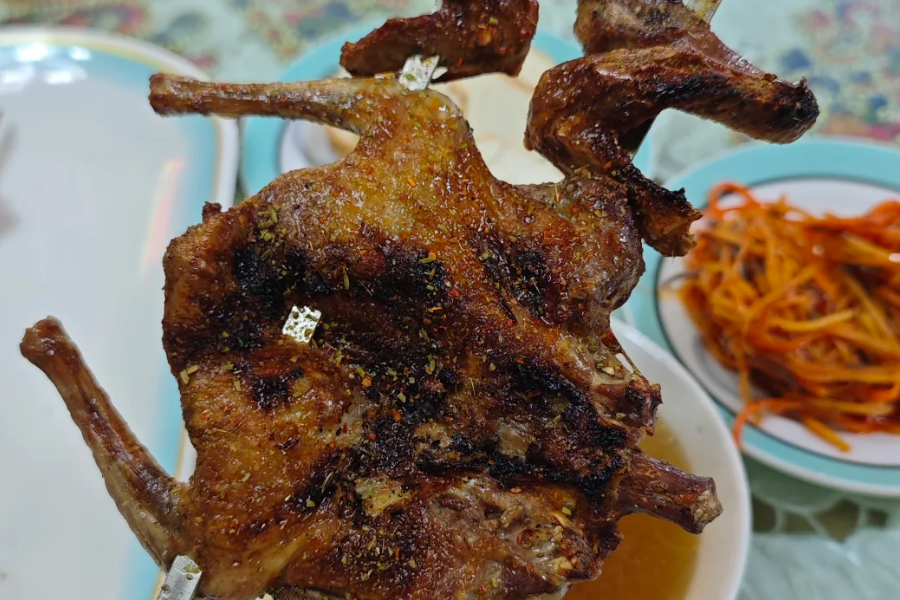
Many first-time visitors describe pigeon as somewhere between chicken and duck, though the comparison is incomplete.
The texture is usually denser than chicken, less fatty than duck, and more concentrated in flavor than both. Smaller local pigeons in Kashgar often produce less meat but stronger taste intensity.
Restaurants that specialize in roast pigeon usually focus heavily on skin texture. Well-prepared versions develop thin crisp skin while keeping the interior relatively moist.
Open-fire cooking tends to create stronger smoke flavor and slightly drier texture. Naan-pit roasting usually produces softer meat and more even cooking.
If you’re eating multiple barbecue meals in one evening, naan-pit roasted pigeon often feels easier to balance with soup dishes.
Why Pigeon Soup Becomes Important During Xinjiang Food Trips
Many travelers underestimate how physically heavy Xinjiang food routes can become after several days.
Continuous barbecue meals, lamb fat, spicy skewers, and grilled breads can create noticeable fatigue, especially during summer travel in Southern Xinjiang.
This is one reason pigeon soup becomes surprisingly important in Kashgar dining culture.
The broth is usually lighter and less oily than many regional barbecue dishes. Some travelers begin ordering pigeon soup not as a main attraction, but as a way to slow the pace of heavier meals.
Restaurants commonly pair pigeon soup with noodles or naan, creating a more balanced dining rhythm compared with nonstop barbecue dining.
Where Travelers Usually Find Better Pigeon Restaurants
Some of Kashgar’s better-known pigeon restaurants are not located on the most tourist-heavy streets.
Many are hidden inside residential-style alleys or secondary roads near Kashgar Old City. Navigation may not always feel straightforward for first-time visitors.
Online rankings also do not always reflect current local dining patterns. In Kashgar, smaller specialty restaurants often provide more consistent food quality than large tourist-oriented restaurants with oversized menus.
A simple restaurant focusing mainly on roast pigeon, soup, noodles, and a few barbecue dishes can sometimes deliver a much stronger local dining experience.
The Late-Night Dining Atmosphere in Kashgar
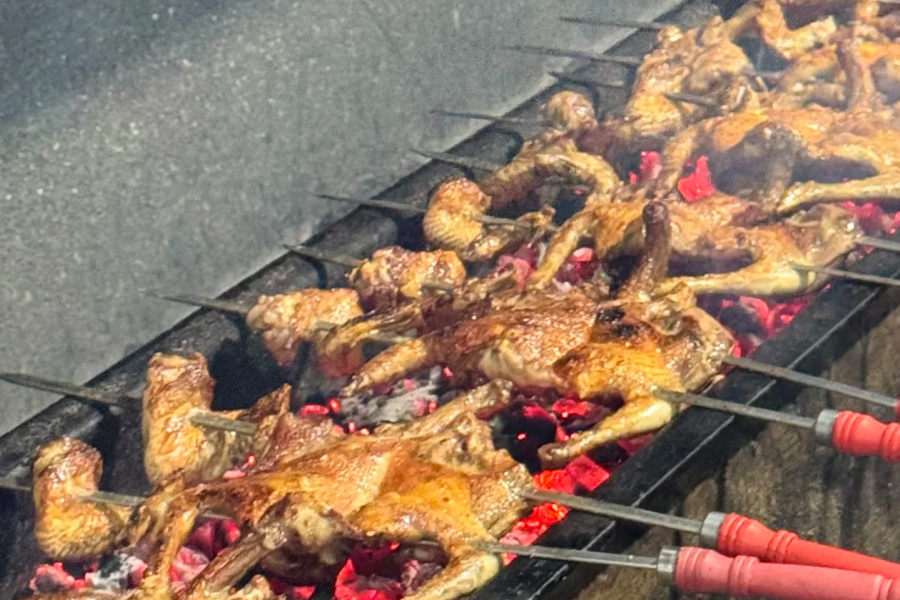
Kashgar’s late-night food culture feels different from many larger Chinese cities.
Restaurants often stay busy well into the evening, particularly around local neighborhoods instead of commercial shopping areas. Many pigeon restaurants operate with simplified menus and relatively direct service styles.
Travelers expecting polished hospitality may initially find the atmosphere more functional than welcoming. In practice, most local diners care more about food freshness, roasting quality, and consistency than restaurant presentation.
Starting dinner slightly earlier usually creates a more comfortable experience and helps avoid peak evening crowds.
Common Mistakes Travelers Make
Many visitors assume Kashgar cuisine is dominated entirely by lamb dishes. In reality, pigeon dishes form a recognizable part of the city’s local food identity and are commonly recommended alongside lamb skewers and naan.
Another common mistake is trying too many heavy barbecue dishes within a short period of time.
A more balanced meal rhythm usually works better:
combine roast pigeon with soup or noodles
avoid stacking multiple oily barbecue dishes together
leave flexibility for late-night food stops
prioritize local recommendations over map rankings
Travelers also often spend too much time searching for internet-famous restaurants while overlooking smaller neighborhood spots nearby.
What to Know Before Adding Roast Pigeon to Your Kashgar Food Route
Roast pigeon works best as part of a broader food experience rather than a standalone attraction.
For shorter Kashgar itineraries, combining roast pigeon, pigeon soup, naan, and evening market snacks usually creates a more balanced introduction to local dining culture than focusing entirely on barbecue-heavy meals.
You may also want to keep dinner schedules flexible. Popular local restaurants can become crowded quickly, especially near Kashgar Old City during peak travel periods.
For travelers unfamiliar with local navigation, a more organized food route can reduce unnecessary searching time and improve overall evening travel efficiency.
Hiorient Travel generally recommends treating Kashgar food exploration as a pacing experience rather than a checklist. Some of the most memorable meals are often found in smaller neighborhood restaurants with limited menus and long-standing local regulars.