Dry-fried noodles are one of the most common everyday meals in Xinjiang Uyghur Autonomous Region. Unlike wetter Chinese stir-fried noodles, the Xinjiang version focuses on high-heat wok cooking, chewy hand-pulled noodles, and concentrated seasoning.
For travelers exploring local food beyond lamb skewers and naan bread, this is one of the easiest Xinjiang noodle dishes to start with.
What Are Xinjiang Dry-Fried Noodles
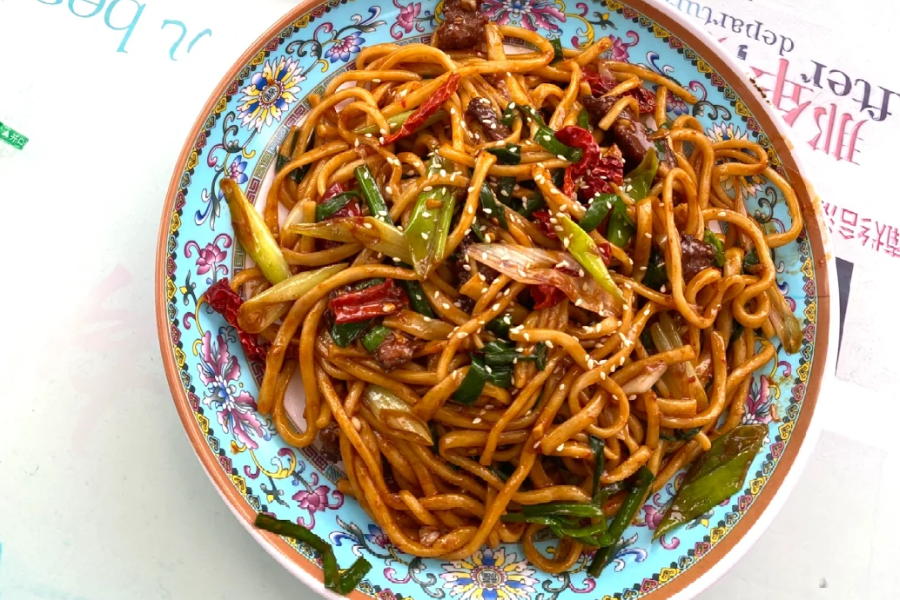
Xinjiang dry-fried noodles are a stir-fried noodle dish made with hand-pulled noodles, lamb or beef, peppers, onions, garlic, and chili.
The defining feature is the “dry-fried” cooking style. Cooks continue stir-frying over high heat until most moisture disappears, creating stronger wok aroma and slightly crisp noodle edges.
Many local restaurants use freshly pulled noodles similar to Laghman, which gives the dish a thicker and more elastic texture than standard fried noodles found elsewhere in China.
Why the Flavor Feels Different
The dish is known for concentrated seasoning rather than heavy sauce.
Most restaurants use:
Cumin
Xinjiang dry chili
Garlic
Soy sauce
Pepper powder
Lamb fat or cooking oil
The flavor usually feels:
Smokier
Drier
Spicier
More oil-based
More aromatic
Compared with ordinary stir-fried noodles, the wok fragrance is noticeably stronger.
Dry-Fried Noodles vs. Regular Stir-Fried Noodles
| Feature | Xinjiang Dry-Fried Noodles | Regular Stir-Fried Noodles |
|---|---|---|
| Texture | Dry and chewy | Softer and wetter |
| Cooking method | Longer high-heat frying | Standard stir-frying |
| Main aroma | Wok-char fragrance | Sauce-based aroma |
| Spice level | Usually stronger | Usually milder |
| Regional identity | Distinct Xinjiang style | Broad Chinese style |
Travelers familiar with Cantonese or eastern Chinese fried noodles often notice the Xinjiang version feels heavier and more filling.
What to Expect When Ordering
Portions are usually large enough for a full lunch or dinner.
The noodles absorb oil and seasoning quickly during cooking, which makes the dish feel denser than it initially appears. Restaurants often serve it very hot directly from the wok.
First-time visitors should expect:
Strong cumin aroma
Noticeable chili oil
Thick hand-pulled noodles
Oily but dry texture
Filling portions
The dish works especially well during colder weather or after long travel days.
Who Will Probably Enjoy This Dish
This dish is usually a good choice for:
Travelers who enjoy cumin-heavy flavors
Visitors comfortable with spicy food
People looking for filling local meals
Travelers interested in everyday Xinjiang restaurant culture
It may feel too oily or too heavy for travelers who prefer lighter meals or mild seasoning.
Best Places to Try It in Xinjiang
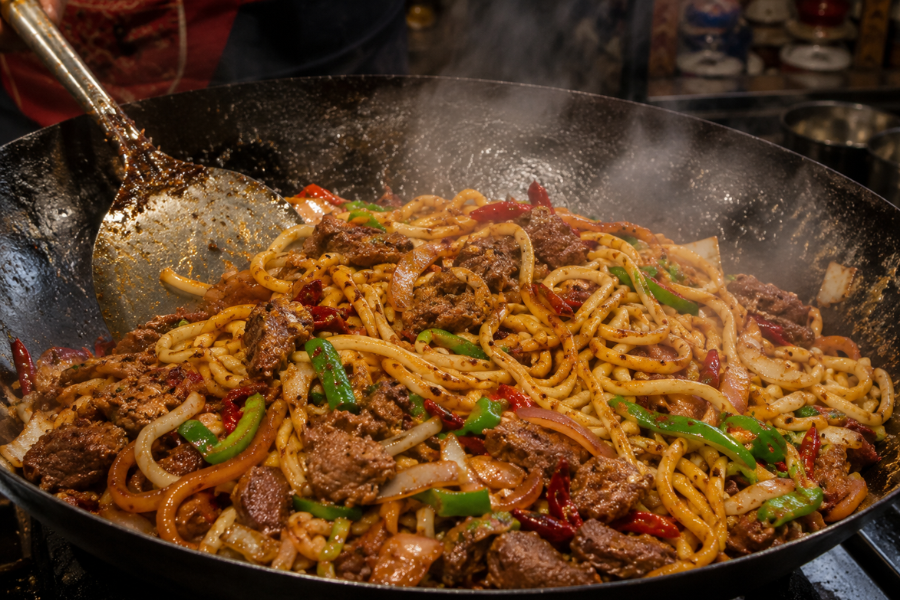
Good versions are widely available across Urumqi, Kashgar, Aksu, and Yining.
In most cases, ordinary local noodle restaurants are a better choice than tourist-focused restaurants.
Travelers often find reliable versions:
Near residential districts
Around local bazaars
Inside neighborhood Uyghur restaurants
In small family-run noodle shops
At late-night street-side restaurants
Flavor differences between restaurants are usually related to:
Oil level
Spice intensity
Meat quantity
Wok-char level
The overall cooking style remains relatively consistent across Xinjiang.
Practical Ordering Tips
Start with standard spice level
Xinjiang chili seasoning can feel stronger than expected for first-time visitors.
Share one portion if ordering multiple dishes
Dry-fried noodles are heavier than they appear, especially when combined with barbecue or rice dishes.
Pair the dish with lighter sides
Common combinations include:
Lamb skewers
Cold yogurt drinks
Xinjiang milk tea
Pickled vegetables
Cold side dishes
This helps balance the oil and spice level.
Allow extra dining time
The noodles are often served immediately after high-heat cooking and remain extremely hot for several minutes.
Why Many Travelers Reorder It
Many Xinjiang dishes are tied to specific restaurants or regional specialties. Dry-fried noodles are different because they are available almost everywhere and remain relatively consistent.
That combination of accessibility, strong flavor, and filling portions makes the dish easy to revisit during longer Xinjiang trips.
For many travelers, it becomes one of the most practical everyday meals while moving between cities across Xinjiang.
Final Travel Tip
Travelers often focus heavily on lamb skewers, naan bread, and barbecue when planning food experiences in Xinjiang. Dry-fried noodles are sometimes overlooked because they appear visually simple.
In practice, the dish reflects several important parts of Xinjiang food culture at once — hand-pulled noodles, high-heat wok cooking, cumin-heavy seasoning, and large sharing-style portions.
If you want to experience everyday restaurant culture in Xinjiang rather than only famous tourist foods, this is one of the most useful dishes to try early in the trip.