What Travelers Should Know Before Trying Grilled Chicken Rack
Grilled Chicken Rack is one of the more distinctive night market barbecue foods found in northern China and parts of Xinjiang.
The dish focuses less on large meat portions and more on charcoal aroma, spice-heavy seasoning, crispy texture, and the experience of eating around the bones.
For travelers exploring Xinjiang night markets, this is usually a better choice for relaxed evening food walks, late-night snacks, or barbecue-focused food routes rather than formal dining.
What Grilled Chicken Rack Actually Is
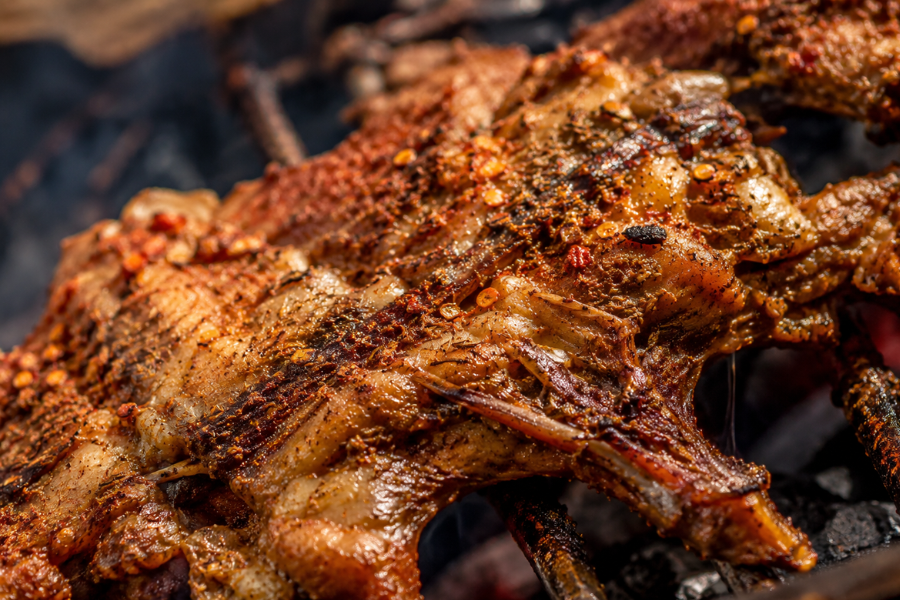
Chicken rack refers to the remaining chicken frame after most large meat sections have been removed.
The rack still contains:
Bone-side meat
Chicken skin
Connective tissue
Fat around the bones
In China, this developed into a separate street food category rather than being treated as leftover ingredients.
Common English menu names include:
Grilled Chicken Rack
Charcoal Grilled Chicken Frame
Spicy Cumin Chicken Rack
“Chicken carcass” is technically accurate but rarely used on menus because it sounds too industrial for restaurant presentation.
Why It Fits Xinjiang Barbecue Culture So Well
Xinjiang barbecue food strongly emphasizes:
Charcoal grilling
Cumin seasoning
Chili powder
Smoky aroma
Bone-side meat flavor
Because of this, grilled chicken rack matches the flavor structure commonly found in Xinjiang street barbecue.
Xinjiang versions usually include:
Cumin
Chili flakes
Xinjiang pepper powder
Sesame
Onion
Heavy charcoal smoke flavor
Compared with standard fried chicken rack styles found in other cities, Xinjiang versions often taste smokier and more spice-forward.
What the Taste and Texture Are Like
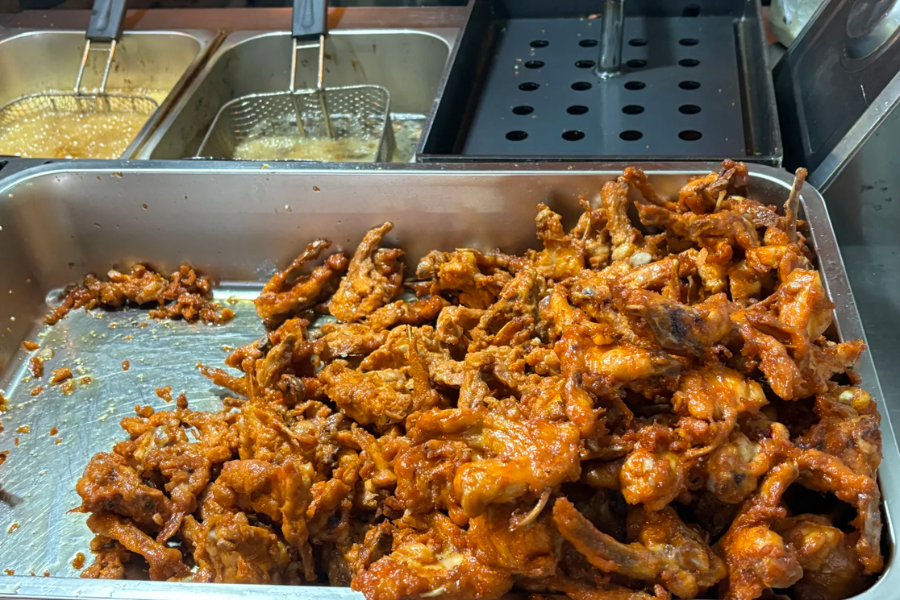
The flavor focus comes from seasoning and charcoal aroma rather than meat quantity.
Most versions have:
Crispy outer skin
Chewy meat around the bones
Visible chicken fat richness
Strong cumin and chili flavor
Smoky aftertaste from charcoal grilling
Some stalls also add sweet-sour seasoning or vinegar-based sauce to reduce the heaviness of grilled fat.
This combination makes the food feel richer and more suitable for colder evening weather.
How It Is Usually Cooked
Most stalls follow a similar preparation process:
Marinate or lightly braise the chicken rack
Brush oil onto the surface
Add cumin and chili powder
Grill over charcoal
Press repeatedly on a hot iron plate
The iron-plate pressing process helps remove excess fat while creating a thinner and crispier texture.
Some bones become partially crunchy after extended grilling, which makes the eating experience noticeably different from ordinary barbecue chicken.
Where Travelers Usually Find It
Grilled chicken rack is especially common in:
Xinjiang night markets
University-area food streets
Residential evening barbecue zones
Northeastern Chinese barbecue districts
In Urumqi, smaller neighborhood barbecue streets often provide a more local atmosphere than larger tourist-oriented food courts.
Some stalls operate from temporary roadside setups rather than permanent storefronts. Finding them may require extra walking time, especially during busy evenings.
When to Go and What to Expect
This type of food becomes most popular after dinner time.
Queues usually increase significantly:
After 7 p.m.
On weekends
During colder months
Near universities and busy residential districts
Many travelers underestimate how long the waiting process can take.
Preparation speed is often slower because each chicken rack is grilled and pressed individually rather than batch-cooked in advance.
Waiting 30 to 60 minutes at highly popular stalls is not unusual.
Cold weather, outdoor smoke, crowded sidewalks, and charcoal aroma often become part of the overall night market experience.
Which Travelers Usually Enjoy It Most
This experience is generally better for travelers who:
Enjoy local street food culture
Prefer barbecue-heavy flavors
Want a more local evening atmosphere
Have flexible nighttime schedules
Enjoy slower night market exploration
It may be less suitable for travelers who:
Prefer quick meals
Dislike outdoor smoke exposure
Avoid oily or heavily seasoned foods
Have tightly scheduled evening itineraries
Practical Tips Before Visiting
We recommend arriving earlier in the evening to reduce queue time.
Other useful tips include:
Wear warm clothing during colder seasons
Allow additional waiting time during weekends
Order multiple portions together
Bring cashless payment options commonly used in China
Combine the visit with nearby barbecue or noodle stalls
This type of food is usually more enjoyable when included as part of a longer evening food route rather than a single-destination meal.
What Foods Pair Well With Grilled Chicken Rack
Many travelers combine grilled chicken rack with:
Xinjiang barbecue skewers
Stir-fried noodles
Roasted naan
Cold side dishes
Local beer
A structured evening food route can help reduce unnecessary transportation time between different night market areas.
University districts and residential food streets often provide a more balanced experience than major tourist night markets with heavier crowds.
Is Grilled Chicken Rack Worth Trying in Xinjiang
For travelers interested in Xinjiang night market culture, grilled chicken rack offers a practical introduction to the region’s barbecue flavor style.
The experience focuses less on refined dining and more on charcoal smoke, spice layering, roadside atmosphere, and slow-paced evening eating culture.
If you are planning a Xinjiang evening food route, this dish works well as part of a broader barbecue-focused night market experience.