Xinjiang Meatball Soup is one of the most common local comfort foods in northern Xinjiang, especially in Urumqi and Changji.
Unlike heavily spiced Xinjiang dishes centered around chili or grilled lamb, this meal focuses on beef broth, fried beef meatballs, noodles, vegetables, and bread. It is filling, warming, and closely connected to everyday local dining rather than tourist-focused restaurants.
Many travelers encounter it for breakfast or brunch after visiting local markets, mosque districts, or older neighborhoods in Xinjiang cities.
What Is Xinjiang Meatball Soup
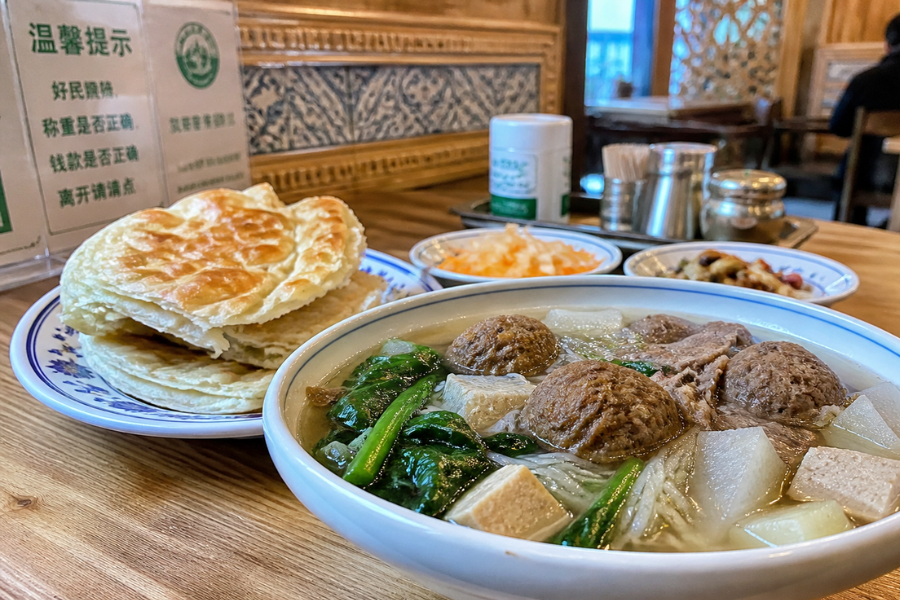
Xinjiang Meatball Soup, sometimes translated simply as Meatball Soup, is a halal-style beef soup widely served in local breakfast restaurants and traditional Muslim eateries across Xinjiang.
A typical bowl usually includes:
Fried beef meatballs
Beef bone broth
Vermicelli or sweet potato noodles
Beef slices
Spinach
Frozen tofu
Jelly cubes
Mushrooms
Some restaurants also add black pepper, especially during colder months.
The dish is commonly paired with oil tower bread, a layered Xinjiang flatbread that absorbs broth and balances the richness of the beef ingredients.
Why the Dish Feels Much Heavier Than Expected
Many first-time visitors assume this is a light soup-based meal.
In reality, Xinjiang Meatball Soup is usually dense enough to function as a complete meal. Even standard portions often include multiple meatballs, noodles, vegetables, tofu, and bread.
Combination versions may also add extra beef bones, stuffed meatballs, or lamb skewers.
We recommend starting with a standard portion instead of a deluxe combination on your first visit.
This is especially helpful if you plan to try several Xinjiang dishes in one meal.
The Meatballs Are the Core of the Experience
The meatballs themselves are usually the highlight.
Unlike lighter boiled meatballs found in many northern Chinese soups, Xinjiang versions are commonly prepared in four steps:
Beef is minced into a paste
The meat is seasoned and shaped by hand
The meatballs are fried first
They are later simmered in beef broth
This process creates a firmer outer layer with deeper beef aroma while keeping the inside relatively tender.
Travelers who enjoy stronger beef texture and heavier northern-style comfort food often prefer this style.
What the Broth Actually Tastes Like
Travelers Often Expect a Stronger Soup Base
Some visitors are surprised that the broth is not heavily salted or intensely seasoned.
Traditional versions usually focus more on:
Beef aroma
Slow-cooked stock
Pepper warmth
Ingredient freshness
rather than concentrated seasoning.
If you normally prefer spicy or strongly savory soups, the flavor may initially feel mild.
Non-spicy eaters, however, often find Xinjiang Meatball Soup easier to approach than many other regional specialties.
Why Oil Tower Bread Matters
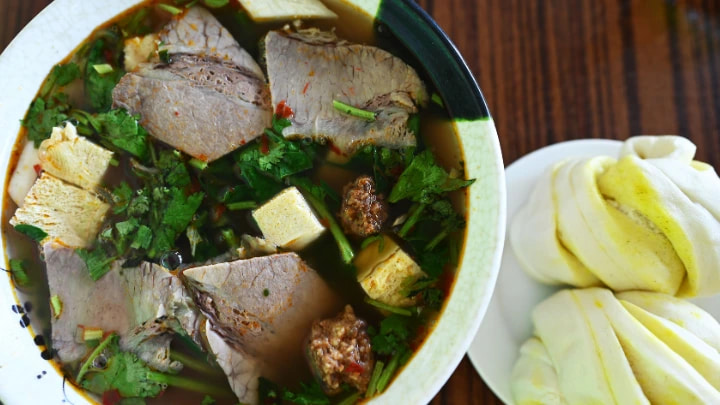
Oil tower bread is one of the most common side dishes served with Xinjiang Meatball Soup.
The layered bread absorbs broth while helping balance the richness of the meat-heavy ingredients.
Many travelers find the meal feels more complete and easier to finish when the bread is included.
Skipping it can make the soup feel overly dense, especially in larger portions.
Where Travelers Commonly Try It
One of the best-known local chains is Forty-Nine Meatball Soup.
The restaurant originally began near kilometer marker 49 on National Highway 312 in Changji during the 1980s. It later expanded into one of the region’s most recognizable local soup chains.
Travelers most commonly encounter the dish in:
Local breakfast shops
Traditional halal restaurants
Neighborhood soup restaurants
Older residential districts
Morning dining streets near bazaars or markets
This is not primarily a social media-driven “check-in” food. It remains closely tied to everyday local dining culture in Xinjiang.
Best Time to Try Xinjiang Meatball Soup
This dish is especially popular during:
Winter
Cold mornings
Evening meals
Post-travel recovery meals
The high serving temperature and dense ingredients make it particularly suitable after outdoor sightseeing or long-distance travel days.
During summer afternoons, some travelers may find the meal too heavy.
Morning or evening dining usually provides a better experience.
How Xinjiang Meatball Soup Differs From Other Chinese Meatball Soups
| Style | Xinjiang Meatball Soup | Northern Chinese Clear Meatball Soup |
|---|---|---|
| Broth | Beef bone broth | Light clear broth |
| Meatballs | Fried beef meatballs | Boiled meatballs |
| Flavor profile | Peppery and beef-focused | Mild and clean |
| Portion size | Heavy and dense | Relatively light |
| Side pairing | Oil tower bread or naan | Usually standalone |
| Dining role | Full meal | Soup dish |
The fried beef meatball technique and dense ingredient combination create the biggest difference.
Practical Ordering Tips for First-Time Visitors
Start with a small or standard portion
Share dishes if trying multiple Xinjiang foods
Order oil tower bread together with the soup
Leave room for lamb skewers or naan
Expect the meal to feel heavier than the name suggests
Try it during colder weather for a more balanced experience
Travelers exploring Xinjiang beyond famous dishes like big plate chicken or barbecue skewers often find Meatball Soup provides a more everyday view of local food culture.
For visitors with limited time, combining a morning market visit with a traditional breakfast stop in Urumqi or Changji can be an efficient way to experience this part of Xinjiang’s daily dining culture without adding major detours to a broader itinerary.