Xinjiang Mixed Noodles, also known as Laghman or 拉条子, is one of the most common everyday meals in Xinjiang. The dish combines hand-pulled wheat noodles with freshly stir-fried meat and vegetables served on top.
For many travelers, it offers a more practical introduction to daily Xinjiang food culture than formal banquet dishes or tourist-focused specialties.
What Xinjiang Mixed Noodles Actually Are
Despite the English name “mixed noodles,” this dish is not a cold noodle preparation.
The structure usually includes:
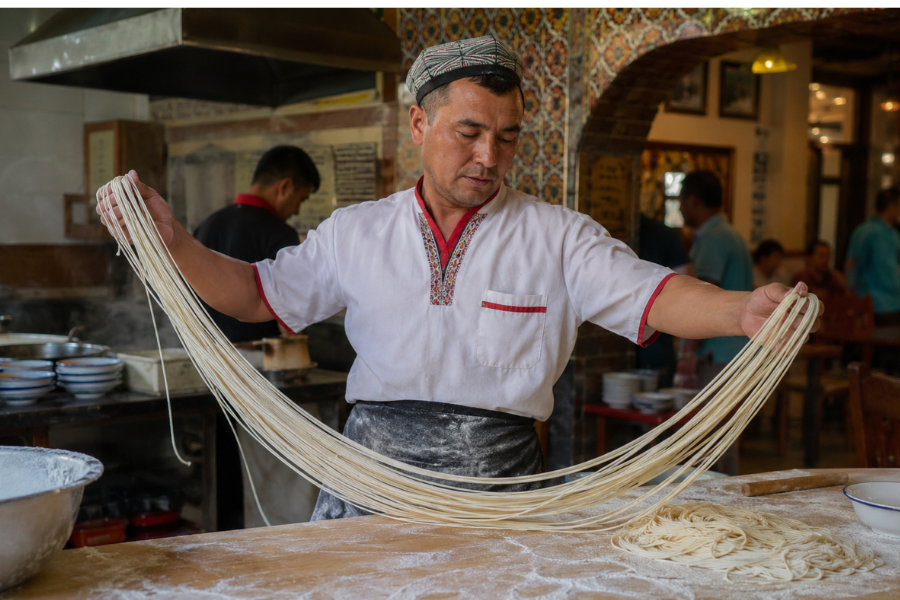
Fresh hand-pulled noodles
Stir-fried meat and vegetables
Thick savory sauce poured over the noodles before serving
The dish is served hot and eaten immediately after cooking.
In most restaurants, noodles and toppings are prepared separately to maintain texture and prevent overcooking.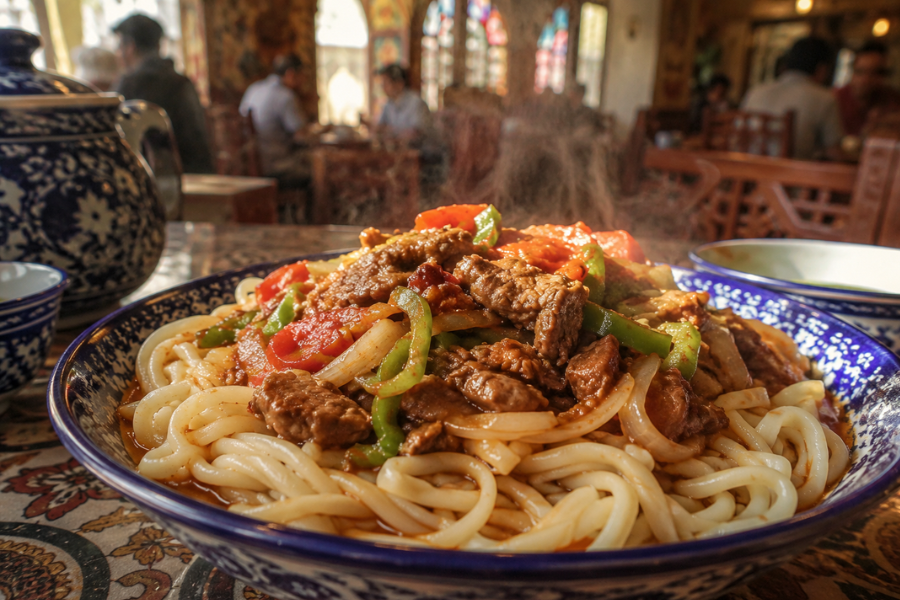
Why This Dish Matters in Xinjiang Food Culture
Xinjiang Mixed Noodles is closely connected to Uyghur daily dining habits and Silk Road food traditions.
In cities such as Kashgar, Urumqi, and Yining, locals commonly eat it as a full lunch or dinner rather than as a snack.
Many travelers consider it one of the most representative “daily life” foods in Xinjiang because it appears in ordinary neighborhood restaurants instead of only tourist dining areas.
What the Noodles Taste Like
The overall flavor profile is rich, savory, and slightly tomato-based.
Most versions include: Beef or lamb Tomato ,Onion ,Green pepper ,Carrot Cabbage ,Sometimes potato
The noodles are usually thick, elastic, and chewy. Texture is one of the main factors that separates average restaurants from better local shops.
The sauce is typically oil-rich but balanced with vegetable sweetness and tomato acidity.
Common Versions Travelers Will See
Beef Mixed Noodles
This is the most common version and usually the safest starting point for first-time visitors.
The flavor is balanced and less gamey than lamb-based versions.
Lamb Mixed Noodles
This version has a stronger meat aroma and heavier oil profile.
You may prefer this option if you already enjoy lamb-heavy Central Asian or Northwest Chinese cuisine.
Over-Oil Beef Noodles
This is one of the best-known upgraded regional styles.
The beef is first stir-fried separately in hot oil before being combined with vegetables and sauce, creating a deeper savory flavor and thicker texture.
Many travelers associate this version with the strongest “Xinjiang restaurant” experience.
Spicy Versions
Some restaurants add chili paste or dried chili during stir-frying.
Spice levels vary significantly between restaurants, especially outside southern Xinjiang.
How to Judge Quality in a Restaurant
Not all Xinjiang Mixed Noodles deliver the same experience.
The biggest quality differences usually come from:
Noodle elasticity
Sauce consistency
Freshness of stir-frying
Meat tenderness
Oil balance
A better restaurant usually prepares noodles fresh and serves the dish immediately after cooking.
If noodles sit too long before serving, they often lose elasticity and absorb too much oil from the sauce.
Fresh wok cooking also affects aroma and overall texture balance.
Where Travelers Should Try It
You can find Xinjiang Mixed Noodles across most cities in Xinjiang, but the experience differs by region.
| Location | Typical Style | Best For |
|---|---|---|
| Kashgar | Richer seasoning, stronger regional flavor | Traditional local experience |
| Urumqi | Wider restaurant variety | First-time travelers |
| Yining | Slightly lighter flavor balance | Travelers preferring less oil-heavy meals |
Smaller local restaurants often provide a more authentic version than large tourist-oriented dining halls.
However, restaurants with visible hand-pulled noodle preparation usually provide more consistent quality.
Best Time to Eat Xinjiang Mixed Noodles
This dish works best as:
Lunch after morning sightseeing
Early dinner during colder seasons
A filling single-meal option during long travel days
Because the portion is usually large and oil-rich, many travelers prefer not to eat it late at night.
Fresh serving temperature also matters. The experience is generally better when eaten immediately after preparation.
What First-Time Travelers Should Expect
The first few bites are often highly satisfying due to the combination of chewy noodles and concentrated sauce.
However, the richness can become heavy toward the end of the meal, especially for travelers unfamiliar with Northwest Chinese cuisine.
Pairing the meal with: Tea,Simple vegetable dishes,Lighter side dishes can create a more balanced dining experience.
Common Mistakes Travelers Make
Many travelers focus only on meat quantity and overlook noodle quality.
In practice, noodle texture usually determines whether the meal feels authentic and balanced.
Another common misunderstanding is assuming all versions taste similar. In reality, restaurants vary significantly in: Sauce depth, Oil level,Saltiness, Noodle thickness Stir-fry technique.
Even within the same city, experiences can differ noticeably.
How Xinjiang Mixed Noodles Compare With Other Noodle Dishes
| Dish | Main Style | Eating Experience |
|---|---|---|
| Xinjiang Mixed Noodles | Stir-fried topping over noodles | Rich, chewy, filling |
| Lanzhou Beef Noodles | Clear soup noodles | Lighter and broth-focused |
| Italian pasta dishes | Sauce-coated noodles | Smoother and less oily |
| Cold mixed noodles | Chilled preparation | Light and refreshing |
Xinjiang Mixed Noodles generally deliver a heavier and more savory experience than most noodle dishes travelers may already know.
Practical Ordering Tips
For first-time travelers, beef versions are usually easier to adapt to than stronger lamb-based versions.
Restaurants with high local customer turnover during lunch hours often provide fresher noodle preparation.
If you prefer lighter flavors, you may want to:
Request less oil when possible
Avoid extra chili additions
Pair the meal with vegetable dishes or soup
Travelers sensitive to heavy seasoning may also prefer sharing one portion between two people alongside additional dishes.
Final Travel Insight
Xinjiang Mixed Noodles is less about presentation and more about understanding how people in Xinjiang eat in everyday life.
Its value comes from the balance between hand-pulled noodles, stir-fried toppings, and fresh preparation timing rather than from any single ingredient.
For travelers planning a food-focused Xinjiang itinerary, this dish is often one of the easiest and most practical ways to experience regional dining culture beyond tourist menus.
If you are building a broader Xinjiang food route, we recommend combining Xinjiang Mixed Noodles with lighter regional dishes to create a more balanced travel dining experience throughout the trip.