Xinjiang Stir-fried Rice Noodles, often called Xinjiang Chao Mifen, are one of the most recognizable street foods in Xinjiang. The dish is especially common in Urumqi, Yining, Changji, and local night markets across the region.
Unlike lighter southern rice noodle dishes, this version focuses on thick sauce, chewy noodles, chili fragrance, and a heavier stir-fried texture. Many travelers use it as an introduction to Xinjiang street food culture because it combines Northwest Chinese flavors with Sichuan-style chili seasoning.
What Makes Xinjiang Stir-fried Rice Noodles Different
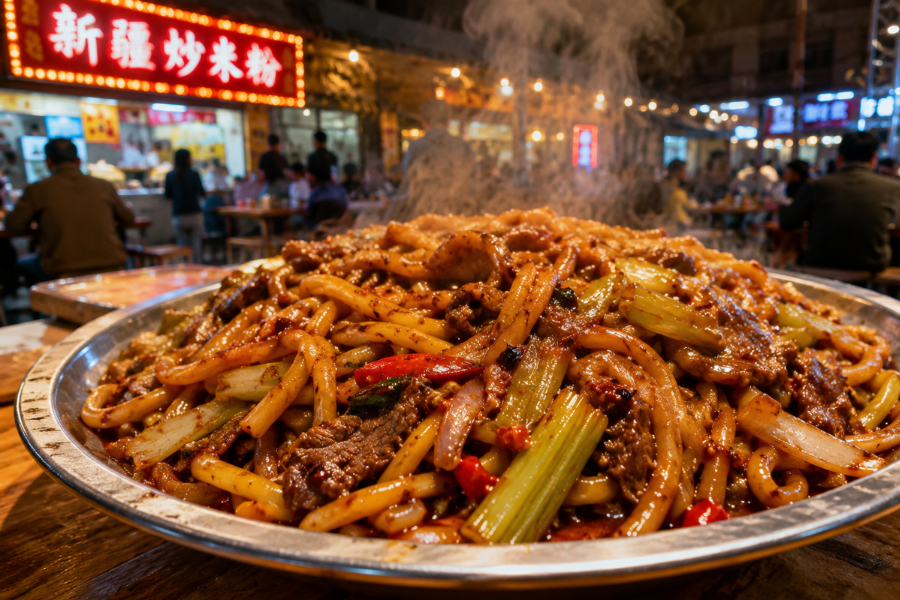
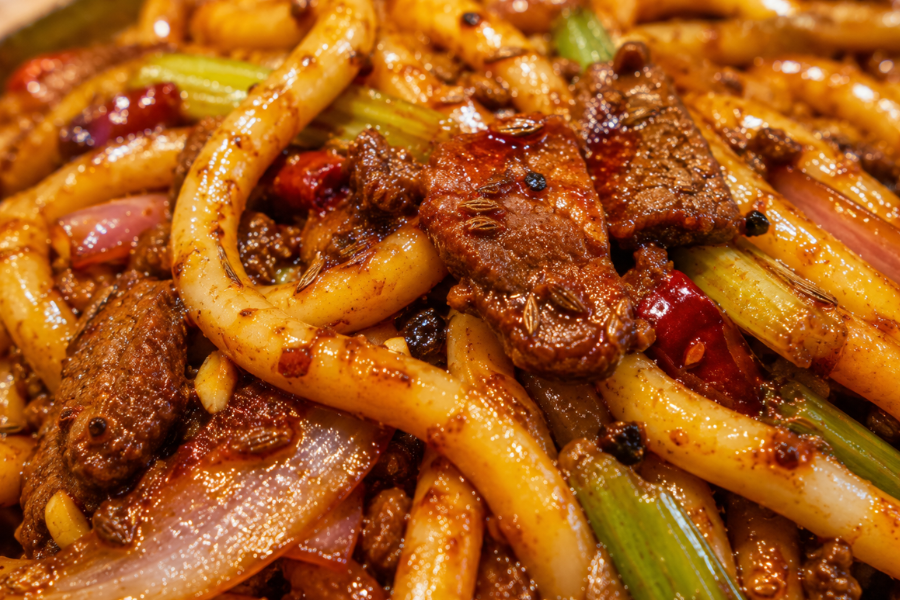
Xinjiang-style rice noodles are usually much thicker than standard Chinese rice noodles, closer in width to udon. The thicker shape helps the noodles absorb sauce more effectively during stir-frying.
Most versions include
Thick rice noodles
Beef or chicken
Celery and onion
Chili paste and Doubanjiang
Tomato-based sauce elements
Cumin and Sichuan pepper
The overall flavor usually feels:
Rich and oily
Spicy but sauce-focused
Slightly fermented or tangy
Heavier than southern Chinese noodle dishes
Many travelers expect extreme heat, but local versions often emphasize sauce aroma and savory depth more than pure spiciness.
How Spicy Is Xinjiang Chao Mifen
Most restaurants offer three spice levels:
Mild
Medium
Extra Hot
We recommend starting with medium spice. Many local diners believe lower spice levels reduce the balance of the sauce because chili fragrance plays an important role in the overall flavor.
Travelers who already enjoy Sichuan-style dishes or spicy instant noodles usually adapt well to medium spice.
If your spice tolerance is lower, you may prefer:
Chicken instead of beef
Less oily versions
Shops with lighter tomato-based sauces
Smaller portions shared with other dishes
How It Differs From Other Rice Noodle Dishes
| Feature | Xinjiang Stir-fried Rice Noodles | Southern Chinese Fried Rice Noodles |
|---|---|---|
| Sauce | Thick and concentrated | Lighter coating |
| Texture | Chewy and dense | Softer |
| Spice Level | Medium to very spicy | Usually mild |
| Oil Content | Higher | Lower |
| Flavor Style | Chili, cumin, fermented sauce | Soy sauce focused |
Travelers familiar with Cantonese fried rice noodles are often surprised by how wet and sauce-heavy Xinjiang versions feel.
What Travelers Usually Notice First
Texture is often the biggest surprise.
Many visitors expect a dry fried noodle dish, but authentic Xinjiang versions are softer, stickier, and more heavily coated in sauce.
Common traveler reactions include:
“The noodles are much chewier than expected”
“The chili aroma is stronger than the heat”
“The sauce feels rich and concentrated”
“It becomes more addictive after a few bites”
Freshly cooked portions usually provide the best experience. The noodle texture and sauce aroma are noticeably stronger when eaten immediately at the restaurant instead of through takeaway delivery.
Regional Differences Inside Xinjiang
Many travelers notice stronger flavor variation in Xinjiang itself compared with versions outside the region.
Differences commonly include:
Noodle thickness
Chili paste style
Oil richness
Sourness level
Herbal spice intensity
Some restaurants focus on aggressive chili oil flavor, while others emphasize fermented sauce depth and savory balance.
Urumqi versions are often richer and heavier, while smaller local shops sometimes use stronger spice blends and thicker sauces.
What to Order With Xinjiang Stir-fried Rice Noodles
The dish is commonly eaten as:
A quick lunch
A late-night meal
Winter comfort food
Night market street food
Popular combinations include:
Stir-fried rice noodles with naan
Stir-fried rice noodles with lamb skewers
Milk tea
Ice yogurt drinks
Cold yogurt drinks are especially popular because they help balance the oil and spice intensity.
Practical Ordering Tips for Travelers
A few practical tips can improve the experience significantly.
We recommend:
Starting with medium spice
Eating the dish fresh on-site
Ordering drinks in advance if you are sensitive to chili
Focusing on sauce style rather than only spice level
Trying local Xinjiang shops instead of heavily adapted chain versions
This dish works best for travelers who enjoy rich, oily, heavily seasoned comfort food. Travelers looking for lighter noodle dishes may find it too dense or overpowering.
Why Xinjiang Stir-fried Rice Noodles Became Popular Across China
The dish reflects Xinjiang’s fusion-style food culture.
Its flavor combines:
Northwest Chinese spice preferences
Sichuan-style chili sauces
Central Asian influence
Tomato-heavy savory cooking commonly found in Xinjiang cuisine
Today, Xinjiang Chao Mifen is common not only in Xinjiang cities but also in university districts, food streets, and night markets across China.
For travelers exploring Xinjiang food culture beyond kebabs and naan, this is one of the most practical dishes to try early in the trip. It is especially common during colder evenings, busy night markets, and casual local gatherings where heavier, spicy street food is part of everyday dining culture.