What to Expect From a Kazakh Yurt Stay
A Kazakh yurt stay in Xinjiang is primarily a grassland cultural experience rather than a standard hotel stay.
These traditional portable dwellings are still connected to the nomadic lifestyle of Kazakh pastoral communities across regions such as Nalati Grassland, Sayram Lake, and Bayinbuluk Grassland. Many travelers describe the experience as a combination of open grassland scenery, slower daily rhythms, traditional meals, and quiet mountain environments rather than luxury accommodation.
Unlike hotels, yurts are designed around practicality and mobility. Interiors are often simple, with floor-style bedding, low tables, woven carpets, and shared family-style spaces. Some camps provide upgraded facilities such as private bathrooms or electric heating, while others remain much more basic.
Most travelers find that the surrounding environment becomes the strongest part of the stay. Horses grazing near camp areas, wind moving through the grasslands, and quiet evenings under open skies usually leave a stronger impression than the yurt itself.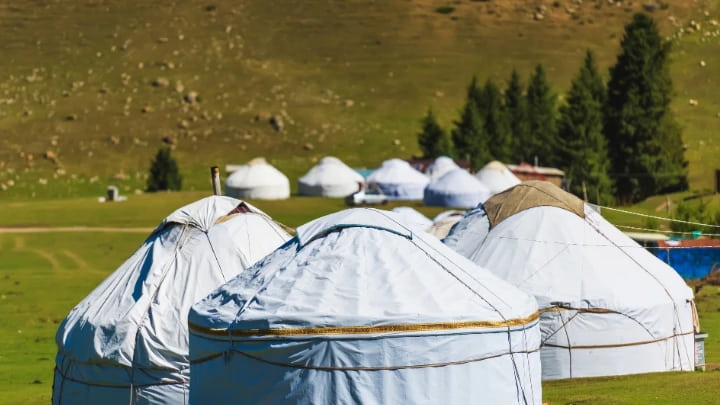
Best Time for a Kazakh Yurt Stay
The most practical season for yurt stays is generally from May through September.
Late spring and early summer usually provide greener grasslands and milder daytime temperatures. July and August are considered the peak nomadic tourism season, when grasslands become more active and cultural festivals are more common across northern Xinjiang.
September tends to feel quieter and cooler, with softer grassland colors and fewer tourists in major pasture regions.
Weather conditions can change quickly at higher elevations. Strong winds, cold evenings, and sudden rainstorms are common even during summer months, especially in open grassland areas without tree cover. Many visitors underestimate how cold nights can become inside traditional yurts.
Winter stays are relatively uncommon because extreme cold and wind conditions make many grassland camps less practical to operate.
Recommended Itineraries for a Kazakh Yurt Stay
Classic Route (1 Night)
Most travelers include a single overnight yurt stay as part of a larger northern Xinjiang itinerary.
This usually works best when combined with grassland routes around Nalati, Sayram Lake, or Bayinbuluk. A one-night stay provides enough time to experience evening camp atmosphere, traditional meals, sunrise scenery, and slower-paced grassland life without requiring major comfort compromises.
This option is especially suitable for first-time visitors to Xinjiang who want cultural immersion while still maintaining a balanced travel pace.
Extended Route (2–3 Nights)
Longer yurt stays generally work better for travelers interested in photography, horse-riding activities, or slower grassland travel.
Spending multiple nights allows more flexibility around weather conditions, sunrise and sunset photography, and interactions with local pastoral culture. The experience often becomes more rewarding once travelers adjust to the slower rhythm and simpler facilities of the grassland environment.
This option is more suitable for travelers comfortable with rural conditions and reduced infrastructure convenience.
Custom Route Option
Kazakh yurt stays are usually integrated into broader northern Xinjiang self-drive or grassland itineraries rather than booked as isolated accommodation experiences.
Many travelers combine yurt stays with mountain drives, horse-riding routes, or alpine meadow photography schedules. Because camp quality, weather conditions, and facility standards vary widely between regions, a more customized travel plan often creates a smoother overall experience.
This becomes especially important during peak summer season when popular grassland camps can book out much earlier than expected.
How to Get to and Around Kazakh Yurt Areas
Most yurt camps are located in remote grassland regions with limited direct public transportation access.
Travelers usually arrive by private vehicle, organized tours, or self-driving routes from nearby cities such as Yining. Road conditions during summer are generally manageable, although travel times across pasture regions are often longer than expected due to mountain roads, weather changes, and slower rural driving conditions.
Transportation flexibility is important because many camps are spread far apart and roadside services may remain limited in more remote areas.
Self-driving generally provides the most flexibility for photography stops, sunrise timing, and camp selection across northern Xinjiang grassland routes.
Where to Stay During a Kazakh Yurt Experience
Accommodation standards vary significantly between camps.
Some tourism-oriented camps near major scenic areas provide upgraded yurts with private bathrooms, electricity, heating systems, and stronger infrastructure support. Smaller family-run camps and remote nomadic settlements are often much simpler and may include shared bathrooms, weaker electricity supply, and more limited facilities.
Travelers prioritizing comfort usually experience better conditions in established scenic-area camps, while travelers seeking stronger cultural immersion may prefer quieter and less-developed grassland locations.
Choosing the right camp often has a larger impact on the experience than the specific destination itself.
Practical Travel Tips
Layered clothing is important even during summer because nighttime temperatures on the grasslands can drop quickly after sunset. Wind exposure is also much stronger than many travelers expect in open alpine pasture regions.
Facilities should not be compared directly with urban hotels. Many camps remain rural in operation, with weaker internet access, shared facilities, limited charging options, and minimal sound insulation. Travelers expecting luxury-style accommodation sometimes experience disappointment if expectations are not adjusted beforehand.
Booking in advance is usually necessary during peak summer season, especially around Nalati and other well-known grassland regions where accommodation demand rises quickly.
Is a Guided or Private Tour Worth It
Independent travelers can organize yurt stays themselves, although coordination becomes more complicated in remote pasture regions where language barriers, transportation timing, and camp quality differences are harder to evaluate in advance.
Private grassland routes or guided itineraries often create a smoother experience because they help coordinate accommodation standards, driving schedules, weather timing, and transportation logistics across large rural areas. This is especially useful for travelers combining multiple grassland destinations within limited travel time.
A more organized route also reduces uncertainty around camp conditions, altitude adjustment, and evening arrival timing in remote mountain regions.
For many travelers, the strongest memory of a Kazakh yurt stay is not the accommodation itself, but the atmosphere surrounding it — wind moving across open grasslands, horses near the camp, quiet night skies, and the slower rhythm of pastoral life across northern Xinjiang.