Ice Cream Brick is easy to overlook in Xinjiang because it rarely appears as a “must-try local specialty,” yet many travelers end up remembering it after long summer travel days, especially when moving between city walks, night markets, and roadside food stops where cold desserts become more about recovery and convenience than novelty.
Unlike soft-serve or individually wrapped ice cream bars, this style uses a dense block format that melts slowly and feels noticeably heavier, which changes both the texture and the way people consume it during travel. In most cases, the experience is less about flavor complexity and more about strong dairy richness, cooling effect, and portion satisfaction.
What Makes Ice Cream Brick Different From Regular Ice Cream
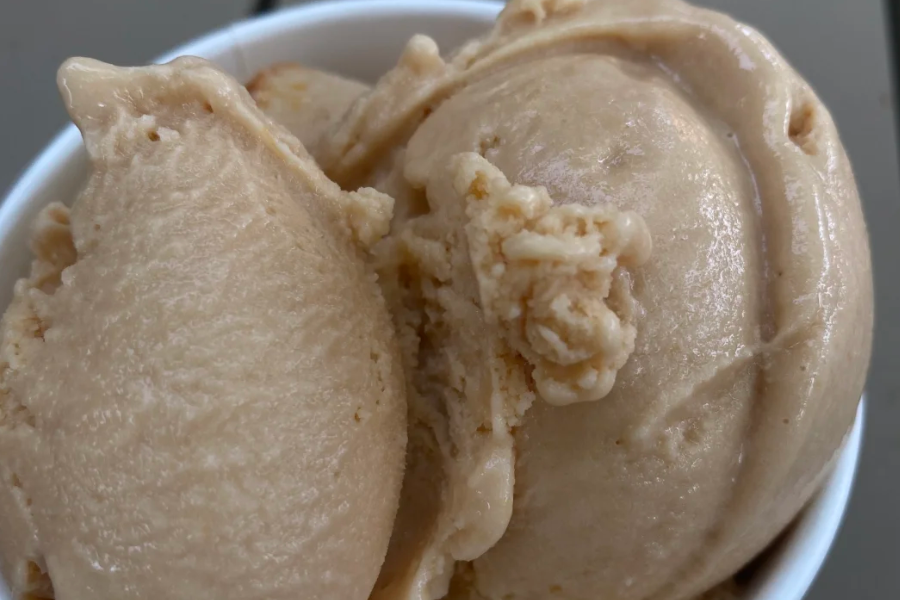
The biggest difference is density.
Most Ice Cream Brick products use a compact frozen structure with less air inside, which creates a firmer texture and a slower melt compared to lighter commercial ice cream formats commonly found in convenience stores. The result feels closer to a frozen dairy block than a whipped dessert, especially in milk-based versions that prioritize creaminess over added toppings or layered flavors.
Travelers often expect something similar to packaged Western-style tubs or soft ice cream, but the eating experience is usually more substantial and filling, particularly in Xinjiang where dairy-forward desserts already tend to lean richer due to regional milk preferences and climate conditions.
The rectangular “brick” shape also changes how it is served. Some shops slice it into thick sections, while others allow customers to scoop directly from the container, which makes it feel more practical and share-oriented than individually portioned frozen snacks.
Why Milk-Based Versions Usually Work Better
Many flavored variations exist, including chocolate, mint, coffee, strawberry, and mixed fruit styles, but simpler milk-based versions are generally the safer choice for first-time travelers because the core strength of this dessert category is usually the dairy profile itself rather than flavor layering.
In practice, stronger secondary flavors do not always scale proportionally with sweetness or cream density, so mint and chocolate versions can sometimes feel weaker than expected once the milk base becomes dominant during melting. Vanilla or classic milk styles tend to perform more consistently because they align naturally with the dense texture instead of competing against it.
This becomes more noticeable in warm weather, when the surface softens faster than the center and the cream profile becomes even heavier.
When Ice Cream Brick Actually Fits a Xinjiang Trip
This is not necessarily a destination food that requires a dedicated stop.
It works better as a flexible cooling break between attractions, particularly during afternoon walking periods in cities such as 乌鲁木齐 or 伊宁, where dry summer temperatures make dense frozen dairy desserts feel more refreshing than their weight would initially suggest.
Hot weather improves the experience considerably because the texture softens enough to become smoother without turning liquid too quickly. During colder months, especially in early spring evenings or high-altitude areas, the structure can remain overly firm and reduce flavor expression.
For most travelers, late spring through early autumn is the most practical period for trying it.
Portion Size Is Usually Larger Than Expected
One common mistake is assuming the product behaves like a standard ice cream bar.
Because the structure is compact and relatively low in air content, even medium portions can feel surprisingly filling, particularly after heavy regional meals such as lamb skewers, hand-pulled noodles, or pilaf rice dishes. Travelers who treat it as a casual snack sometimes find the richness harder to finish than expected, especially during slower sightseeing schedules with limited walking afterward.
Starting with a shared portion is usually the better option if it is your first time trying this style.
This also helps reduce the problem of rapid softening, since Ice Cream Brick tends to become messy once the outer layer melts faster than the frozen center.
The Experience Is More About Comfort Than Novelty
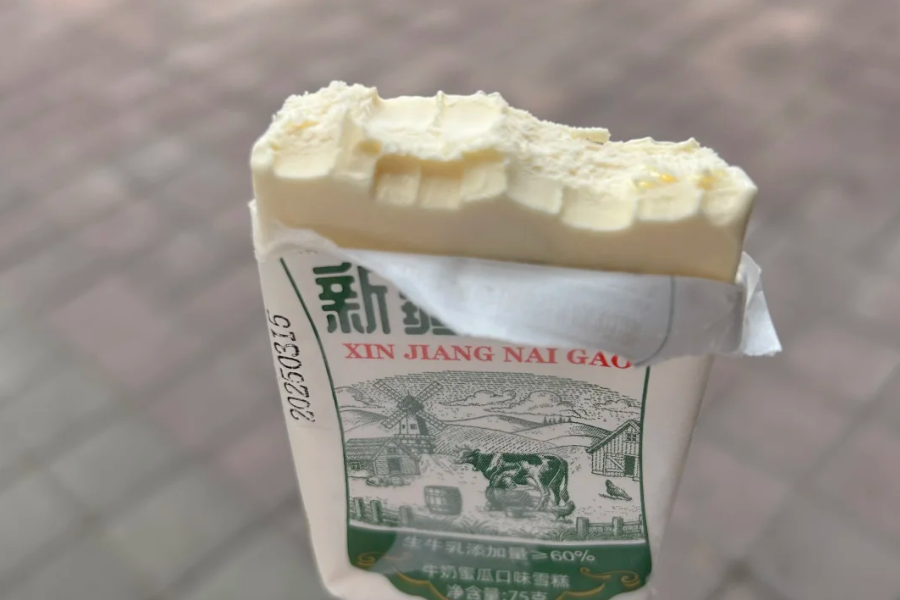
Ice Cream Brick does not usually deliver the kind of dramatic flavor contrast associated with modern dessert shops or highly visual social-media-style sweets. Its appeal is simpler and more functional — cold temperature, dense milk flavor, slow melting texture, and strong satiety at a relatively low cost.
That is also why many Chinese travelers associate it with nostalgia rather than trend-driven food culture.
In Xinjiang, where travel days can involve long distances, dry weather, and irregular meal timing, the dessert fits naturally into the rhythm of the trip because it provides a cooling pause without requiring a full restaurant stop or structured food itinerary.
For travelers expecting elaborate presentation or highly layered flavors, the experience may feel too straightforward. For those who enjoy traditional dairy-heavy frozen desserts with a more substantial texture, the simpler versions are often the most reliable choice.
Toward the middle of a Xinjiang itinerary, especially during warmer travel periods, Ice Cream Brick works best as a practical refreshment that fits naturally into the day rather than a food item that needs to be planned around. A slower travel pace usually improves the experience, since texture, temperature, and portion size all affect enjoyment more than most visitors initially expect.