Xinjiang is one of the most seasonal destinations in China. Unlike Beijing, Shanghai, or other city-based trips, the experience here changes dramatically depending on the month, route, and travel style. In one season, northern Xinjiang may be covered in green grasslands and wildflowers, while southern Xinjiang experiences desert heat above 40°C (104°F).
For most first-time travelers, the best time to visit Xinjiang is from May to October. Among these months, May, June, and September usually offer the best balance of scenery, weather, manageable travel pacing, and lower stress during long-distance travel.
If your goal is green grasslands and lakes, June to August is ideal. If you prefer autumn forests and photography, late September to mid-October is the best period. Winter works best for snow scenery, skiing, and travelers who prefer quieter Silk Road experiences without summer crowds.
As a travel brand specializing in Xinjiang and the Silk Road, Hiorient Travel focuses on seasonal route planning, ethnic culture, photography experiences, and more comfortable long-distance travel for international visitors. This guide is designed to help first-time travelers choose the right season based not only on scenery, but also on comfort, pacing, and travel style.
Before You Choose a Season, Know This About Xinjiang
Xinjiang is not the kind of destination where you can simply arrive and move casually between attractions. Distances are much larger than many first-time visitors expect, and weather conditions can completely change how a route feels.
A route that looks manageable on a map may still involve 6-8 hours of driving in a single day. In northern Xinjiang, travelers often spend long periods between lakes, mountain villages, and grassland areas. Rest stops can sometimes be far apart, mobile signal may become weak in remote regions, and sudden mountain weather changes occasionally slow down travel schedules.
Seasonal timing also affects road accessibility. The famous Duku Highway usually only opens from June to early October. In spring and winter, some mountain routes remain partially closed or become less comfortable due to snow, mud, or unstable weather conditions.
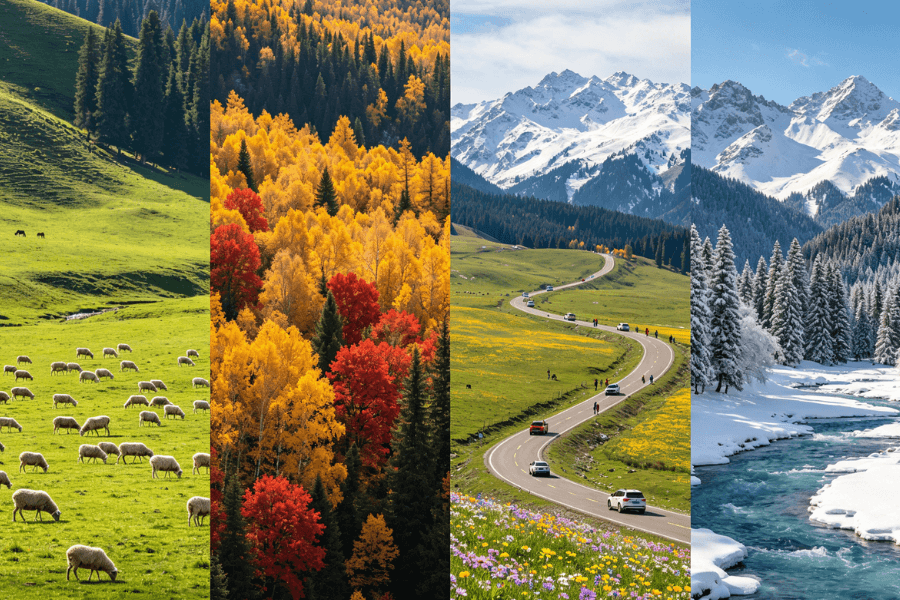
Different seasons create completely different travel rhythms.
Summer focuses on grasslands, lakes, outdoor scenery, and longer daylight hours
Autumn offers cooler temperatures, golden forests, and more comfortable pacing
Winter is quieter and better for skiing, snow scenery, and cultural exploration
Spring works best for apricot blossoms and travelers wanting fewer crowds
For many travelers, the best season is not necessarily the most famous one. It is often the season that best matches their comfort level, energy, and travel expectations.
When Is the Best Time to Visit Xinjiang?
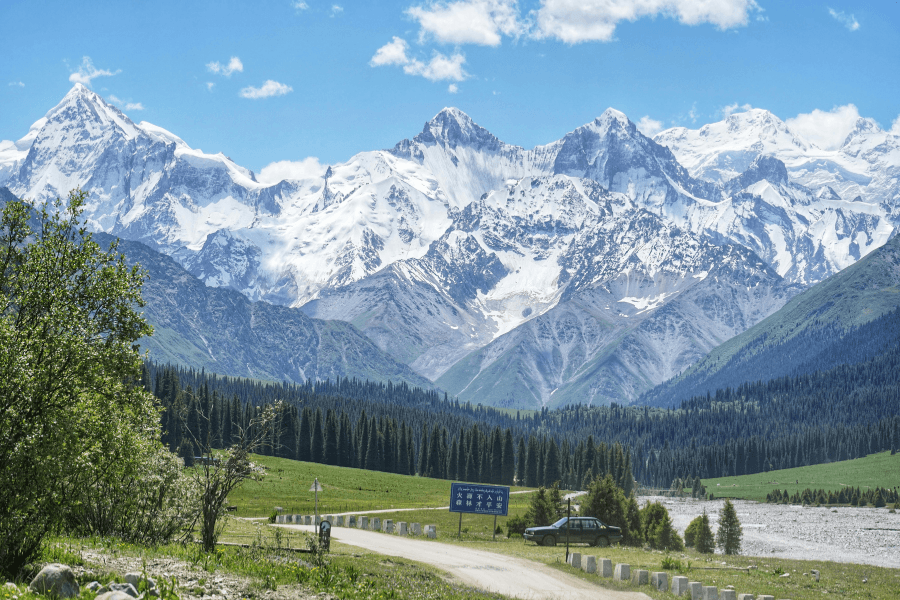
For most travelers, the best overall period is from May to October, when temperatures are milder and most scenic routes are accessible.
| Travel Interest | Best Time |
|---|---|
| Pleasant overall weather | May and September |
| Green grasslands and lakes | June to August |
| Kanas autumn colors | Late September to early October |
| Desert poplar forests | Mid-October to early November |
| Snow scenery and skiing | November to April |
| Family travel with children | June |
| Photography trips | September and October |
Why May and September Feel Easier for First-Time Visitors
Many first-time visitors assume July and August must be the best time because the scenery is greenest. In reality, these months can also become the most physically exhausting.
Long driving days, crowded scenic areas, hotel shortages, and traffic congestion often make summer travel feel rushed. Travelers may spend less time enjoying the scenery and more time managing logistics.
May and September usually feel more balanced because:
Daily driving schedules become more manageable
Scenic areas feel less crowded and less chaotic
Better hotels are easier to secure in convenient locations
Outdoor sightseeing becomes more comfortable without intense midday heat
Restaurant and transportation logistics feel smoother
Route pacing becomes easier for families and older travelers
For travelers visiting China for the first time, these practical differences often matter more than peak-season scenery.
The Best Seasons for Different Travel Styles
For Families With Children
June is usually the best month for family travel in Xinjiang.
The weather is warm but not excessively hot, grasslands are fully green, and many scenic areas remain easier to access before peak summer congestion begins in July and August.
Families with children often underestimate how tiring Xinjiang road travel can feel after several consecutive days. Routes in June usually feel smoother because hotels are easier to manage, waiting times are shorter, and daily schedules remain more flexible.
Northern Xinjiang routes around Yili, Sayram Lake, and Nalati Grassland are often more suitable for family pacing than longer cross-region itineraries.
For Photographers
Late September through mid-October is the best photography season.
Kanas, Hemu, and Baihaba become famous for golden forests, misty mornings, and colorful mountain landscapes. Cooler temperatures also make sunrise and sunset photography sessions much more comfortable than during midsummer.
October is also the best season for photographing Populus euphratica forests near the Taklamakan Desert.
Photographers should book accommodations early because autumn is extremely popular in northern Xinjiang. Travelers who prefer quieter photography conditions often choose mid-September or later October instead.
For Luxury and Comfort-Oriented Travelers
May and September are usually the most comfortable months for travelers prioritizing flexibility, quieter experiences, and reduced logistics stress.
Compared with peak summer travel, these periods generally provide:
smoother hotel availability
more relaxed scenic areas
easier restaurant reservations
less traffic pressure
more flexible route adjustments
less physical exhaustion during long-distance travel
This is also when private travel arrangements become especially valuable. A flexible driver-guide arrangement often reduces fatigue far more effectively than rushing through fixed daily schedules.
Hiorient Travel frequently recommends May and September for travelers who value comfort and pacing over peak-season crowds.
For Self-Driving Travelers
June through September is the safest and most practical period for self-driving trips.
Road conditions are generally stable, mountain routes remain open, and grassland scenery is at its best.
However, Xinjiang self-driving is very different from driving in Europe or North America. Travelers may encounter:
long stretches without convenient rest facilities
weak mobile signal in remote regions
rapidly changing mountain weather
limited English support outside major cities
long daily driving hours between destinations
Many first-time visitors eventually realize that private transportation becomes less about luxury and more about reducing exhaustion during long-distance routes.
Northern Xinjiang – Grasslands, Lakes, and Autumn Forests
Northern Xinjiang is most famous for grasslands, forests, lakes, and mountain scenery. It is also where travelers usually experience the longest daily driving distances.
June to August – Green Grasslands and Summer Landscapes
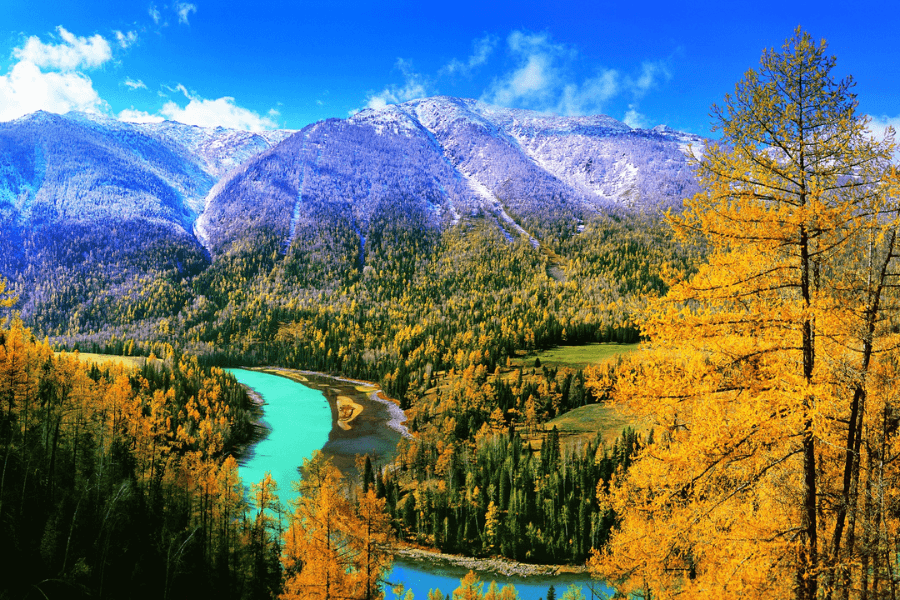
This is the classic green season in northern Xinjiang.
Popular highlights include:
Nalati Grassland
Kalajun Grassland
Sayram Lake
Huocheng lavender fields
Kanas Lake
This season works best for travelers who enjoy outdoor scenery, open landscapes, and longer daylight hours.
However, travelers who dislike crowds, traffic, or frequent hotel changes may find July and August physically tiring. Peak-season demand often creates long waits at scenic entrances, busy roads, and late hotel check-ins.
For travelers wanting similar scenery with a calmer experience, early June or early September often feels more comfortable.
Late September to Early October – Golden Forests and Autumn Photography
This is the best period for autumn scenery.
Kanas, Hemu, and Baihaba become famous for golden forests, cold morning mist, and colorful mountain landscapes. Temperatures also become cooler and more pleasant for walking and photography.
Compared with summer, autumn travel often feels slower and more relaxed. Travelers usually spend less time avoiding heat and more time enjoying outdoor scenery comfortably.
December to February – Snow Villages and Skiing
Winter transforms Altay and Kanas into snow destinations.
Altay is becoming increasingly popular for skiing, while Hemu and Kanas attract travelers looking for wooden villages covered in snow and quieter winter scenery.
Winter works best for travelers comfortable with cold temperatures and slower transportation conditions. Some roads may temporarily close during heavy snowfall, and outdoor walking conditions become more physically demanding.
Turpan – Best Months to Avoid the Extreme Heat
Turpan has one of the hottest climates in China.
The best periods are:
April
September
October
Summer temperatures from June to August often exceed 40°C (104°F), especially around Flaming Mountain.
Major attractions include:
Karez irrigation system
Jiaohe Ancient City
Flaming Mountain
Grape Valley
Some travelers enjoy experiencing Turpan's extreme desert climate once. Others quickly realize that sightseeing becomes physically exhausting under intense heat and strong ultraviolet exposure.
Travelers sensitive to heat usually prefer spring or autumn, when walking conditions become much more manageable.
Southern Xinjiang – Silk Road Cities, Deserts, and Pamir Landscapes
Southern Xinjiang focuses more on Silk Road culture, desert landscapes, and ethnic traditions than grassland scenery.
April to May – Apricot Blossoms and the Pamir Plateau
This is the apricot blossom season around Tashkurgan and the Pamir Plateau.
Temperatures are comfortable, and the scenery attracts photographers looking for mountain villages, blossom valleys, and quieter spring landscapes.
However, travelers heading toward the Pamir region should understand that altitude discomfort can affect some visitors unexpectedly. Even travelers without previous altitude issues sometimes experience headaches or fatigue after rapid elevation gain.
A slower route pace usually makes the experience significantly more comfortable.
September to October – Comfortable Weather and Desert Landscapes
This is the most balanced overall season for southern Xinjiang.
Travelers can comfortably explore:
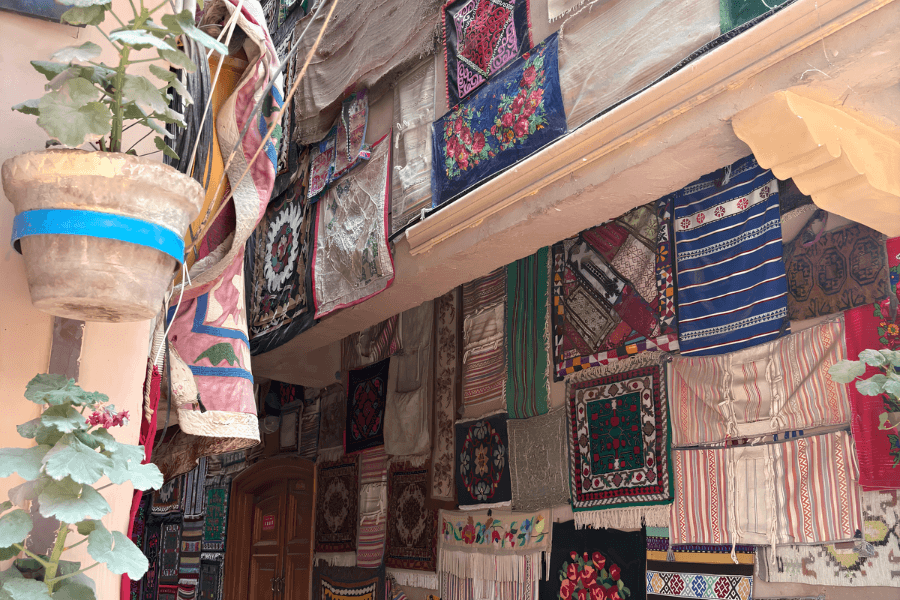
Kashgar Old City
Karakul Lake
Tashkurgan
desert poplar forests
Silk Road markets and teahouses
Compared with summer, walking conditions become far easier during autumn. Travelers can spend more time outdoors without midday heat exhaustion.
This season is especially suitable for travelers more interested in culture, local interaction, and slower travel rhythm than fast-paced sightseeing.
June to August – Extreme Heat and Long Desert Days
Summer in southern Xinjiang can become extremely hot and dry, especially near desert regions.
Strong sunlight, dry air, and long outdoor exposure often create physical exhaustion for travelers unfamiliar with desert climates. Afternoon sightseeing sometimes becomes uncomfortable, especially for older travelers and families with children.
This does not mean summer travel is impossible. But travelers expecting relaxed city walking conditions often find southern Xinjiang more demanding than expected during midsummer.
When Xinjiang Travel Feels More Challenging
Late July and August
These are the busiest travel months.
Travelers should expect:
crowded scenic areas
expensive hotels
long waiting times
traffic congestion
limited hotel availability
more rushed daily schedules
Summer hotel conditions in popular areas such as Kanas and Yili can become particularly stressful for travelers booking late.
Flights and accommodations should ideally be secured at least 2-3 months in advance.
Late March to April in Northern Xinjiang
This period can feel visually less attractive in some northern regions.
Snow may partially melt, roads can become muddy, and grasslands are often still brown before full spring arrives. Some first-time visitors expect green landscapes too early in the season and leave disappointed.
Winter Travel Challenges
Winter travel is beautiful but more demanding.
Travelers may face:
icy roads
temporary road closures
fewer transportation options
extreme cold in northern Xinjiang
reduced restaurant and hotel choices in smaller towns
Winter works best for travelers specifically interested in snow scenery, skiing, or quieter cultural experiences.
Xinjiang Weather by Month at a Glance
| Month | Min Temp | Max Temp | Rainy Days |
|---|---|---|---|
| January | -16°C | -8°C | 0 |
| February | -14°C | -6°C | 0 |
| March | -2°C | 7°C | 1 |
| April | 7°C | 18°C | 2 |
| May | 13°C | 24°C | 3 |
| June | 19°C | 29°C | 6 |
| July | 21°C | 31°C | 9 |
| August | 19°C | 29°C | 9 |
| September | 13°C | 23°C | 5 |
| October | 5°C | 14°C | 2 |
| November | -5°C | 3°C | 1 |
| December | -13°C | -5°C | 0 |
First-Time Xinjiang Travel Tips That Actually Matter
What Clothes Should You Bring?
Xinjiang has large day-night temperature differences, especially in mountain and grassland regions.
Recommended items include:
long sleeves and layered clothing
comfortable walking shoes
waterproof hiking shoes
sunscreen and sunglasses
moisturizing skincare products
lip balm
power bank
medicine for motion sickness and stomach discomfort
Even summer nights in grassland areas can feel surprisingly cold for travelers expecting typical summer temperatures.
Payment Tips for Foreign Travelers
Alipay and WeChat Pay work in most cities and tourist areas.
However, some smaller shops, remote villages, and highway toll stations may still require cash. Carrying 500-1000 RMB in cash is recommended.
International credit cards are still less reliable in many parts of Xinjiang.
Getting Around Xinjiang Without Exhausting Yourself
Xinjiang is much larger than many first-time visitors expect.
Public transportation works reasonably well between major cities, but many scenic areas remain difficult to reach independently.
Places such as:
Hemu
Kanas
remote grasslands
Pamir routes
often require long-distance driving.
Travelers also frequently underestimate how tiring repeated hotel changes can become during northern Xinjiang itineraries.
Private transportation with flexible route pacing often creates a much smoother experience for travelers unfamiliar with China's transportation systems and language environment.
Hiorient Travel specializes in customized English-speaking Xinjiang journeys focused on more comfortable pacing, reduced logistics stress, and seasonal route planning for international visitors.
Where to Stay in Xinjiang
Hotels in cities such as Urumqi, Kashgar, and Turpan generally offer good facilities and Wi-Fi.
In remote areas such as Hemu, Kanas, and grassland regions:
accommodations can be basic
prices rise sharply in peak season
hotel availability becomes limited
English support may be limited
Booking early is essential during:
June to August
National Day holiday
autumn photography season
Travelers booking late during peak season sometimes end up staying far outside scenic areas, which increases daily driving time significantly.
Cultural Tips First-Time Visitors Should Know
Xinjiang is home to many ethnic minority communities, including Uyghur, Kazakh, Tajik, and Hui people.
Travelers should:
avoid discussing sensitive religious topics
avoid mentioning pork in Muslim restaurants
ask before photographing people
dress respectfully in religious areas
Security checkpoints are normal in Xinjiang and are usually straightforward for tourists. Travelers should simply carry passports and remain patient during routine checks.
Respectful behavior usually creates warm and welcoming interactions with local communities.
Why Xinjiang Feels Later Than the Rest of China
Xinjiang officially uses Beijing time, but local daily life often follows a later rhythm.
Sunrise and sunset are usually about two hours later than eastern China.
Many restaurants and shops open later, and dinner often starts after 8 p.m. Travelers unfamiliar with this rhythm sometimes schedule mornings too early during their first few days.
Recommended Xinjiang Routes for First-Time Visitors
6-8 Days Classic Xinjiang Route
Urumqi
Turpan
Kashgar
This works well for first-time visitors wanting a balance between nature and Silk Road culture without excessive daily driving.
Northern Xinjiang Nature Route
Urumqi
Heavenly Lake
Yili Valley
Sayram Lake
Nalati
Kanas
Hemu
This route is best for scenery and photography, but travelers should expect several long driving days.
Southern Xinjiang Cultural Route
Kashgar
Karakul Lake
Tashkurgan
Taklamakan Desert
Poplar forests
This route focuses more on Silk Road culture, desert landscapes, and slower local experiences.
Hiorient Travel provides customized English-speaking Xinjiang journeys designed around comfort, photography timing, cultural experiences, and more realistic travel pacing for international travelers.
FAQ
Q1: How many days should first-time visitors spend in Xinjiang?
Most first-time travelers should plan at least 7-10 days. Northern Xinjiang or southern Xinjiang alone can work in about one week, but combining both regions usually requires 12 days or more due to long driving distances, slower travel pacing, and frequent route changes between destinations.
Q2: Is Xinjiang too tiring for older travelers?
Not necessarily, but route planning matters. Long driving days and frequent hotel changes can become exhausting, especially in northern Xinjiang. Slower itineraries with flexible pacing, fewer hotel switches, and private transportation usually create a much more comfortable experience for senior travelers.
Q3: Is self-driving really worth it in Xinjiang?
Some travelers enjoy the flexibility, especially during summer road trip season. However, many first-time visitors underestimate the long distances, mountain driving conditions, weak mobile signal in remote areas, and limited English support. Private transportation often feels less stressful and more comfortable for first-time China travel.
Q4: Which month offers the best balance between scenery and comfort?
For most travelers, May and September offer the best overall balance. The weather is comfortable, crowds are lower than peak summer, and daily travel pacing usually feels much more manageable than during the busiest months.
Q5: How early should I book hotels in peak season?
For July, August, and autumn photography season around Kanas and Hemu, booking at least 2-3 months in advance is strongly recommended. Popular hotels in scenic areas often sell out early, especially during Chinese school holidays and National Day travel periods.
Final Thoughts on Choosing the Right Season
Xinjiang is one of the few places in China where the season can completely change the travel experience.
Some travelers come for green summer grasslands, while others prefer cooler autumn forests, quieter Silk Road cities, or winter snow villages. The best season is often not the most famous one, but the one that matches your travel style, comfort level, and energy expectations.
For first-time visitors, May, June, and September usually provide the best balance between scenery, weather, and manageable travel conditions. Travelers looking for quieter experiences, smoother pacing, and reduced logistics stress often enjoy these months far more than peak summer season.
Hiorient Travel specializes in customized Xinjiang and Silk Road journeys focused on nature, photography, ethnic culture, and more comfortable long-distance travel for international visitors. Whether you are planning a family holiday, an autumn photography route, or a slower Silk Road experience, our team can help design a seasonally appropriate journey that feels both realistic and enjoyable.
Ready to plan your Xinjiang journey? Contact Hiorient Travel to start designing your personalized Silk Road experience.