Chinese names can feel confusing for first-time visitors to China, especially during hotel check-ins, train bookings, or conversations with local guides. Family names come before given names, many people use English names alongside Chinese names, and pinyin spelling sometimes makes completely different names sound surprisingly similar to foreign travelers.
Understanding a few basics about Chinese names helps reduce common travel confusion in China. It also makes everyday interactions smoother, whether you are checking into a hotel in Shanghai, taking a high-speed train across western China, or speaking with Uyghur guides in Kashgar.
Understanding the Basics of Chinese Names
Most Chinese names follow this structure:
Surname + Given Name
The family name comes first because Chinese culture traditionally places strong importance on family identity and ancestry.
For example:
Wang Lei
Li Na
Zhang Wei
In “Wang Lei”:
Wang is the surname
Lei is the personal name
Most Chinese surnames use one character. Given names usually contain one or two characters, with two-character names being the most common today.
Unlike many Western countries, Chinese women usually keep their original family names after marriage.
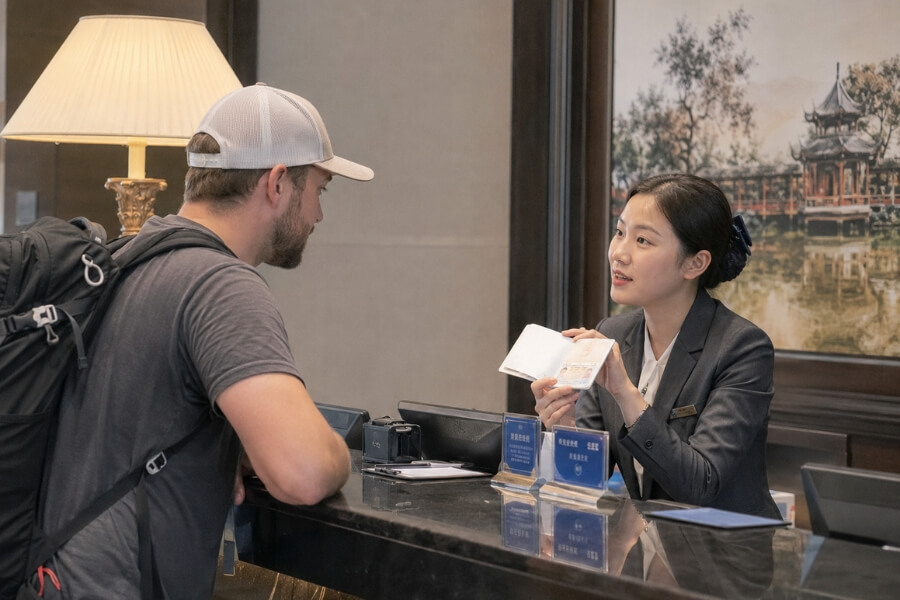
Many travelers first notice these naming differences during hotel registration in China, when reception staff carefully repeat the surname several times to confirm the booking matches the passport exactly.
Why Chinese Surnames Come Before Given Names
The surname-first structure reflects traditional Confucian values centered around family continuity and ancestry.
Even in modern China, introductions still often place family identity first. During formal meetings or guided tours, many Chinese people naturally introduce themselves using their full names rather than only their given names.
For foreign travelers, this naming order sometimes creates confusion during:
train ticket bookings
domestic flights
hotel reservations
WeChat exchanges
business introductions
Travelers rushing through large railway stations in China sometimes realize too late that the booking system reversed their surname and given name. This is especially common among first-time visitors unfamiliar with pinyin booking systems.
The Chinese Surnames You'll See Most Often
China has thousands of surnames, but a relatively small group is shared by a huge percentage of the population.
The most common Chinese surnames include:
| Surname | Pinyin | Approximate Population |
|---|---|---|
| 李 | Li | 95 million |
| 王 | Wang | 88 million |
| 张 | Zhang | 84 million |
| 刘 | Liu | 64 million |
| 陈 | Chen | 54 million |
| 杨 | Yang | 37 million |
| 赵 | Zhao | 27 million |
| 黄 | Huang | 26 million |
| 周 | Zhou | 25 million |
| 吴 | Wu | 24 million |
For first-time visitors, names like Wang, Li, Zhang, and Chen appear constantly throughout a China trip. Many travelers initially assume people sharing the same surname are related, but in reality these names are simply very common across China.
Why Chinese Names Sometimes Sound Similar to Foreign Travelers
Many foreign travelers feel that Chinese names sound similar at first. This is normal, especially for visitors unfamiliar with Mandarin pronunciation and pinyin spelling.
Part of the reason is that a huge percentage of China's population shares a limited group of surnames like Wang, Li, Zhang, and Liu. Mandarin pronunciation patterns can also sound repetitive to English speakers at first, especially in noisy airports or train stations.
Names like:
Zhang
Zheng
Zhuang
may sound almost identical to first-time travelers when spoken quickly.
Another source of confusion is pinyin itself. Tone marks are usually removed from booking systems, train tickets, and maps, which makes different names appear visually similar even when native speakers hear them differently.
Many younger Chinese people also use modern naming trends built around similar-sounding characters associated with brightness, harmony, nature, or aspiration.
Fortunately, most Chinese people do not expect foreign visitors to pronounce names perfectly. A polite attempt is usually enough.
What Chinese Names Often Represent
Chinese parents usually do not choose names randomly. Many names reflect hopes for a child's future personality, education, career, health, or emotional character.
One traveler visiting a family-run guesthouse near Kashgar once asked why several cousins shared characters connected to “brightness” and “peace.” The host explained that older family members believed names could express the kind of life parents hoped their children would grow into.
That idea still exists today, even in modern cities.
Some names suggest calmness or elegance. Others reflect ambition, intelligence, or strength. Nature also appears frequently in Chinese naming traditions, especially references to moonlight, rivers, flowers, seasons, or mountains.
For example:
Mei 美 often relates to beauty
Jing 静 suggests calmness
Ming 明 can imply brightness or clarity
Modern naming styles in China continue changing, but meaningful symbolism remains surprisingly important across generations.

Why Some Chinese Families Share Part of the Same Name
Some traditional Chinese families use generation names, where relatives from the same generation share one common character.
For example:
Li Zuyang
Li Zuli
Both names share the character “Zu.”
Historically, this system helped identify family relationships across large extended families.
Some naming traditions were inspired by Confucian sayings such as:
“Cultivate oneself, regulate the family, govern the country, bring peace to the world.”
Although generation naming is less common among younger urban families today, travelers may still encounter it in traditional communities and smaller cities across China.
In parts of Xinjiang and western China, local guides sometimes explain how naming traditions connect to clan history, religion, and regional identity. These details often make more sense during real conversations than through online translation alone.
Why Many Chinese People Also Use English Names
Many Chinese people, especially younger generations and tourism professionals, also use English names.
This became increasingly common through:
international education
tourism
overseas business
English-language workplaces
For example:
Wang Lei may introduce himself as “Michael”
Zhang Min may use “Lucy”
This can confuse first-time travelers because:
passports show Chinese names
WeChat profiles use nicknames
hotel systems rely on pinyin spelling
business cards may contain both versions
A guide named “Aman” on WhatsApp may appear under a completely different Chinese name inside WeChat. Travelers using WeChat in China for the first time often need a day or two before these naming differences stop feeling confusing.
English support can also vary significantly across China. In larger cities like Shanghai or Beijing, international hotels usually handle foreign names smoothly. In smaller towns near Kashgar or along remote Silk Road routes, communication may rely much more heavily on local guides or translation assistance.
How to Politely Address Chinese People
For most travelers, polite forms of address in China are simple.
In formal situations, using:
Mr. Wang
Ms. Li
Professor Chen
is completely acceptable.
Close friends sometimes use given names directly, but foreign visitors are generally not expected to understand every cultural nuance immediately.
Many Chinese people appreciate polite effort more than perfect pronunciation.
Travelers joining longer Xinjiang itineraries or private tours often become more comfortable with Chinese names after a few days of daily interaction with drivers, restaurant staff, local guides, and hotel teams.
Real Situations Where Travelers Encounter Chinese Names
Chinese names become especially important during practical travel situations in China.
Hotel Check-Ins
Hotels in China normally follow passport spelling exactly. Front desk staff often double-check surnames carefully because hotel registration systems connect directly with passport information.
Even small spelling inconsistencies can create delays.
High-Speed Train Tickets
China's railway system uses strict real-name registration rules. The spelling on train tickets must match the passport exactly.
Travelers unfamiliar with Chinese booking systems sometimes accidentally reverse their surname and given name during online reservations. This problem appears surprisingly often during first-time China trips.
Travelers researching how to use trains in China or planning long-distance Xinjiang transportation routes should pay especially close attention to passport name order before booking tickets.
Domestic Flights
Airlines in China also require accurate passport spelling. Some foreign travelers experience check-in issues after entering names in Western order instead of booking-system order.
WeChat Communication
WeChat in China can feel confusing at first because many users combine:
Chinese names
English names
emojis
nicknames
company names
in one profile.
For travelers planning longer trips across western China, understanding these communication habits becomes surprisingly useful. This is especially true in Xinjiang, where transportation coordination, local contacts, and bilingual assistance become more important on remote travel routes.
Many first-time visitors researching Xinjiang transportation planning, Xinjiang safety, or first-time Xinjiang itineraries eventually realize that communication logistics matter almost as much as scenery during long-distance travel across western China.
How Uyghur Names Reflect Xinjiang's Cultural Diversity
Xinjiang introduces travelers to a very different naming culture compared to eastern China.
Uyghur names are strongly influenced by:
Turkic languages
Persian culture
Islamic traditions
Central Asian history
Many Uyghur names contain imagery connected to:
moonlight
flowers
freedom
wisdom
spirituality
Examples include:
Aygül — moon flower
Aynur — moonlight
Erkin — freedom
Ilham — inspiration
Unlike Han Chinese names, Uyghur names often sound closer to names found in Central Asia, Türkiye, or the Middle East.
Travelers moving between Kashgar, Tashkurgan, and Yining quickly notice that naming systems, spoken languages, and even forms of greeting can change significantly across Xinjiang. In places like Kashgar Old City, these cultural differences become part of daily travel rather than something only explained in museums.
For travelers planning a deeper western China journey, understanding local naming traditions often becomes part of understanding Xinjiang itself. Hiorient Travel helps first-time visitors navigate these regional differences through bilingual guidance, realistic Xinjiang route planning, and customized travel support designed for international travelers unfamiliar with remote western China logistics.
Travelers reading a Kashgar travel guide or building a first-time Xinjiang itinerary often focus mainly on landscapes at first. After arriving, many realize that conversations, naming customs, and small daily interactions become some of the most memorable parts of traveling across Xinjiang.

Do Foreign Travelers Need a Chinese Name?
Some travelers choose a Chinese name during their stay in China, especially students, long-term visitors, or people building friendships with local communities.
Common approaches include:
choosing a similar-sounding name
selecting characters with meanings you like
asking Chinese friends for advice
choosing simple characters that are easy to pronounce
At the same time, having a Chinese name is completely optional for short-term travel.
Most Chinese people are comfortable using foreign names, and very few expect travelers to fully understand Chinese naming culture immediately.
FAQ
Q1: Do Chinese people expect foreigners to pronounce names perfectly?
Most Chinese people understand that Mandarin pronunciation can be difficult for foreign travelers, especially during a first China trip. A polite attempt is usually appreciated more than perfect pronunciation, and many people will patiently repeat or explain their names during conversations.
Q2: Why do Chinese train tickets require exact name spelling?
China's railway system uses strict real-name registration connected to passport information. Even small spelling mistakes or reversed surname order can sometimes create boarding problems, especially during busy travel periods or long-distance train journeys across China.
Q3: Why do many Chinese people use English names?
English names became common through tourism, international education, and global business. Many Chinese people use English names to simplify communication with foreign visitors, especially in hotels, restaurants, universities, and international workplaces throughout China.
Q4: Are Uyghur names different from Han Chinese names?
Yes. Uyghur names are influenced by Turkic, Persian, and Islamic traditions, while Han Chinese names mainly use Chinese characters and symbolic meanings. Travelers in Xinjiang often notice these cultural and linguistic differences during everyday interactions.
Q5: Should foreign travelers choose a Chinese name?
A Chinese name is completely optional for short-term travel. Most visitors comfortably use their passport names during their China trip, although some students or long-term travelers enjoy choosing a Chinese name for cultural exchange or easier communication.