Xinjiang has a long and complex history shaped by geography, migration, trade, empires, religions, and cultural exchange. Located in China's far northwest, the region sits between Central Asia, Mongolia, Tibet, and other parts of China, giving it an important position on routes connecting East and West.
For travelers today, understanding some of Xinjiang's history can make places such as Kashgar, Turpan, and the ancient cities of Jiaohe and Gaochang much more meaningful. Many of the region's archaeological sites, markets, religious monuments, and cultural traditions reflect centuries of interaction along the Silk Road.
Xinjiang Before the Silk Road
Human communities have lived in what is now Xinjiang for thousands of years.
The region's geography encouraged different ways of life. Oasis settlements developed around reliable water sources, while pastoral communities moved through grasslands and mountain regions.
Because Xinjiang sits at a crossroads between different parts of Eurasia, populations, languages, technologies, and traditions moved through the region long before the Silk Road became famous.
Xinjiang and the Ancient Silk Road
Xinjiang became especially important with the development of the ancient Silk Road.
Rather than being one single road, the Silk Road consisted of multiple trading routes connecting China with Central Asia and destinations farther west.
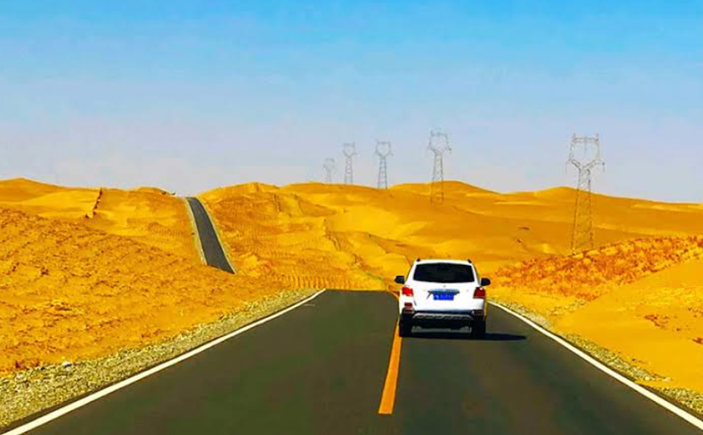
Caravans traveled through Xinjiang's deserts and mountain passes, stopping at oasis settlements for water, food, supplies, and trade.
Silk was one of the best-known commodities transported along these routes, but merchants also exchanged horses, precious materials, spices, textiles, and other goods.
More importantly, the Silk Road carried ideas, religions, languages, art, and technologies between different civilizations.
Turpan – A Major Silk Road Oasis
Turpan became an important center because of its strategic location and access to oasis agriculture.
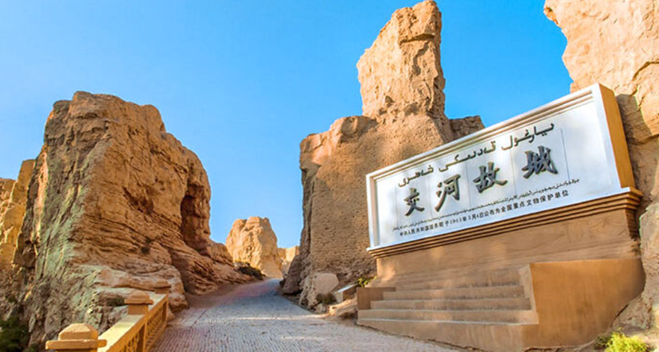
Ancient settlements including Jiaohe and Gaochang demonstrate how sophisticated communities developed in this difficult desert environment.
Jiaohe is particularly impressive because much of the ancient city was constructed directly from the natural earth platform on which it stands.
Picture:
Kashgar – Where Trade Routes and Cultures Met
Kashgar's location near Central Asia made it another important center for merchants and travelers.
Caravans passing through the region could continue toward Central Asia or travel eastward toward other parts of China.
Over centuries, these connections helped shape Kashgar's distinctive food, architecture, crafts, markets, and cultural traditions.
Today, Kashgar remains one of the most interesting destinations for travelers wanting to experience the cultural legacy associated with the Silk Road.
Picture:
Buddhism and Cultural Exchange
Buddhism played an important role in the history of parts of Xinjiang before Islam became dominant in many communities.
Buddhist monks, merchants, and travelers moved through the region along Silk Road routes, helping spread religious teachings and artistic traditions.
Important evidence survives around Turpan and other historic areas, including cave temples, murals, sculptures, manuscripts, and archaeological ruins.
The Bezeklik Thousand Buddha Caves near Turpan are among the best-known examples travelers can visit today.
Where Travelers Can Experience Xinjiang's History
Travelers interested in history should consider visiting:
Kashgar– Silk Road heritage and historic neighborhoods
Turpan– Jiaohe, Gaochang and ancient irrigation systems
Bezeklik Caves – Buddhist art and Silk Road history
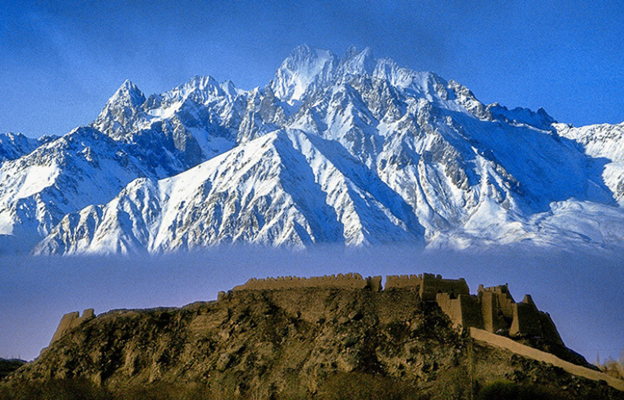
Tashkurgan – Historic mountain trading routes andStone City
Urumqi– Museums covering the region's archaeology and history
Visiting these places provides more context than simply reading about the Silk Road because travelers can see how geography influenced the development of settlements and trade routes.