Traditional ethnic costumes are still visible in Xinjiang today, especially in places such as Kashgar Old City, Tashkurgan, and parts of the Ili region. While most local residents wear modern clothing in daily life, traditional dress remains an important part of festivals, weddings, cultural performances, and tourism experiences.
For first-time visitors, Uyghur clothing is the style they are most likely to encounter. Travelers can also experience traditional costume photography, visit Atlas silk workshops, and learn about local customs through guided cultural experiences. Understanding these garments provides a deeper connection to Xinjiang's people and helps travelers appreciate the region beyond its landscapes.
What Makes Xinjiang Ethnic Costumes Different?
Xinjiang is one of China's most culturally diverse regions, home to multiple ethnic groups including Uyghurs, Kazakhs, Tajiks, Kyrgyz, Hui, Mongolians, and others.
For centuries, trade along the Silk Road connected Xinjiang with Central Asia, Persia, the Middle East, and inland China. These cultural exchanges influenced fabrics, colors, embroidery techniques, jewelry, and headwear, creating clothing traditions that differ noticeably from those found elsewhere in China.
What makes Xinjiang particularly interesting for travelers is that these traditions are not limited to museums. Visitors can still see traditional clothing worn during celebrations, religious holidays, weddings, community gatherings, and tourism-related cultural activities.
The Traditional Clothing Travelers Are Most Likely to See
Uyghur Dress and the Famous Doppa Hat
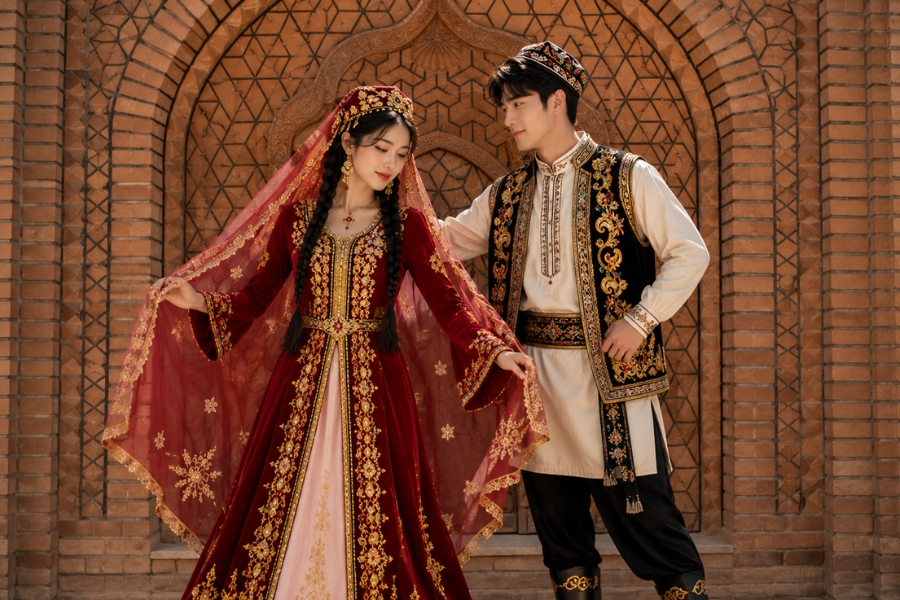
Uyghur clothing is by far the most recognizable traditional dress in Xinjiang and the style most visitors will encounter during their trip.
Women often wear flowing dresses made from brightly colored fabrics, particularly Atlas silk, a traditional handwoven textile known for its vibrant patterns. Reds, greens, yellows, and gold tones are especially common.
Men traditionally wear a long coat known as a chapan, usually secured with a cloth belt around the waist. During colder months, heavier wool and fur versions provide additional warmth.
The most recognizable accessory is the doppa, a square embroidered cap worn by both men and women. Different patterns may reflect regional traditions, family heritage, or local identity.
Travelers will most often see traditional Uyghur clothing in Kashgar Old City, local markets, wedding celebrations, cultural performances, and photography studios that specialize in traditional portrait experiences.
Traditional crafts remain closely connected to Uyghur culture. Visitors frequently encounter Atlas silk workshops, embroidered handicrafts, traditional musical instruments, copperware, and handmade knives while exploring southern Xinjiang.
Kazakh Clothing Inspired by Nomadic Life
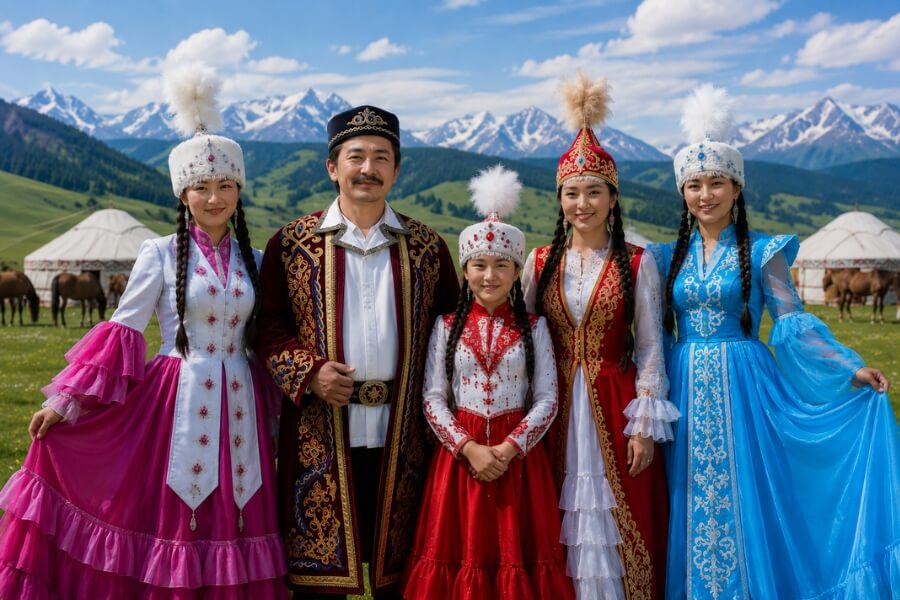
Traditional Kazakh clothing reflects centuries of life on the grasslands.
Historically, Kazakh communities depended on livestock and horseback travel, so clothing was designed for warmth, practicality, and durability. Fur, wool, sheepskin, and leather remain important elements of traditional dress.
For travelers, traditional Kazakh clothing is most commonly encountered during summer grassland festivals, horse-riding events, and community celebrations in the Ili region. Many visitors first see ceremonial Kazakh dress during cultural performances where local families still wear traditional garments as part of music, dance, and seasonal gatherings.
Horse culture remains an important part of Kazakh identity. Traditional games, horseback competitions, and seasonal migrations provide some of the best opportunities to experience these customs alongside traditional clothing.
Traditional Tajik Clothing in the Pamir Mountains
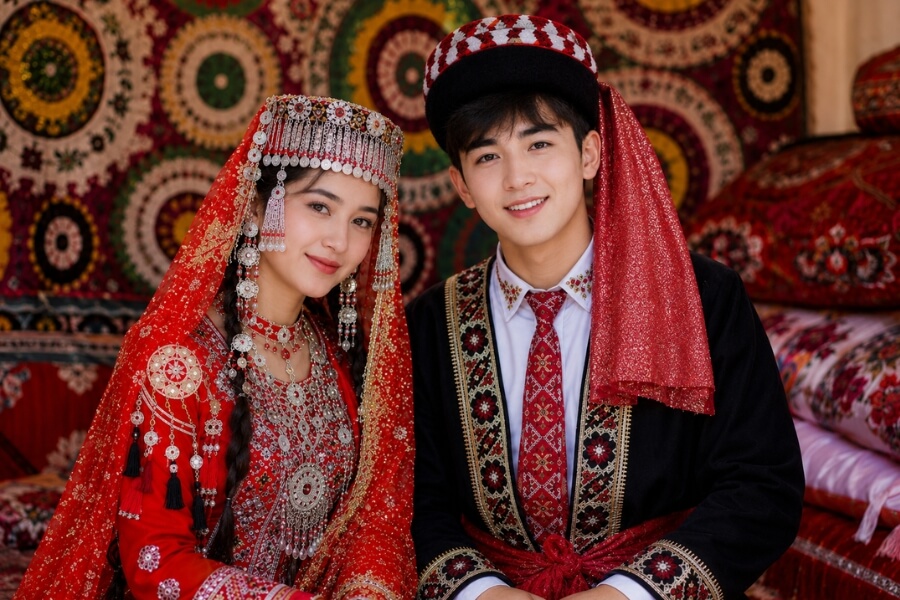
The Tajik people mainly live around Tashkurgan in southwestern Xinjiang near the Pamir Plateau.
Because the region sits at high altitude and experiences harsh winters, traditional clothing emphasizes warmth and protection. Wool, felt, leather, and woven fabrics remain common materials.
Visitors traveling along the Karakoram Highway often notice that Tajik clothing looks very different from what they saw in Kashgar. Traditional hats, colorful embroidery, and ceremonial garments remain important parts of local festivals and family celebrations.
Many travelers are surprised by the Tajiks' distinct appearance and language, which differ significantly from the Turkic-speaking groups found elsewhere in Xinjiang. Their cultural traditions add another layer to the region's diversity.
Kyrgyz Clothing and Mountain Traditions
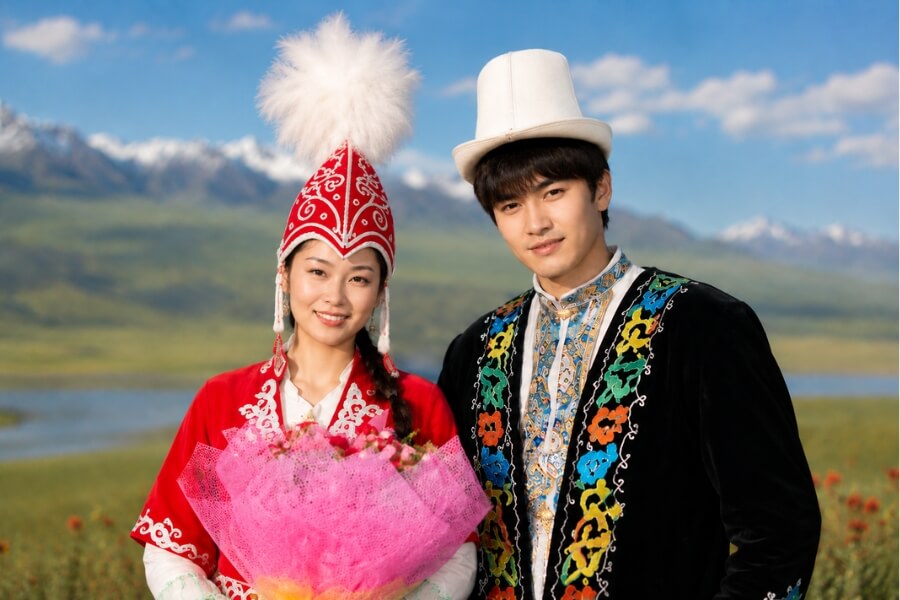
Kyrgyz communities traditionally lived in mountain and grassland environments, which influenced their clothing styles.
Traditional garments often incorporate wool and animal hides, while white felt hats remain one of the most recognizable elements of Kyrgyz dress.
Although fewer travelers encounter Kyrgyz communities compared with Uyghur or Kazakh populations, visitors exploring remote western Xinjiang may occasionally see traditional clothing during local events and cultural gatherings.
Hui Clothing and Islamic Traditions
The Hui people are one of Xinjiang's major Muslim communities and can be found in cities such as Urumqi, Changji, Turpan, and Yining.
Unlike Uyghur clothing, traditional Hui dress is generally more understated. Men are often recognized by their white prayer caps, while women may wear headscarves, particularly during religious gatherings and special occasions.
Because the Hui people speak Chinese and share many cultural customs with other Chinese communities, first-time visitors sometimes find Hui culture easier to understand than some of Xinjiang's more distinct ethnic traditions. However, Islamic beliefs remain an important part of daily life and are reflected in clothing, food, festivals, and religious practices.
Travelers are most likely to encounter traditional Hui clothing near mosques, halal markets, and during important Islamic celebrations. Visiting these communities can provide valuable insight into another side of Xinjiang's cultural diversity beyond the better-known Uyghur traditions.
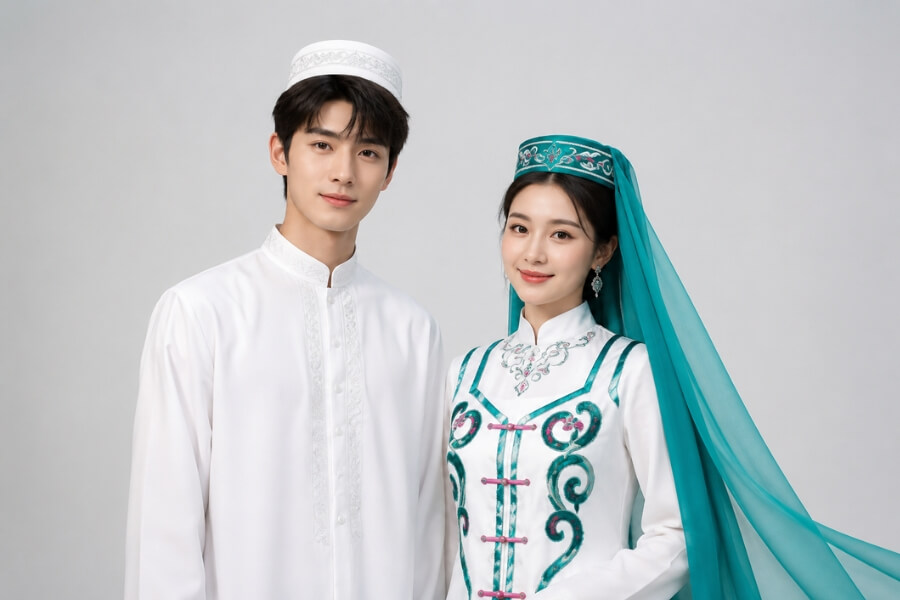
Other Ethnic Groups in Xinjiang
Xinjiang is also home to many other ethnic communities, including Mongolian, Xibe, Uzbek, and Tatar populations.
The Hui people mainly practice Islam and live throughout northern Xinjiang, while Mongolian communities are concentrated in areas such as Bayingolin and Bortala. Uzbek and Tatar communities are smaller in number but have contributed to Xinjiang's long history of trade and cultural exchange along the Silk Road.
While travelers may occasionally encounter their traditional clothing during festivals and cultural events, Uyghur, Kazakh, Tajik, and Kyrgyz dress are the styles most visitors are likely to see during a typical Xinjiang journey.
Where to Experience Ethnic Costumes in Xinjiang
Kashgar Old City - The Best Place to See Uyghur Clothing
Kashgar Old City is the easiest and most accessible place for travelers to experience traditional Uyghur clothing.
Many costume studios offer professional photography experiences that include traditional clothing, makeup, hairstyling, and guided photo sessions. Local artisans, musicians, and performers also frequently wear traditional garments during cultural events.
For photographers, the best time is often between 8 and 10 a.m. During these hours, many organized photography groups have not yet arrived, making it easier to photograph traditional clothing against quieter Old City backdrops.
Tashkurgan - Traditional Tajik Dress and Culture
Tashkurgan offers one of the most distinctive cultural experiences in Xinjiang.
Traditional Tajik clothing is most visible during local festivals, community celebrations, and special events. The combination of mountain scenery, stone fortresses, and traditional dress creates a cultural atmosphere that feels noticeably different from other parts of Xinjiang.
Ili Grasslands - Where Kazakh Traditions Remain Strong
The grasslands around Ili, Nalati, and Kalajun remain important centers of Kazakh culture.
Summer is typically the best season to visit. During this period, travelers may encounter horse-riding festivals, cultural performances, and seasonal gatherings where traditional Kazakh clothing remains widely visible.
Festivals and Weddings - When Traditional Clothing Is Most Visible
Traditional clothing is most commonly seen during celebrations.
While younger generations generally wear modern clothing in daily life, weddings, family gatherings, religious holidays, and cultural festivals remain occasions where full traditional dress is proudly displayed.
For travelers interested in authentic cultural experiences, these events often provide the most memorable opportunities to observe traditional clothing in its natural social context.
When Is the Best Time to See Traditional Costumes?
Traditional clothing can be seen throughout the year, but some periods offer better opportunities than others.
Summer Festival Season
From June through September, many grassland festivals and cultural events take place across northern Xinjiang. This is often the best time to see traditional Kazakh clothing.
Religious and Community Celebrations
Traditional dress becomes much more visible during major religious holidays and community celebrations. Dates vary each year, so checking local schedules before travel is helpful.
Wedding Season
Many local weddings take place between late spring and early autumn. While travelers generally do not attend private ceremonies, traditional wedding clothing may sometimes be seen in towns and villages during this period.
Best Experiences by Travel Style
For Photographers
Kashgar Old City offers the best opportunities to photograph traditional clothing, architecture, local markets, and cultural activities in one location.
For Families
Cultural performances, handicraft workshops, and traditional music events provide accessible ways for families to experience local culture without extensive travel.
For First-Time Visitors
Guided walking tours in Kashgar help visitors understand the meaning behind traditional clothing, local customs, and cultural etiquette while reducing language barriers.
For Luxury Travelers
Private cultural experiences, traditional photography sessions, and artisan workshop visits can provide a more personalized introduction to Xinjiang's clothing traditions.
Can Tourists Wear Xinjiang Ethnic Costumes?
In most situations, yes.
Many photography studios in Kashgar Old City offer traditional costume rental packages for both domestic and international visitors. These experiences usually include clothing, styling, makeup, and professional photography.
However, travelers should be aware that most costume studios primarily operate in Chinese. Visitors who do not speak Chinese may find it easier to arrange appointments through a local guide, hotel concierge, or travel company.
Independent travelers sometimes discover that booking experiences outside major tourist areas can be difficult because of language barriers and local reservation systems. This is one reason many visitors choose guided cultural experiences that include translation and local coordination.
At Hiorient Travel, we often help travelers combine costume experiences with visits to local workshops, historic neighborhoods, and cultural sites, making the experience more meaningful than a simple photo session.
Tips for Wearing and Photographing Traditional Costumes
When experiencing traditional ethnic clothing in Xinjiang, respect matters more than perfect cultural knowledge.
A few practical guidelines can help create a positive experience:
Ask permission before photographing local people.
Avoid treating religious or cultural symbols as props.
Follow guidance from local hosts or guides.
Dress modestly when visiting mosques and religious sites.
Learn a little about the clothing's cultural background before wearing it.
Choose quieter morning hours if you want less crowded photography locations.
Most cultural misunderstandings can be avoided through curiosity, respect, and common courtesy.
Atlas Silk and Doppa Hats Explained
Atlas Silk
Atlas silk is one of the most recognizable symbols of Uyghur culture.
Known for its flowing patterns and vibrant colors, the fabric has been produced in Xinjiang for generations. The weaving technique was added to China's national intangible cultural heritage list in 2006.
Today, Atlas silk remains widely used in traditional dresses, cultural performances, handicrafts, and photography experiences.
Doppa Hats
Doppa hats remain one of the most visible traditional accessories in Xinjiang.
Historically, embroidery patterns, colors, and decorations could reveal information about the wearer's hometown, family background, or social status.
Although younger generations may not wear doppa hats every day, they remain common during festivals, weddings, cultural events, and family gatherings.