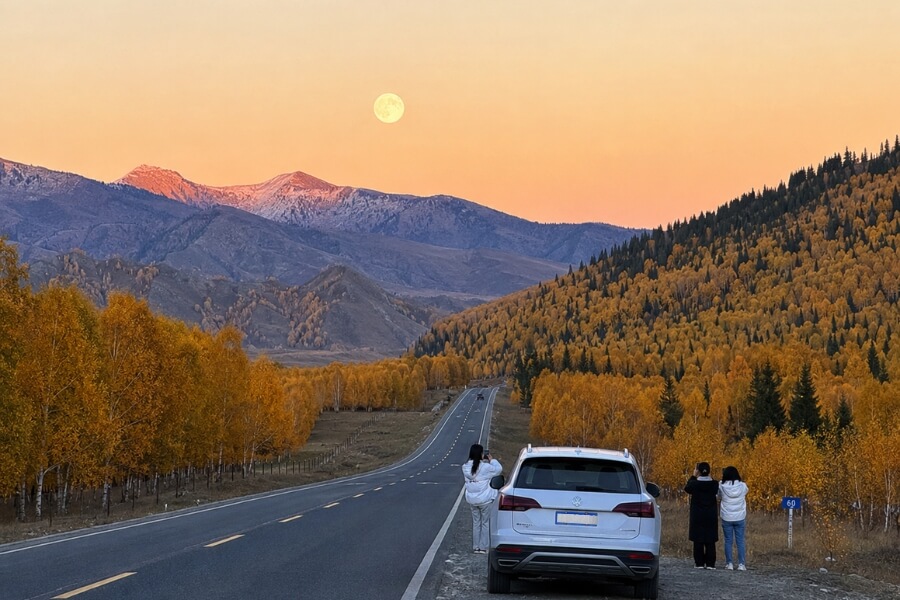
If you're planning to visit Xinjiang during the Mid-Autumn Festival, expect a quieter and more landscape-focused experience than the large lantern festivals commonly seen in eastern China. In Xinjiang, the holiday often feels connected to autumn road trips, night markets, mountain lakes, and long evenings under unusually clear skies.
Late September is also one of the best times for traveling across much of Xinjiang. Northern Xinjiang turns yellow and gold, daytime temperatures become more comfortable, and many grassland and mountain regions enter peak autumn scenery. In places like Kashgar, Hemu, Sayram Lake, and the Pamir Plateau, Mid-Autumn Festival feels less like a staged holiday event and more like everyday evening life along the Silk Road.
What Makes Mid-Autumn Festival in Xinjiang Different
In most parts of China, Mid-Autumn Festival is associated with mooncakes, lanterns, and family reunion dinners. Xinjiang still shares some of these traditions, especially in Han Chinese communities, but the atmosphere changes because of the region's geography and multi-ethnic environment.
Distances between destinations are much longer than many first-time visitors expect. Driving between northern Xinjiang towns can easily take six to eight hours in a single day, especially during holiday traffic periods. Instead of rushing between attractions, many travelers naturally spend more time around lakes, village courtyards, night markets, and roadside restaurants.
The region's cultural mix also shapes the holiday atmosphere differently. Uyghur neighborhoods, Kazakh grassland communities, and Han Chinese urban districts each bring different foods, music traditions, and gathering styles into the festival season.
For international travelers, Mid-Autumn in Xinjiang often feels more connected to local evening life than formal tourism activities.
Mid-Autumn Nights Across Xinjiang
Kashgar After Sunset
In southern Xinjiang, Mid-Autumn evenings in Kashgar usually feel calmer than the large public celebrations found in eastern Chinese cities.
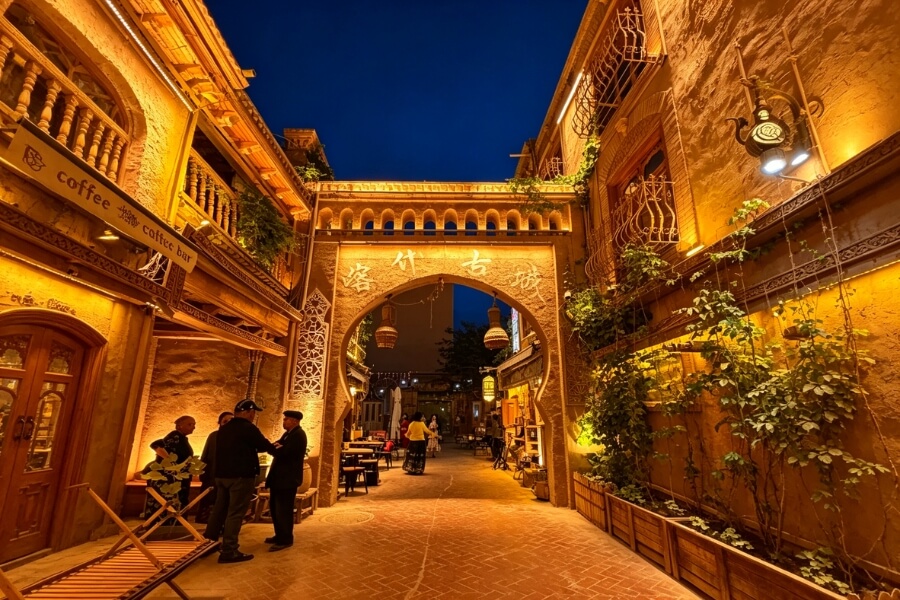
After sunset, the streets around Kashgar Old City remain busy with tea shops, fruit vendors, outdoor food stalls, and local families walking through the alleys. Restaurants near Id Kah Mosque and the old bazaar districts often stay open late during the holiday period.
The atmosphere comes more from shared evening life than organized performances. Travelers may hear local music from courtyards, see children carrying lanterns through narrow streets, or watch families gathering around outdoor dinner tables filled with fruit, nang bread, and grilled lamb skewers.
For first-time visitors unfamiliar with Xinjiang, Kashgar is also one of the easier places to experience Silk Road culture without needing long mountain transfers or remote overnight stays.
Grassland Evenings in Northern Xinjiang
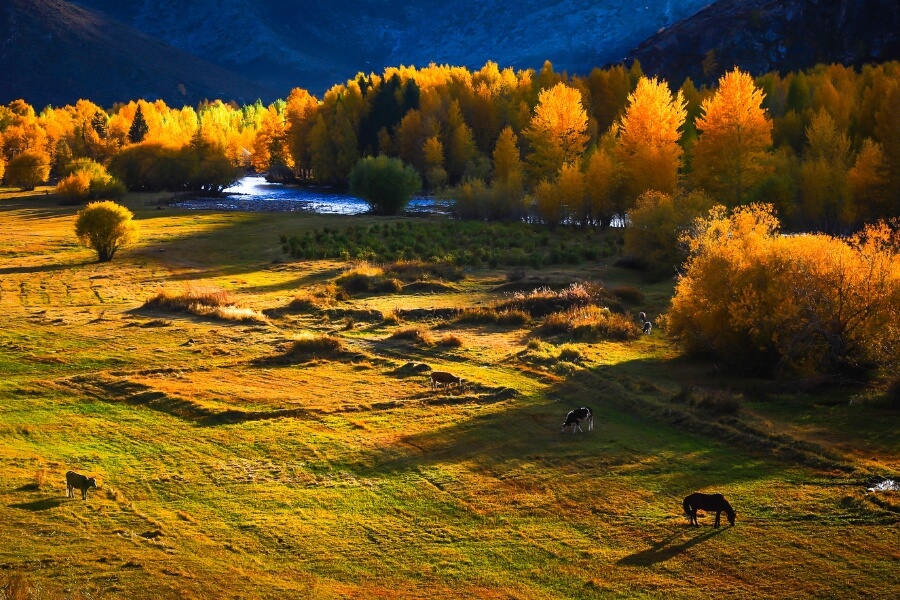
Northern Xinjiang offers a completely different atmosphere during Mid-Autumn Festival. Around Hemu, Kanas, Nalati, and Sayram Lake, the holiday overlaps with peak autumn scenery.
By late September, many roads in northern Xinjiang are already lined with yellow birch forests, while higher mountain areas may receive early snowfall. Travelers arriving from Urumqi are often surprised by how quickly the scenery changes from dry grasslands to cold forest valleys within only a few hours of driving.
Evenings around Hemu can become cold enough for winter jackets after sunset, even when daytime weather still feels mild. In smaller guesthouses and grassland lodges, travelers often gather outdoors around bonfires, drink hot tea, and watch the moon rise above wooden villages and mountain slopes.
Some Kazakh families organize informal dombra music gatherings that continue late into the night. These experiences are usually simple rather than commercialized, which many international travelers find more memorable than large festival shows.
Because villages in northern Xinjiang are relatively spread out, trying to combine too many destinations in a short holiday often becomes tiring much faster than visitors expect.
Desert Roads and Silk Road Night Skies
In remote parts of southern Xinjiang, Mid-Autumn nights feel especially quiet because of the region's scale and low population density.
Around the edges of the Taklamakan Desert and the Pamir Plateau, moonlight reflects strongly across open landscapes once city lights disappear. Travelers driving between Kashgar and Tashkurgan often notice how isolated some sections of the Karakoram Highway feel after dark.
Road conditions are generally good, but the full drive toward the Pamir region still takes most of the day even without long sightseeing stops. Many first-time visitors underestimate how tiring consecutive long-distance driving days in Xinjiang can become.
In smaller roadside towns, hotel standards and English support can also vary considerably. Some remote hotels may still rely mainly on Chinese-language check-in systems and mobile payment apps.
For photographers, however, these quieter sections of Xinjiang create some of the clearest night sky conditions in western China during autumn.

Evening Food Markets During Mid-Autumn Festival
Mid-Autumn Festival also overlaps with harvest season in Xinjiang, which changes the atmosphere in local markets and night streets considerably.
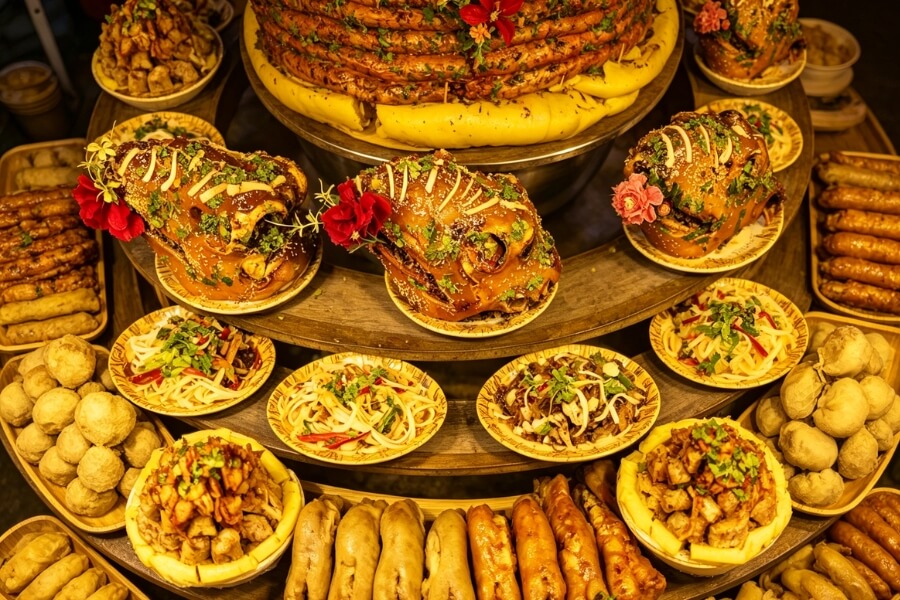
During this period, travelers frequently encounter fresh grapes, melons, pomegranates, roasted nang bread, yogurt drinks, grilled lamb skewers, and polo rice dishes served late into the evening. In Uyghur night markets, food becomes part of the social atmosphere rather than simply a dinner stop.
One of the best-known local festival foods is mooncake nang, a thicker baked pastry filled with walnuts, almonds, raisins, and red dates. Compared with many sweet eastern Chinese mooncakes, Xinjiang versions are usually less oily and heavier in texture.
Travelers spending longer evenings in local neighborhoods often experience more of this atmosphere naturally than those moving quickly between destinations.
Places That Feel Especially Memorable During Mid-Autumn Festival
Hemu and Kanas
Hemu and Kanas are among the most popular Mid-Autumn destinations for travelers focused on autumn scenery and photography.
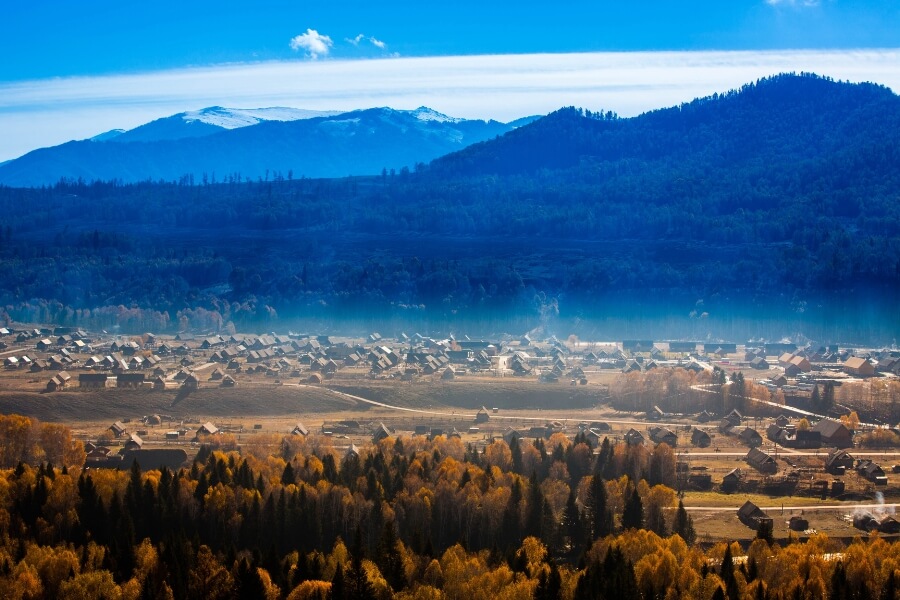
Morning fog, wooden houses, yellow forests, and moonlit mountain valleys create some of Xinjiang's best-known autumn landscapes. Sunrise conditions are usually strongest between 7:30 and 9:00 a.m. in late September, although temperatures already feel close to winter during early mornings.
Many first-time visitors book accommodation in Hemu too late during autumn season and later discover that rooms become limited weeks in advance.
Sayram Lake
At more than 2,000 meters above sea level, Sayram Lake offers wide open views with relatively little surrounding light pollution.
Clear evenings often produce strong moon reflections across the water, especially when winds calm down after sunset. Temperatures near the lakeshore can feel noticeably colder than nearby cities such as Yining.
The lake area also involves long driving sections with limited roadside services, so travelers usually experience the area more comfortably when staying overnight nearby instead of treating it as a quick stop.
Kashgar
Kashgar works especially well for travelers more interested in food, local street life, and Silk Road atmosphere than long mountain routes.
The combination of tea houses, bazaars, alleyways, and late-night food markets creates a very different Mid-Autumn experience from modern Chinese cities. Travelers unfamiliar with Xinjiang also tend to find Kashgar easier to navigate than more remote rural regions.
Pamir Plateau
For travelers comfortable with higher elevations and longer road journeys, the Pamir Plateau offers some of the clearest night skies in western China.
Altitude adjustment becomes important here. Some visitors begin experiencing mild headaches or fatigue after arriving above 3,000 meters, especially if they try to move too quickly through the region without overnight breaks.
Families traveling with young children or older relatives usually benefit from slower pacing in the Pamir area rather than attempting aggressive multi-stop itineraries.
Things Many First-Time Visitors Underestimate
Xinjiang Travel Fatigue
Many travelers underestimate how physically tiring Xinjiang becomes after several consecutive long-distance driving days.
Even routes that appear simple on maps often involve mountain roads, checkpoint procedures, limited rest stops, and large stretches between towns. Families with children or older travelers usually need more overnight stops than they initially expect.
Holiday Hotel Pressure
If Mid-Autumn Festival overlaps with China's National Day holiday period, accommodation pressure increases quickly across Xinjiang.
Places such as Hemu, Kanas, and Sayram Lake can become difficult to book at short notice during peak autumn season. Travelers unfamiliar with China's holiday travel patterns are often surprised by how early domestic tourists reserve hotels.
Limited English Support in Remote Areas
In Urumqi and parts of Kashgar, tourism services are becoming easier for international visitors. However, English communication remains limited in many smaller towns, roadside hotels, and grassland regions.
Restaurant menus, transportation systems, and payment methods may still rely heavily on Chinese-language apps and mobile payment platforms such as Alipay and WeChat Pay.
Cold Evenings and Sudden Weather Changes
Although daytime temperatures in September are usually comfortable, evenings across northern Xinjiang can cool down rapidly after sunset.
Mountain weather near Kanas and the Pamir Plateau can also change quickly during late evening driving hours. Travelers planning outdoor moon viewing or photography should prepare insulated jackets, windproof layers, stable walking shoes, and portable chargers for cold conditions.
Is Mid-Autumn Festival a Good Time to Visit Xinjiang?
For many travelers, Mid-Autumn Festival becomes one of the easiest periods to understand why Xinjiang feels so different from eastern China.
By late September, northern Xinjiang roads are already entering peak autumn color season, while southern Xinjiang cities become noticeably cooler after the summer heat. Evening markets grow busier, fruit reaches peak harvest season, and long outdoor evenings become more comfortable for walking and photography.
At the same time, Xinjiang still rewards realistic pacing. Distances remain long, holiday transportation pressure can increase quickly, and remote areas are often less flexible for independent travelers than many visitors initially expect.
Travelers who leave more time between destinations usually experience the region far more comfortably than those trying to complete rushed multi-city routes within only a few days.
FAQ
Q1: What makes Mid-Autumn Festival in Xinjiang different from other parts of China?
Mid-Autumn Festival in Xinjiang combines traditional Chinese customs with Silk Road culture, desert scenery, grassland landscapes, and multi-ethnic communities. Instead of large lantern festivals, travelers often experience quieter evening gatherings, local night markets, open-sky moon viewing, and regional food traditions shaped by Uyghur, Kazakh, and Han cultures.
Q2: Can foreigners join local Mid-Autumn celebrations in Xinjiang?
Yes. Most Mid-Autumn activities in Xinjiang are informal public gatherings rather than closed private events. Travelers can usually explore night markets, lakeside gathering areas, village streets, and local food scenes freely, although celebrations often feel more community-based than performance-oriented.
Q3: Is late September a good time to visit Xinjiang?
Late September is one of the best periods for Xinjiang travel because temperatures become milder and northern Xinjiang enters peak autumn scenery season. However, evenings in mountain and grassland regions can become surprisingly cold after sunset, especially around Hemu and Kanas.
Q4: Is Xinjiang crowded during Mid-Autumn Festival?
Some destinations become noticeably busier, especially if Mid-Autumn Festival overlaps with China's National Day holiday. Popular places such as Hemu, Kanas, and Sayram Lake often experience hotel shortages, slower traffic conditions, and longer restaurant wait times during peak travel days.
Q5: Is independent travel in Xinjiang difficult during the holiday period?
Independent travel is possible, but many first-time visitors underestimate Xinjiang's long driving distances, limited English support, changing weather conditions, and holiday transportation pressure. Slower pacing usually creates a more comfortable experience, especially when visiting remote mountain and desert regions.
Further Reading
Mid-Autumn Festival in Xinjiang – What Travelers Can Expect in 2026 Eating Mooncakes in Xinjiang - A First-Time Traveler's Guide to Mid-Autumn Festival