Is the Forbidden City Worth Visiting?
Yes. The Forbidden City is one of the most important attractions in Beijing and one of the world's most remarkable palace complexes. Built between 1406 and 1420, it served as the home of 24 emperors and remained the political center of China for nearly 500 years.
Today, it is part of the Palace Museum and a UNESCO World Heritage Site. Visitors come to admire its imperial architecture, fascinating history, and priceless cultural treasures. If you are visiting Beijing for the first time, the Forbidden City is often considered an essential stop.
Most travelers should allow at least three to four hours to explore the main palace route. Many visitors also combine the Forbidden City with Tiananmen Square and Jingshan Park for a full day of sightseeing in Beijing's historic center.
The Secret Behind the Name "Forbidden City"
The English name "Forbidden City" comes from the Chinese name Zijincheng, meaning "Purple Forbidden City."
The word "Purple" refers to the Purple Star, known today as Polaris. In ancient Chinese astronomy, the Purple Palace was believed to be the residence of the Celestial Emperor. Since Chinese emperors were regarded as the "Sons of Heaven," their earthly palace was designed as a reflection of this heavenly realm.
The word "Forbidden" reflected the strict rules that governed access. Ordinary people could not enter without permission, and even high-ranking officials were only allowed into specific areas according to their status.
Today, most Chinese people refer to the site as Gugong, meaning "Former Palace." This name became widely used after the Palace Museum was established in 1925.
How the Forbidden City Became China's Imperial Heart
Construction of the Forbidden City began in 1406 under Emperor Yongle of the Ming Dynasty and was completed in 1420.
More than one million workers and craftsmen participated in the project. For nearly five centuries, the palace served as the center of political power for both the Ming and Qing dynasties.
The Forbidden City survived dynastic changes, fires, rebellions, and foreign invasions. In 1644, rebel forces briefly occupied Beijing before the Qing Dynasty took control. During the Second Opium War and the Boxer Rebellion, foreign troops also entered the palace complex.
After the last emperor, Puyi, was expelled in 1924, the Palace Museum was established and opened the former imperial residence to the public. UNESCO recognized the Forbidden City as a World Heritage Site in 1987.
Top Highlights Inside the Forbidden City
Hall of Supreme Harmony
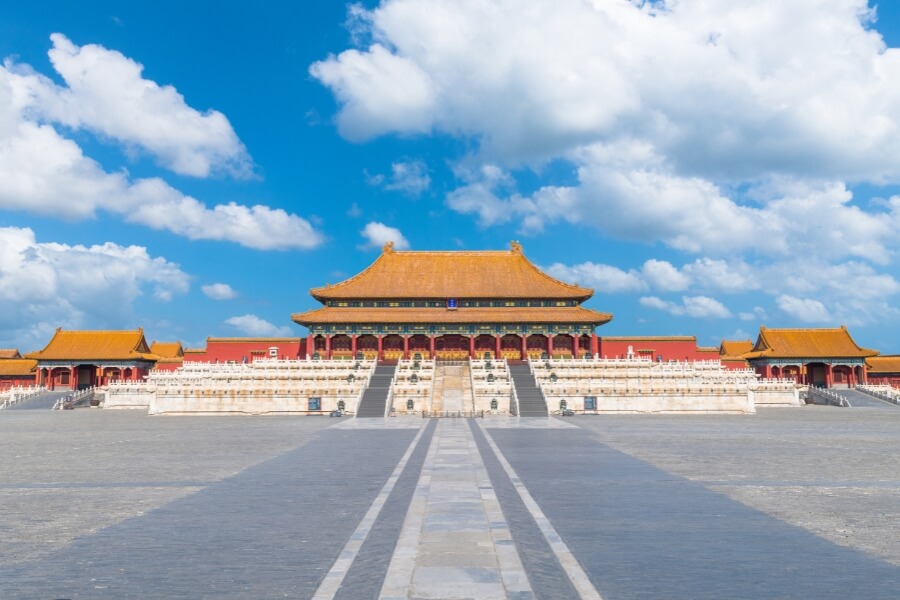
The Hall of Supreme Harmony is the largest and most important building in the palace complex. Coronations, imperial weddings, New Year ceremonies, and major state events were held here.
Its elevated marble platform, golden roof, and imperial throne symbolize the highest authority of imperial China.
Meridian Gate
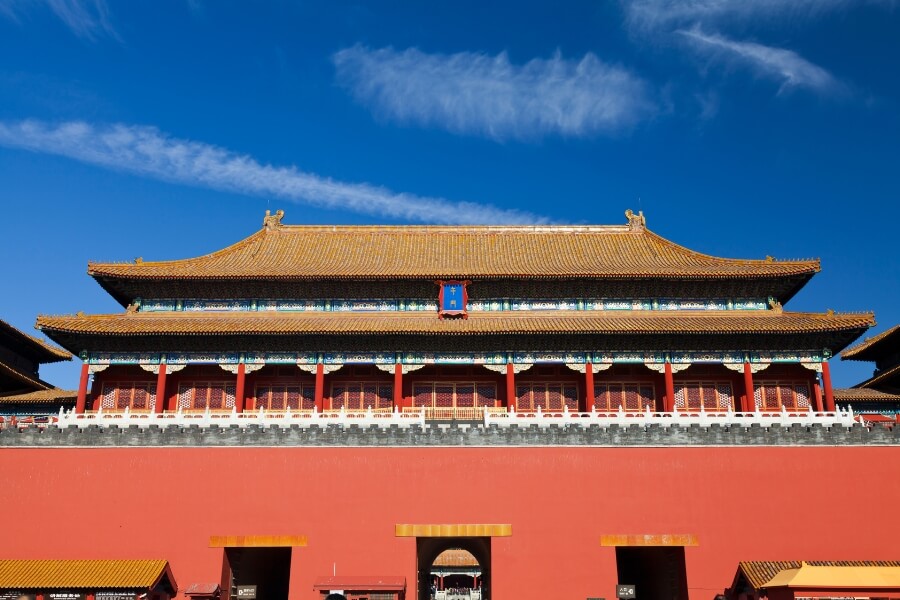
The Meridian Gate served as the main entrance to the palace. During imperial times, only the emperor could normally pass through the central archway.
Today, visitors begin their journey through the Forbidden City at this historic gate.
Palace of Heavenly Purity
Originally the residence of Ming emperors, the Palace of Heavenly Purity later became an audience hall where emperors met officials and handled important state affairs.
Imperial Garden
Located at the northern end of the complex, the Imperial Garden provided a peaceful retreat for the imperial family. Ancient trees, pavilions, and decorative rock formations offer a different atmosphere from the ceremonial halls.
The View from Jingshan Park
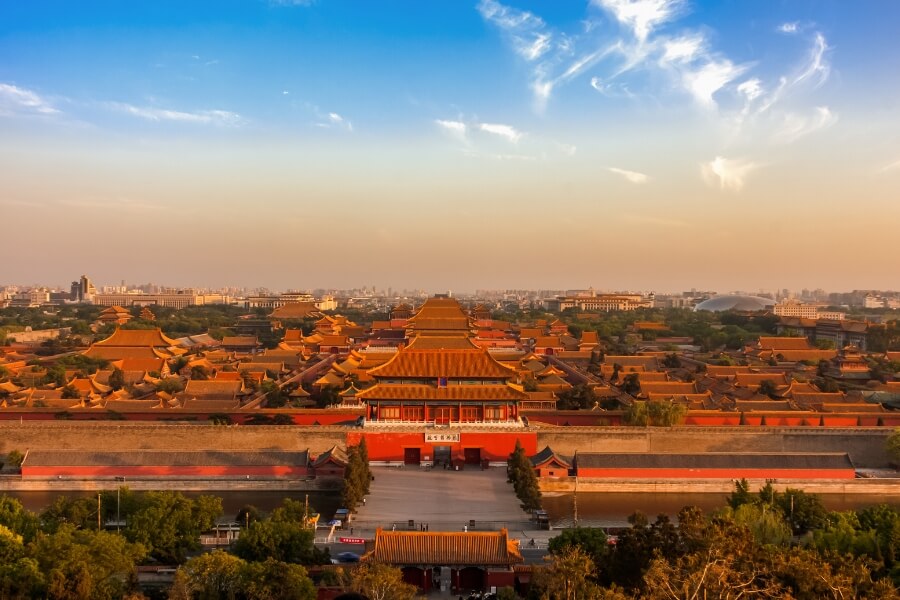
Many travelers discover that the best panoramic view of the Forbidden City is actually outside its walls.
Jingshan Park, located directly north of the palace, offers a spectacular view of the sea of golden roofs and Beijing's historic central axis.
Architectural Details Most Visitors Overlook
Perfect Symmetry
The most important halls and gates were arranged along Beijing's central north-south axis. This design symbolized the emperor's position at the center of the world.
Wooden Construction Without Nails
The Forbidden City contains the world's largest collection of preserved ancient wooden palace buildings. Traditional craftsmen relied on sophisticated mortise-and-tenon joints instead of metal nails.
Yellow Roofs and Red Walls
Yellow represented imperial authority and was reserved for the emperor and his family. Red symbolized prosperity, happiness, and good fortune.
These colors remain some of the most recognizable features of the Forbidden City.
Roof Guardians
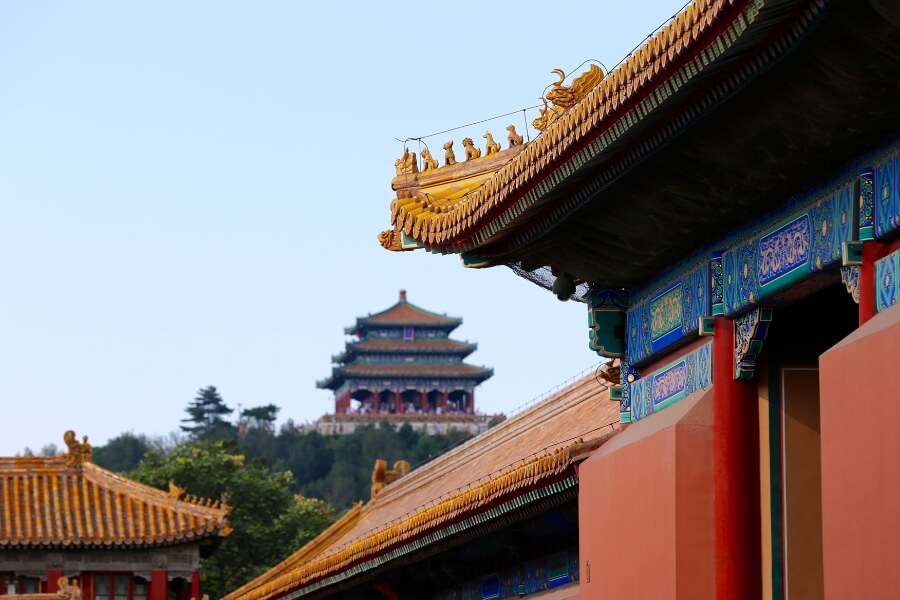
Rows of mythical animals appear on rooftops throughout the complex. The number of figures reflected the status of each building.
The Hall of Supreme Harmony contains the highest-ranking roof decoration found anywhere in China.
Interesting Facts Most Visitors Miss
The Forbidden City is often said to contain 9,999½ rooms, although modern surveys suggest there are approximately 8,886 surviving rooms.
It took around 14 years to complete construction.
Twenty-four emperors lived inside the palace walls.
The Palace Museum houses approximately 1.8 million cultural relics and artifacts.
The famous "Cold Palace" was not a specific building but a general term for residences where disgraced concubines were confined.
The Golden Water River served both decorative and fire-prevention purposes.
The largest marble carving inside the palace weighs around 200 tons and was transported during winter using specially prepared ice roads.
Some museum displays use high-quality replicas to protect fragile original artifacts.
What First-Time Visitors Often Underestimate
Many first-time visitors underestimate how much walking is involved.
A standard route from the Meridian Gate through the three main halls, the Inner Court, and the Imperial Garden can already cover several kilometers. Adding exhibition halls or climbing Jingshan Hill afterward can easily turn the day into a four-to-five-hour sightseeing experience.
Summer visits can also be more demanding than expected. Much of the main route offers limited shade, and midday temperatures can feel significantly hotter than forecasts suggest.
Crowds are another common surprise. During Chinese public holidays and school vacations, security checks and ticket verification can add considerable waiting time before visitors even enter the palace.
Best Ways to Visit Based on Travel Style
For First-Time Visitors
Focus on the central axis, including the Hall of Supreme Harmony, Palace of Heavenly Purity, and Imperial Garden. End your visit at Jingshan Park for the best panoramic view.
For Families
Allow extra time for breaks. The palace is larger than many children expect, and trying to combine too many attractions in one day can lead to fatigue.
For Seniors
A slower pace is recommended. The route is mostly flat, but the overall walking distance can be significant. Regular rest stops help make the visit more comfortable.
For Photographers
Arrive early in the morning when crowds are smaller and lighting conditions are softer. Jingshan Park remains the best location for wide-angle views of the entire palace complex.
For History Enthusiasts
Consider visiting the Treasure Gallery and Clock Gallery. These collections provide additional insight into imperial life beyond the main palace buildings.
Planning Your Visit to the Forbidden City
Ticket Reservations
Tickets are generally released in advance and often sell out before major holidays. Foreign visitors can use their passport information when making reservations.
Waiting until the day of your visit is not recommended, especially during peak travel periods.
Entrance and Exit
Visitors enter through the Meridian Gate in the south and exit through the Gate of Divine Might in the north.
Because the route is one-way, it helps to plan nearby attractions before your visit.
How Long Should You Spend?
Quick visit: 2-3 hours
Standard visit: 3-4 hours
Detailed visit with exhibitions: 5-6 hours
Nearby Attractions
Many visitors combine the Forbidden City with:
Tiananmen Square
Jingshan Park
Beihai Park
Temple of Heaven
Summer Palace
These attractions can also be incorporated into a broader Beijing itinerary.
Common Mistakes Visitors Make
Arriving Too Late
Many visitors arrive around midday when crowds are at their heaviest. Earlier arrivals usually enjoy a more comfortable experience.
Skipping Jingshan Park
The most famous panoramic view of the Forbidden City is from Jingshan Hill rather than from inside the palace itself.
Underestimating Walking Distance
The palace appears compact on maps but covers a vast area. Comfortable footwear is essential.
Assuming Tickets Are Always Available
Tickets frequently sell out before weekends, public holidays, and peak travel seasons.
FAQ
Q1: Why is it called the Forbidden City?
The name comes from the Chinese term Zijincheng, meaning “Purple Forbidden City.” “Purple” refers to the celestial Purple Palace associated with the North Star, while “Forbidden” reflects the strict access rules that once restricted entry to the emperor, his family, and selected officials.
Q2: How many rooms does the Forbidden City have?
A popular legend claims the Forbidden City has 9,999½ rooms, just short of the 10,000 rooms believed to exist in Heaven. Modern surveys, however, estimate that the palace complex contains approximately 8,886 surviving rooms and chambers.
Q3: How long does it take to visit the Forbidden City?
Most visitors spend three to four hours exploring the main route through the palace. If you plan to visit the Treasure Gallery, Clock Gallery, or nearby Jingshan Park, allowing five to six hours will provide a more relaxed experience.
Q4: Can foreigners visit the Forbidden City independently?
Yes. Foreign visitors can enter independently and reserve tickets using passport information. However, advance booking is strongly recommended because daily visitor numbers are limited and tickets often sell out before weekends and public holidays.
Q5: Is an English guide necessary when visiting the Forbidden City?
An English guide is not essential, but it can significantly improve the experience. Many architectural symbols, imperial traditions, and historical stories are not fully explained on site, making guided interpretation valuable for first-time visitors.
Making the Most of Your Forbidden City Visit
The Forbidden City is not difficult to visit, but understanding it is often more challenging than many travelers expect.
Many of its stories are hidden in architectural details, ceremonial spaces, and symbols that are easy to overlook. Visitors often gain more from understanding why certain buildings mattered than from simply seeing more courtyards.
For travelers planning a first trip to Beijing, Hiorient Travel often recommends combining the Forbidden City with nearby landmarks such as Tiananmen Square, Jingshan Park, the Temple of Heaven, or the Summer Palace. A well-paced itinerary can make the experience more enjoyable, especially for families, seniors, and travelers unfamiliar with China's transportation systems and ticket reservation procedures.