Xi'an is one of the most historically important cities in China. Known in ancient times as Chang'an, the city served as the capital of several Chinese dynasties and witnessed some of the most important periods in the country's development.
For travelers today, understanding the history of Xi'an makes attractions such as the Terracotta Warriors, Ancient City Wall, Big Wild Goose Pagoda, and Muslim Quarter much more meaningful.
From powerful emperors and the beginning of the Silk Road to the modern city visitors experience today, Xi'an's story stretches across more than 3,000 years.
Xi'an Before It Became an Imperial Capital
The area surrounding modern Xi'an has been inhabited for thousands of years.
Its location in the fertile Wei River Valley provided access to water, agricultural land, and important routes connecting different parts of ancient China.
Over time, settlements around the region developed into important political and cultural centers. Xi'an's position eventually helped it become the heart of several powerful Chinese dynasties.
The Qin Dynasty and China's First Emperor
One of the most famous chapters in Xi'an's history is connected with Qin Shi Huang, the ruler who unified China in 221 BC and became its first emperor.
His enormous burial complex was constructed near present-day Xi'an.
The most famous discovery from the site is the Terracotta Army, consisting of thousands of life-sized soldiers, horses, and chariots created to protect the emperor in the afterlife.
Discovered by local farmers in 1974, the Terracotta Warriors have become one of China's most recognizable archaeological attractions.
Chang'an and the Han Dynasty
During the Han Dynasty, Chang'an developed into one of the most important political and commercial centers in ancient China.
It was during this period that routes connecting China with Central Asia expanded significantly. These networks later became known collectively as the Silk Road.
Chinese silk and other goods traveled westward while horses, precious materials, foods, technologies, artistic traditions, and ideas entered China from other regions.
Chang'an became the eastern starting point for one of history's greatest networks of cultural exchange.
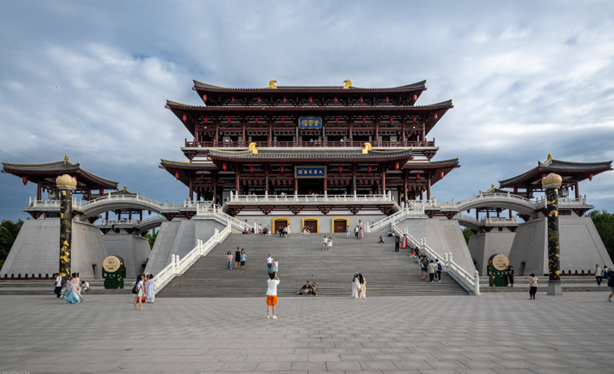
Xi'an During the Tang Dynasty
Xi'an experienced another golden age during the Tang Dynasty (618–907).
Chang'an became the imperial capital and grew into one of the world's largest and most cosmopolitan cities.
Merchants, diplomats, scholars, monks, and travelers arrived from Central Asia and other regions. Different religions and cultures could be found throughout the city, reflecting China's extensive connections with the outside world.
This international character remains an important part of Xi'an's historical identity today.
The Big Wild Goose Pagoda
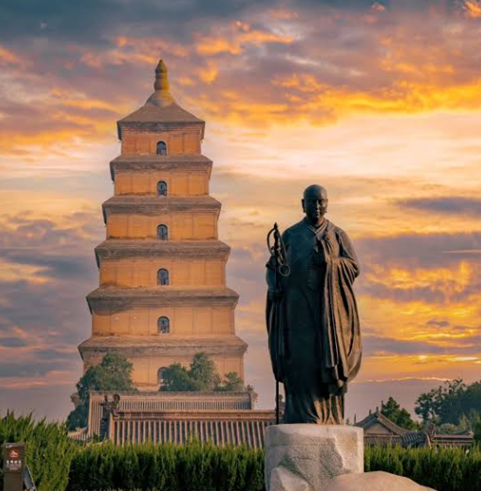
One of the most important surviving symbols of Tang-era Xi'an is the Big Wild Goose Pagoda.
The pagoda is closely associated with the Buddhist monk Xuanzang, who traveled from China to India and returned with Buddhist scriptures and knowledge.
His famous journey demonstrates how religion and ideas moved alongside goods on the ancient trade routes.
Today, the pagoda remains one of Xi'an's most recognizable historical attractions.
Xi'an and the Silk Road
Xi'an's role in the Silk Road is one of the main reasons the city became so historically significant.
Caravans departing from Chang'an traveled westward through what is now Gansu before continuing toward Xinjiang and Central Asia.
Silk may have given the route its famous name, but merchants exchanged much more than fabric. Spices, horses, glassware, precious stones, foods, music, religions, technologies, and artistic traditions moved between civilizations.
For modern travelers following China's Silk Road, Xi'an remains the natural place to begin the journey.
The Muslim Quarter and Xi'an's Cultural Diversity
Xi'an's long history of international exchange helped create cultural communities whose influence remains visible today.
The city's famous Muslim Quarter is one of the best places for travelers to experience this heritage.
The neighborhood is known for busy food streets, traditional shops, mosques, and distinctive local cuisine.
Nearby, the Great Mosque of Xi'an is particularly interesting because its architecture combines traditional Chinese design with Islamic religious traditions.
Xi'an's Ancient City Wall
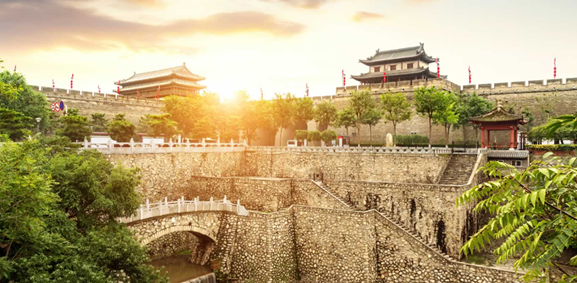
Another important historical landmark is the Xi'an City Wall.
The wall visitors see today was largely constructed during the Ming Dynasty and surrounds the historic center of the city.
It remains one of the best-preserved city walls in China.
Visitors can walk or cycle along the top, enjoying views that show the contrast between historic Xi'an and the modern city surrounding it.
From Ancient Capital to Modern Xi'an
Xi'an eventually lost its role as China's primary imperial capital, but its historical importance never disappeared.
Today, it is a major modern city and transportation center while remaining one of China's most important destinations for archaeology, history, and cultural tourism.
Modern development now surrounds ancient pagodas, temples, walls, and archaeological sites, creating an interesting contrast between China's past and present.
High-speed rail also makes Xi'an easily accessible from cities such as Beijing, Shanghai, and Chengdu.
Where Travelers Can Experience Xi'an's History
Visitors interested in the history of Xi'an should consider exploring:
Terracotta Warriors
Ancient City Wall
Big Wild Goose Pagoda
Muslim Quarter
Great Mosque of Xi'an
Shaanxi History Museum
Bell Tower and Drum Tower
Together, these attractions tell different parts of Xi'an's story, from imperial China and the Silk Road to religion, trade, and everyday urban life.