Travelers visiting China during Spring Festival may notice Rooster imagery in temple fairs, paper cuttings, lantern displays, and traditional street markets. In Chinese culture, the Rooster is traditionally associated with punctuality, discipline, confidence, and responsibility.
The Rooster ranks as the 10th animal in the Chinese zodiac cycle and corresponds to the earthly branch “You.” In traditional Chinese beliefs, the rooster's morning crow symbolizes the start of a new day and the arrival of light after darkness.
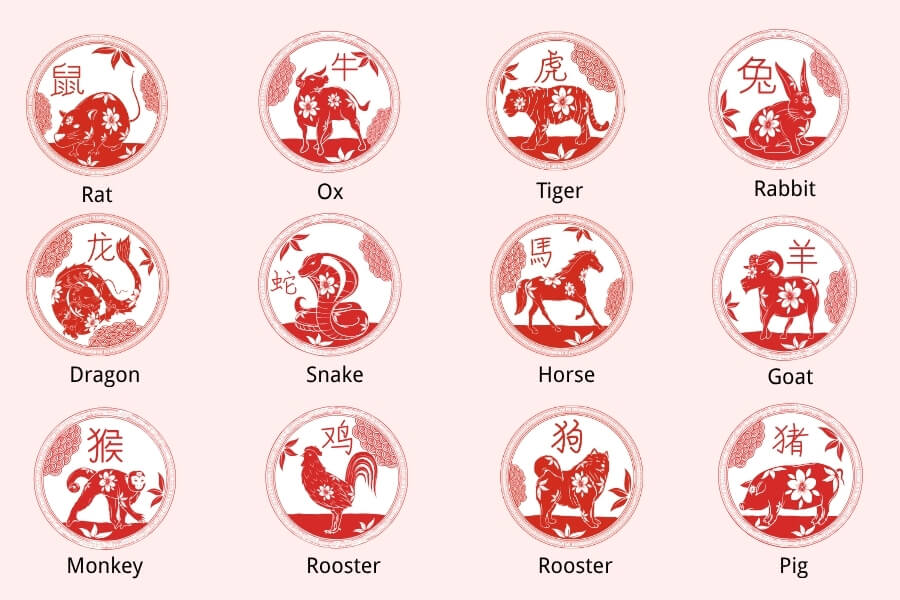
During Lunar New Year, zodiac decorations are especially common in older neighborhoods, local markets, and family homes. Rooster-themed artwork often appears on red banners, festive paintings, and handmade folk crafts.
For travelers interested in understanding Chinese traditions beyond major tourist attractions, zodiac culture offers useful insight into how seasonal customs, family symbolism, and folk beliefs still influence modern celebrations across China.
What the Rooster Represents in Chinese Traditions
In many parts of China, the Rooster symbolizes reliability, hard work, and awareness of time. These meanings come partly from the rooster's daily habit of crowing at sunrise, which traditionally helped farming communities begin work early in the morning.
Travelers exploring traditional towns or Spring Festival markets may also notice rooster imagery connected with good fortune and career success. In Chinese, the rooster's comb sounds similar to a word associated with official status and promotion, which historically linked the animal with achievement and recognition.
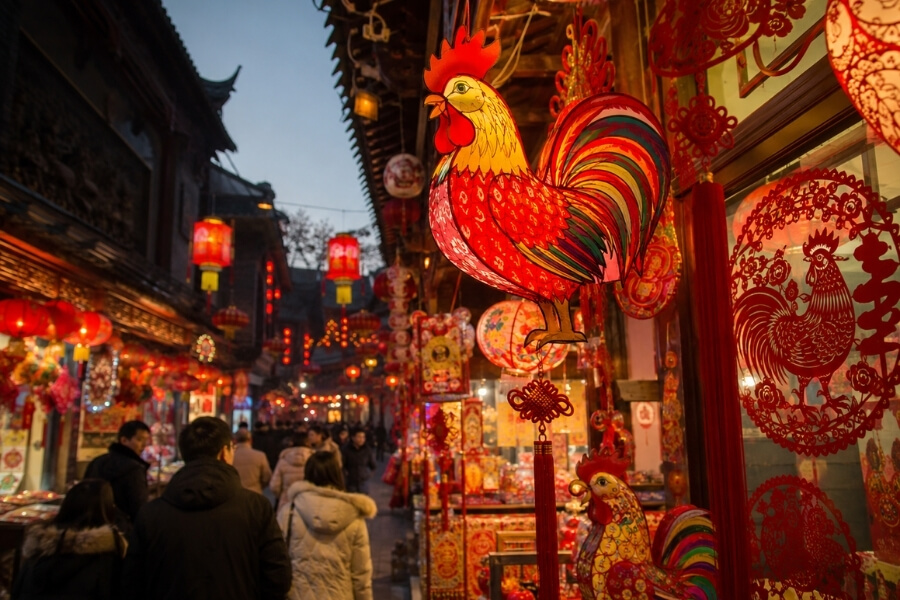
Traditional stories about the zodiac remain widely known in China today. According to one popular legend, the rooster earned its place in the zodiac after helping humanity by crowing before sunrise every morning. Its dedication eventually impressed the Jade Emperor, allowing the Rooster to become one of the twelve zodiac animals.
For visitors, these stories help explain why zodiac animals remain visible during holidays, temple fairs, and seasonal celebrations throughout the country.
Rooster Years and What They Mean
The Chinese zodiac follows the lunar calendar rather than the Gregorian calendar. Because of this, people born in January or February should check the exact Lunar New Year date before identifying their zodiac sign.
| Rooster Year | Lunar Start Date | Lunar End Date | Element |
|---|---|---|---|
| 1921 | Feb. 8, 1921 | Jan. 27, 1922 | Metal Rooster |
| 1933 | Jan. 26, 1933 | Feb. 13, 1934 | Water Rooster |
| 1945 | Feb. 13, 1945 | Feb. 1, 1946 | Wood Rooster |
| 1957 | Jan. 31, 1957 | Feb. 17, 1958 | Fire Rooster |
| 1969 | Feb. 17, 1969 | Feb. 5, 1970 | Earth Rooster |
| 1981 | Feb. 5, 1981 | Jan. 24, 1982 | Metal Rooster |
| 1993 | Jan. 23, 1993 | Feb. 9, 1994 | Water Rooster |
| 2005 | Feb. 9, 2005 | Jan. 28, 2006 | Wood Rooster |
| 2017 | Jan. 28, 2017 | Feb. 15, 2018 | Fire Rooster |
| 2029 | Feb. 13, 2029 | Feb. 2, 2030 | Earth Rooster |
If you were born close to Lunar New Year, your zodiac sign may belong to the previous animal year instead.
Why Chinese Zodiac Years Change in January or February
Many international travelers assume Chinese zodiac signs change on January 1, but the zodiac system follows Lunar New Year dates instead.
Chinese New Year usually begins between late January and mid-February. This means someone born in January 1993 may actually belong to the Monkey sign rather than the Rooster sign.
Understanding this calendar difference can help travelers better understand conversations around birthdays, compatibility, and zodiac traditions in China.
During Lunar New Year gatherings, zodiac signs are still commonly discussed among family members, especially older generations. Travelers visiting China during this period may hear people casually talk about zodiac years, lucky colors, or compatibility during meals and holiday celebrations.
Common Personality Traits of the Rooster
In China, zodiac personality traits are often discussed casually during family gatherings and holiday conversations. Although not everyone takes zodiac traditions seriously, many people still associate certain personality patterns with each animal sign.
People born in the Year of the Rooster are commonly viewed as organized, observant, outspoken, and hardworking. They are often associated with efficiency, confidence, and strong personal standards.
Common Strengths
Roosters are frequently described as:
Detail-oriented
Honest
Practical
Independent
Loyal
Competitive
Organized
Socially confident
In Chinese culture, these qualities are often connected with leadership, responsibility, and discipline.
Common Challenges
Roosters may also be viewed as:
Impatient
Critical
Attention-seeking
Perfectionistic
Overly direct
Because they value recognition, some Roosters dislike being ignored or underestimated. Their communication style may sometimes feel intense in group situations.
Differences Between Men and Women
Rooster men are often associated with ambition, leadership, and business-minded thinking. Many are viewed as highly competitive and focused on career advancement.
Rooster women are commonly described as perceptive, adaptable, and socially intelligent. In traditional zodiac discussions, they are often associated with practical decision-making and emotional awareness.
The Five Element Types of the Rooster
In traditional Chinese philosophy, each zodiac year is connected to one of the Five Elements — Wood, Fire, Earth, Metal, and Water.
Travelers visiting museums, temples, or cultural attractions in China may occasionally encounter Five Elements concepts in traditional art, feng shui discussions, or seasonal customs. The system is still widely recognized in Chinese folk culture today.
| Element | Personality Traits |
|---|---|
| Wood Rooster | Energetic, expressive, emotionally sensitive |
| Fire Rooster | Responsible, punctual, determined |
| Earth Rooster | Reliable, generous, socially respected |
| Metal Rooster | Brave, disciplined, persistent |
| Water Rooster | Intelligent, adaptable, compassionate |
The Five Elements Theory is also connected with traditional Chinese ideas about balance, personality, and harmony between people and nature.
Lucky Colors and Symbols for the Rooster
During Lunar New Year, lucky colors and symbolic decorations appear throughout China in homes, markets, temples, and shopping streets. Zodiac traditions often influence gift choices, clothing colors, and festive decorations during this period.
Lucky Associations
| Category | Lucky Associations |
|---|---|
| Lucky Numbers | 5, 7, 8 |
| Lucky Colors | Gold, yellow, brown |
| Lucky Flowers | Gladiola, cockscomb |
| Lucky Directions | South, southwest, northeast |
Traditionally Unlucky Associations
| Category | Traditionally Unlucky |
|---|---|
| Unlucky Numbers | 1, 2, 3, 6, 9 |
| Unlucky Colors | Red, white, green, purple |
| Unlucky Directions | East, north |
In China, people experiencing their zodiac birth year — known as Ben Ming Nian — often wear red bracelets or clothing as a traditional symbol of protection and good fortune.
Travelers visiting China during a zodiac birth year may notice red accessories, charms, and symbolic gifts being sold in markets before Lunar New Year.
Which Zodiac Signs Match Best With the Rooster
Chinese zodiac compatibility is traditionally connected with personality balance, communication style, and long-term harmony.
Although younger generations in China may view zodiac matching more casually today, compatibility discussions still appear during family conversations, especially around relationships and marriage.
Best Matches
Ox
Rooster and Ox personalities are traditionally considered compatible because both value discipline, responsibility, and stability. Ox personalities are also believed to balance the Rooster's intensity with patience and consistency.
Snake
Snake and Rooster personalities are often viewed as complementary. Roosters appreciate honesty and structure, while Snakes are associated with calm thinking and emotional support.
Dragon
Rooster and Dragon pairs are traditionally connected through ambition and confidence. In Chinese zodiac culture, both signs are considered strong-willed but capable of respecting each other's independence.
More Challenging Matches
Rabbit
Rabbit personalities are often associated with emotional sensitivity and quiet communication, while Roosters tend to be more outspoken and critical. This difference may create misunderstandings.
Dog
Dogs are generally viewed as calm and emotionally steady, while Roosters may appear demanding or overly direct in daily interactions.
Relationship Advice for Roosters
In traditional zodiac discussions, Roosters are often described as people who respond better to practical solutions than emotional criticism.
Many Chinese families also associate the Rooster sign with loyalty and reliability, especially in long-term relationships and friendships.
What 2026 May Bring for the Rooster
During Lunar New Year, horoscope discussions remain common in many Chinese families, especially among older generations. Zodiac years are often associated with personality trends, work habits, relationships, and seasonal luck.
For the Rooster sign, 2026 is generally viewed as a year connected with discipline, steady progress, and relationship stability rather than dramatic change.
Career and Work
In traditional zodiac interpretations, Roosters may experience gradual career progress through consistency and communication skills rather than sudden breakthroughs.
Public-facing roles, teamwork, and flexible thinking are often considered important themes for the year.
Finances
Traditional horoscope discussions often suggest a cautious financial approach for Roosters in 2026. Long-term planning and stable decision-making are generally viewed more favorably than risky investments.
Relationships
Family harmony and relationship stability are commonly emphasized in traditional discussions about the Rooster sign during 2026.
Health and Lifestyle
Many Chinese horoscope traditions encourage balance, regular routines, and stress management during busy periods of the year.
Activities such as walking, hiking, and maintaining structured daily habits are often associated with improving overall well-being.
Where to Experience Zodiac Traditions in China
Many travelers first encounter zodiac culture through decorations in large cities, where holiday displays can feel crowded and heavily commercialized during Spring Festival.
In smaller Silk Road communities and regional markets, however, zodiac traditions are often preserved in a more local and everyday setting. Travelers may notice handmade paper cuttings, seasonal market decorations, folk crafts, and family customs that feel less staged and more connected with daily life.

Different destinations also offer very different cultural experiences during Lunar New Year.
| Experience | Major Cities | Silk Road Regions |
|---|---|---|
| Holiday decorations | Large-scale and crowded | Smaller and more traditional |
| Temple fairs | Easier to access | More community-focused |
| Zodiac souvenirs | Commercialized | Handmade local crafts |
| Festival atmosphere | Fast-paced | Slower and more local |
Travelers interested in experiencing zodiac culture beyond major tourist centers may prefer smaller regional destinations during the holiday season.
Hiorient Travel designs customized Silk Road and Xinjiang routes that help travelers experience seasonal traditions in less crowded cultural settings, with a stronger focus on local communities, regional customs, and practical travel support.
FAQ
Q1: What years are considered the Year of the Rooster?
Recent Rooster years include 1945, 1957, 1969, 1981, 1993, 2005, and 2017. The next Year of the Rooster begins in 2029. Because the Chinese zodiac follows the lunar calendar, travelers born in January or February should check the exact Lunar New Year dates carefully.
Q2: Why does the Chinese zodiac change during January or February?
The Chinese zodiac follows the Lunar New Year calendar rather than the Gregorian calendar. Since Lunar New Year falls between late January and mid-February, zodiac signs may differ for people born near those transition dates. This is still widely recognized in modern Chinese culture.
Q3: What personality traits are commonly associated with the Rooster?
In traditional Chinese culture, Roosters are often associated with discipline, confidence, punctuality, and strong organizational skills. Many people also view the Rooster as outspoken and hardworking, although some zodiac discussions describe the sign as impatient or overly critical at times.
Q4: Which zodiac signs are traditionally most compatible with the Rooster?
Traditional Chinese zodiac compatibility beliefs usually pair the Rooster with Ox, Snake, and Dragon signs. These combinations are often associated with balanced communication, shared goals, and stable long-term relationships in traditional cultural interpretations.
Q5: Why is the Rooster the 10th animal in the Chinese zodiac?
The Rooster is connected with the earthly branch “You,” which represents the period between 5 p.m. and 7 p.m. in traditional Chinese timekeeping. According to folk beliefs, this is the time when roosters naturally return to their nests at sunset.